

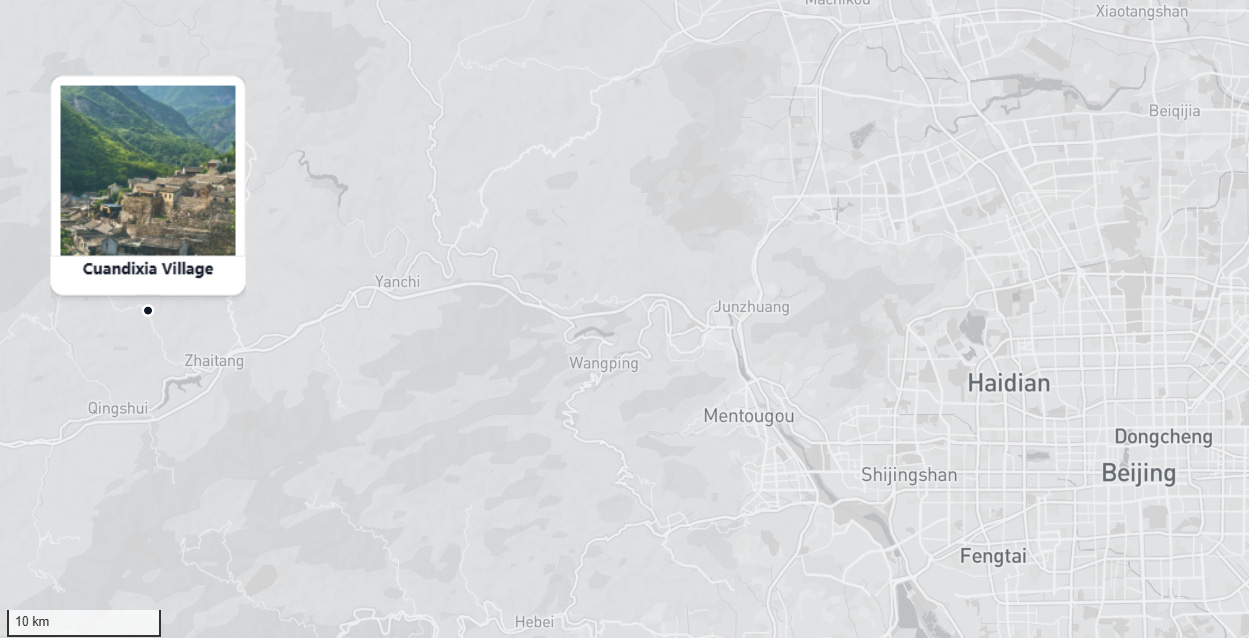
The rarest Chinese character you may ever type, 爨 (cuàn, “stove”), spells the name of a village tucked in the mountains west of Beijing. Cuandixia (爨底下, literal meaning ‘beneath the stove’) sits roughly 90 kilometers from the city center in Mentougou District, a clutch of stone courtyards and slate lanes that has survived from the Ming dynasty into the age of weekend escapes and camera phones.

“Beneath the stove”, the name carries a much deeper, figurative meaning rooted in Chinese folk culture and superstition. The stove is traditionally the heart of the home, symbolizing warmth, family, and livelihood. It is associated with the household deity or the “Stove God” (灶神 Zào Shén).
Read more on Chinese folk culture and superstition


Cuandixia did not begin as a picture-postcard. It began as a frontier. In the early Ming (15th century), the court fortified the western approaches to the capital near Yanhekou (沿河口), and families tied to that garrison, local lore and records say the Han (韩) clan, took root on this slope. Over generations they built terraces, courtyards, and a village that watched the passes while minding its fields.
Read more on Mongol, Ming, and the Great Wall

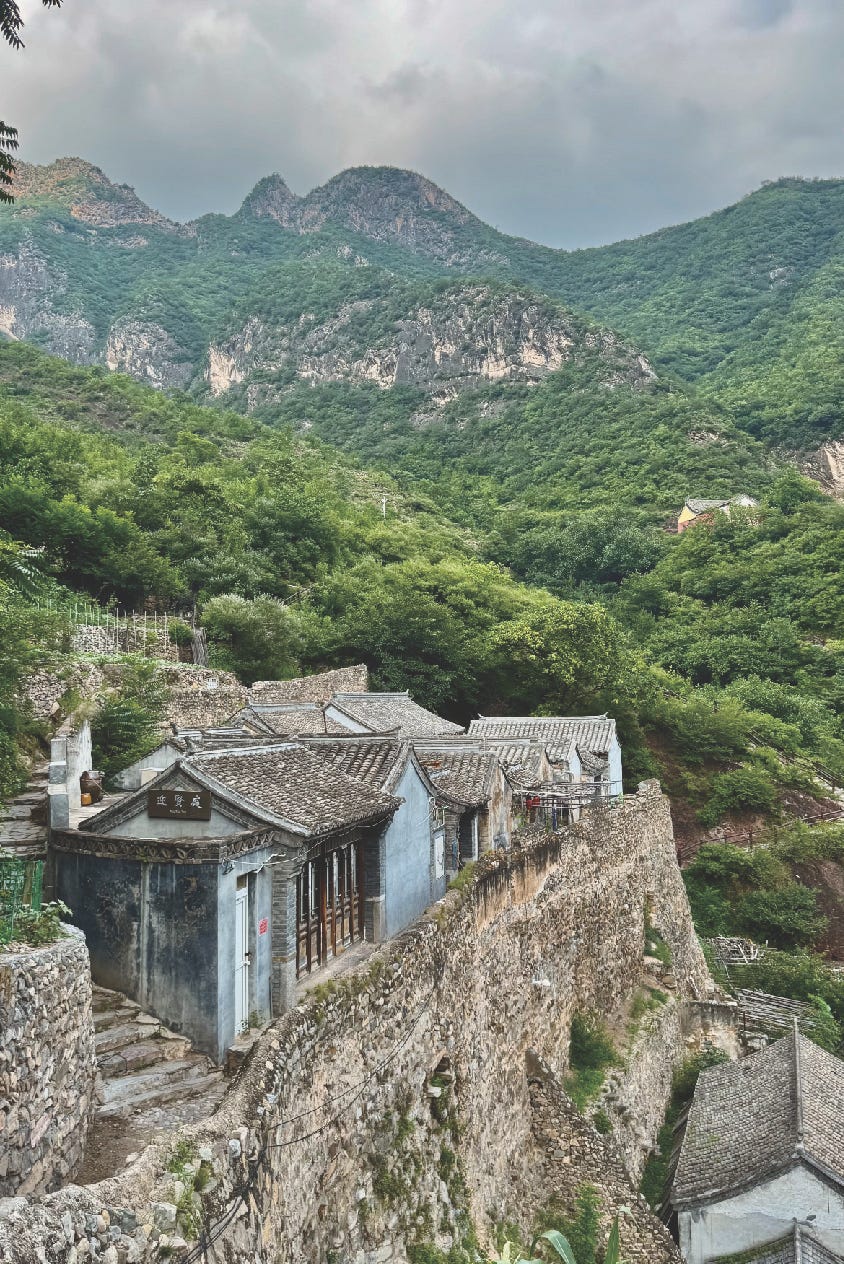
Stand on the opposite hillside and the village reads like a cross-section of northern vernacular architecture. Cuandixia’s plan obeys both terrain and feng shui: mountains wrap the settlement in a rough amphitheater; a ridge locals call “Dragon Head Mountain” forms the axis; the courtyards climb in fans and steps. Official surveys count 76 preserved “mountain siheyuan (courtyard)” with 656 rooms, tight clusters of grey tile, timber, and honey-colored stone stitched together by stair-steep lanes.
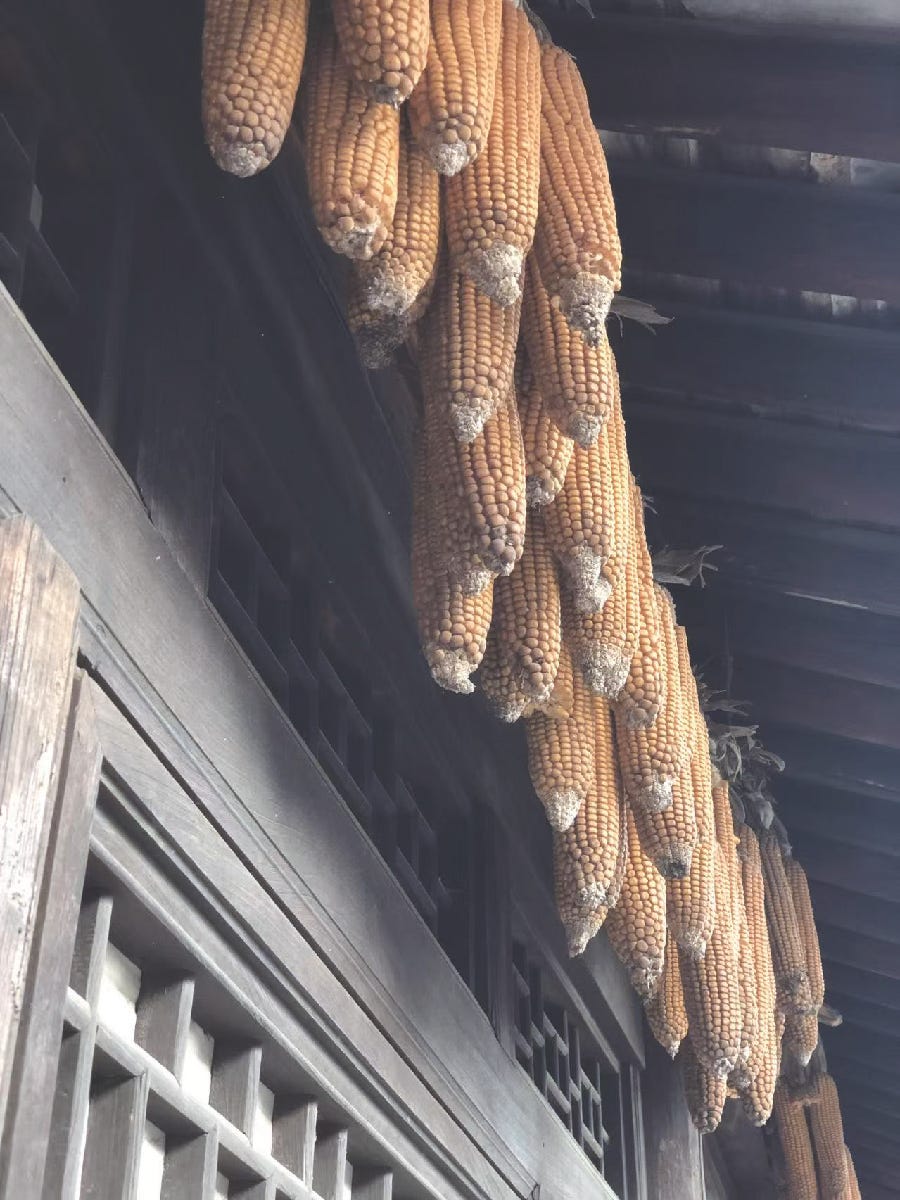
Cuandixia prospered when roads mattered more than rails. In late imperial times it sat on an old post route leading from Beijing toward the coalfields and markets of northern Hebei and onward to Shanxi and beyond. Teamsters and traders needed rest, fodder, and gossip; the village obliged with inns and courtyard homes that opened inward for warmth and security. That traffic eventually ebbed, but the architecture remained, and many of those courtyards now welcome travelers again—this time city people escaping summer heat, hikers chasing ridge views, and photographers chasing light.
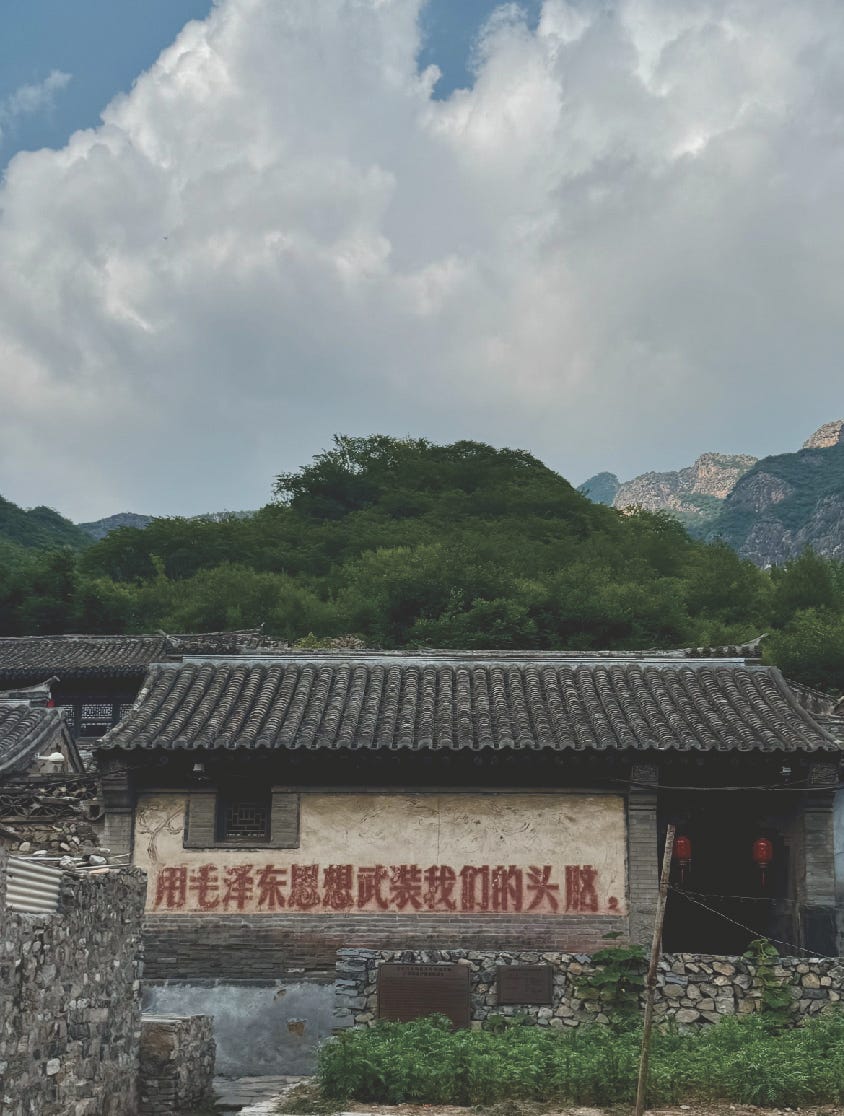
The appeal is not museum-like perfection; it’s texture. Faded Cultural Revolution slogans still ghost across a few walls. Threshold stones are polished by centuries of feet. Kitchens burn the same fuel as the village’s name, stoves fed with sticks, twigs, charcoal. In homestays you’ll find quilts drying on parapets and bowls of handmade noodles or roast chicken passed around long communal tables. At dusk, when the ridge throws a climbing shadow across the roofs, the village’s defensive logic reads as comfort: huddle close, face south, lean on stone.
If my insights brought you a fresh perspective, please consider supporting me by buying me a coffee. Your generosity fuels my writing.
A delightful article. Thank you! Back in 1999 or so, I spent a great day at Cuandixia with the landscape photographer Lois Conner. I also recall a stunning meal we had at Zhaigong 齋宮 on the way there.
Wonderful. 🙏