

Da Qin was the name for the Eastern Roman Empire in ancient China, and “Luminous Religion” (景教) is the Chinese term for the Christian sect of Nestorianism.
According to historical inscriptions, in the ninth year of the Zhenguan era (635 AD), Christianity was introduced to Chang’an (Today’s Xi’an) by the Syrian missionary Alopen from Persia. Three years after Alopen’s arrival in Chang’an, Emperor Taizong granted them a plot of land in the Yining Ward (義寧坊) of Chang’an, allowing them to build the first church in the East.
The inscription translates the core narrative and liturgical life of Christianity: “Creation, Incarnation, Redemption, Ascension, Scripture Preaching, Baptism, Liturgical Praise, Lord’s Day, Commandments, Charity” into the context and terminology of the Tang Dynasty (such as Dao 道, De 德, Jing 景, Jing/mirror 境/镜, Sanchang 三常, etc.).
It interweaves these theological themes with historical accounts, including imperial edicts, the establishment of churches in prefectures and counties, the suppression by Buddhist factions, its resurgence and performance of rituals in the imperial palace during the Tianbao era, the construction of Nestorian monasteries across multiple regions under Emperor Suzong, and the endorsement by prominent officials. Additionally, the text highlights the role of Nestorianism in moral education within the Chinese context and its participation in military activities as field chaplains. In doing so, the inscription forms a parallel narrative that juxtaposes a “theological compendium” with a “Chinese historical chronicle.”
The “Nestorian Stele of Da Qin” documents the introduction of Christianity to China during the Zhenguan period of the Tang Dynasty and its spread over the next hundred years. It is regarded as one of the world’s four most representative steles, alongside the Rosetta Stone of Egypt, the Mesha Stele of Jordan, and the Aztec Sun Stone.
Following is the complete translation of the inscription in Traditional Chinese, Simplified Chinese, and English. The inscription also serves as an example of the stylistic conventions of official documents, a style that continues to influence formal written discourse in China to this day.
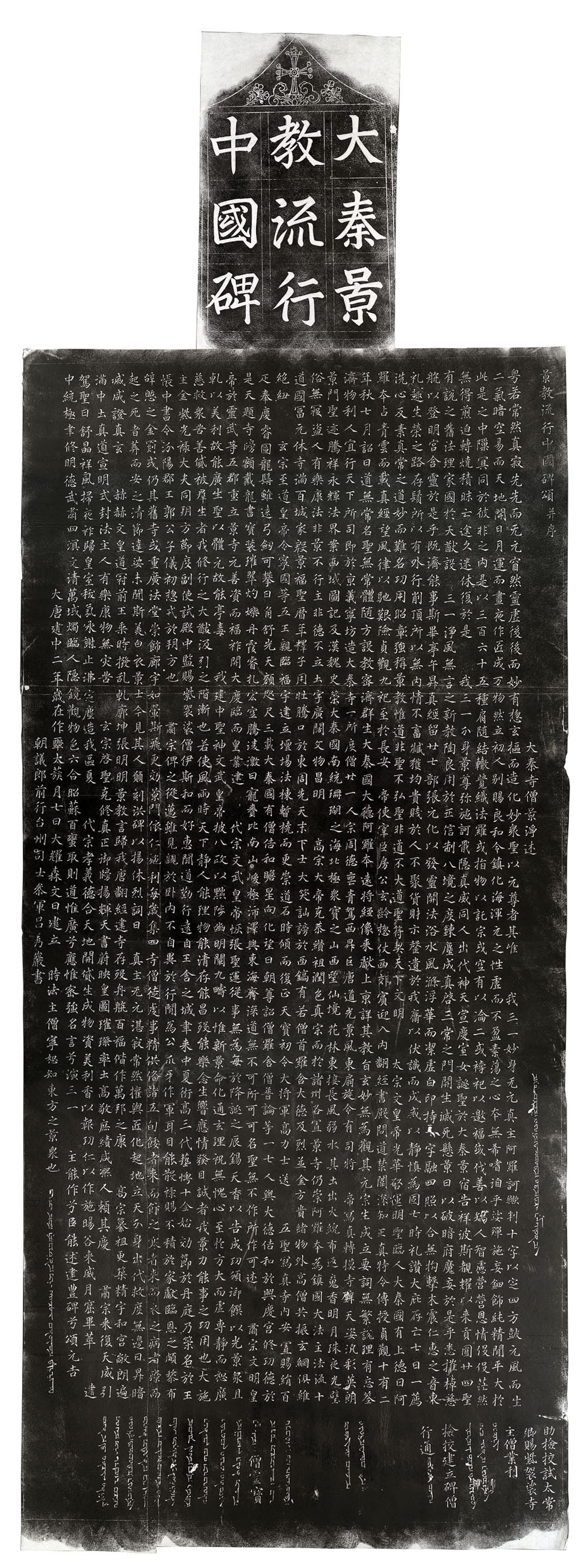
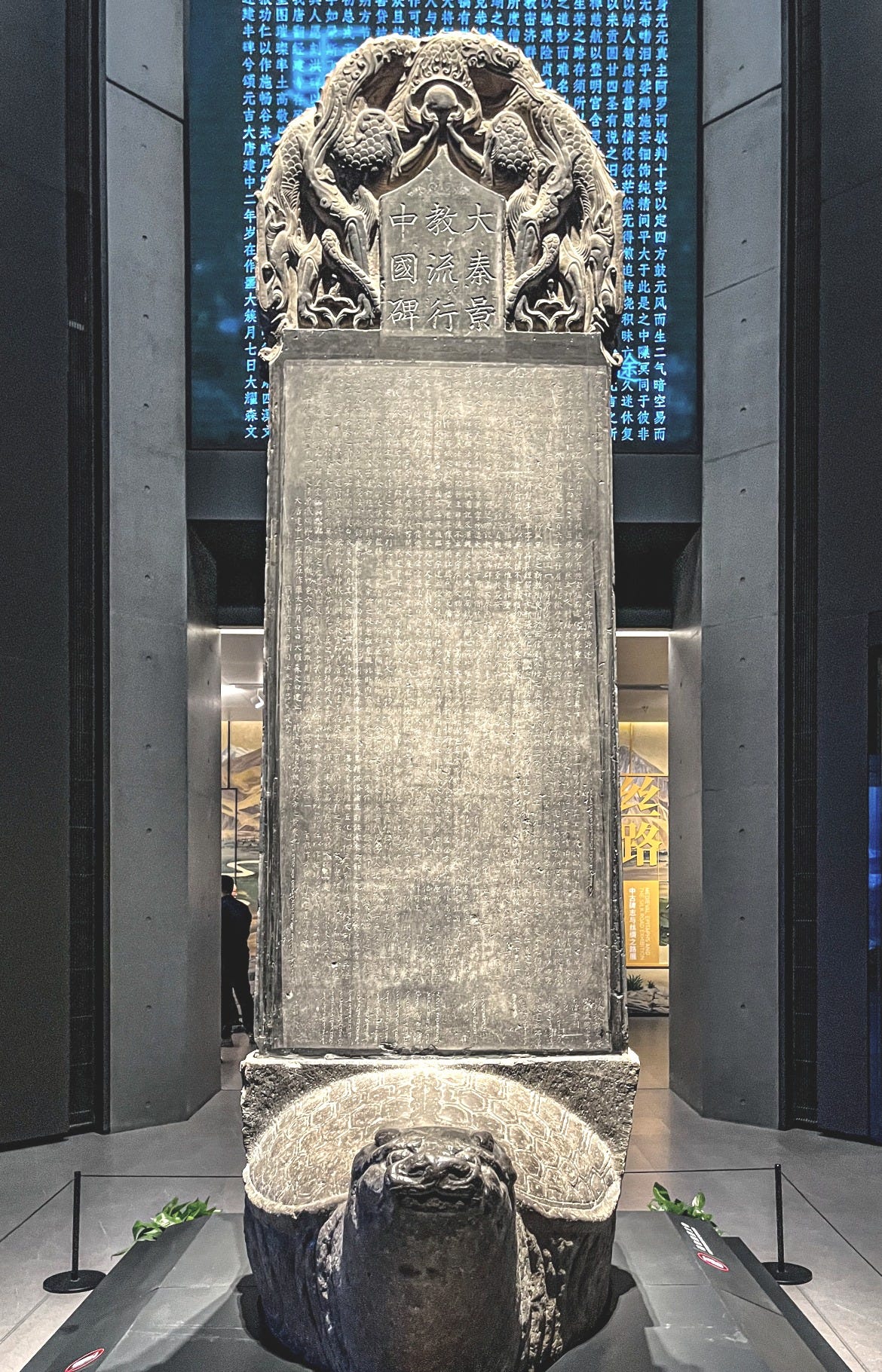
(碑額)大秦景教流行中國碑
(Stele heading) Stele on the Propagation of the Luminous Religion from Da Qin in China.
(碑文)景教流行中國碑頌
(Main inscription) Eulogy on the Stele of the Luminous Religion’s Spread in China.
並序
With preface.
大秦寺僧景淨述
Composed by the monk Jingjing of the Da Qin Monastery.
**Traditional Chinese / Simplified Chinese
**English Translation
粵若。/ 粤若。
Thus it is said.
常然真寂。/ 常然真寂。
Ever-constant and truly quiescent.
先先而無元。/ 先先而无元。
Before all befores, without beginning.
窅然靈虛。 / 窅然灵虚。
Deep, numinous, and void.
後後而妙有。/ 后后而妙有。
After all afters, wondrously existent.
總玄摳而造化。/ 总玄枢而造化。
He gathers the mysterious hub and brings forth creation.
妙眾聖以元尊者。/ 妙众圣以元尊者。
Wondrous among the holy ones and supreme in origin,
其唯我三一妙身無元真主阿羅訶1歟。 / 其唯我三一妙身无元真主阿罗诃欤。
—is it not our Triune, unoriginated True Lord, the Aluohe (Alāhā, Syriac/Aramaic term God)?*
判十字以定四方。/ 判十字以定四方。
He marked the four quarters with the sign of the Cross.
鼓元風而生二氣。/ 鼓元风而生二气。
He stirred the primal wind and generated the two forces.
暗空易而天地開。/ 暗空易而天地开。
The murky void was transformed and Heaven and Earth unfolded.
日月運而晝夜作。/ 日月运而昼夜作。
The sun and moon revolved and day and night began.
匠成萬物然立初人。/ 匠成万物然立初人。
He crafted the myriad beings and then established the first human.
別賜良和令鎮化海。/ 别赐良和令镇化海。
He especially bestowed good harmony to steady the sea of transformation.
渾元之性虛而不盈。/ 浑元之性虚而不盈。
The primal nature is empty and never overfilled.
素蕩之心本無希嗜。/ 素荡之心本无希嗜。
The pure, untroubled heart has no cravings by its root.
洎乎娑殫施妄。/ 泪乎娑殚施妄。
Yet in the dusty world delusions are lavishly dispensed.
鈿飾純精。/ 钿饰纯精。
Gilded ornaments mask what is purely refined.
閒平大於此是之中。 / 间平大于此是之中。
In the space between, “is” swells too great within “this.”
隙冥同於彼非之內。 / 隙冥同于彼非之内。
In hidden gaps, darkness merges with “not-that” inside.
是以三百六十五種。 / 是以三百六十五种。
Hence three hundred and sixty-five sects,
肩隨結轍。/ 肩随结辙。
shoulder to shoulder, follow the rutted tracks,
競織法羅。/ 竞织法罗。
compete to weave nets of doctrine.
或指物以託宗。/ 或指物以托宗。
Some point to things to pin down a creed,
或空有以淪二。/ 或空有以沦二。
some sink into dualism of emptiness and being,
或禱祀以邀福。/ 或祷祀以邀福。
some seek blessing by prayers and sacrifices,
或伐善以矯人。/ 或伐善以矫人。
some parade virtue to correct others.
智慮營營。/ 智虑营营。
Their minds bustle with schemes,
恩情役役。/ 恩情役役。
their affections toil and strain.
茫然無得。/ 茫然无得。
Vastly they gain nothing.
煎迫轉燒。/ 煎迫转烧。
Pressed and seared, they only burn the more.
積昧亡途久迷休復。/ 积昧亡途久迷休复。
Piling up darkness, they lose the way—long lost, they cannot return.
於是我三一分身景尊彌施訶。/ 于是我三一分身景尊弥施诃。
Thereupon our Triune One manifested: the Illustrious Venerable, the Messiah.
戢隱真威。/ 戢隐真威。
He sheathed and hid his true majesty,
同人出代。/ 同人出代。
and, as a man among men, appeared in this age.
神天宣慶。/ 神天宣庆。
The spirits and heavens proclaimed rejoicing.
室女誕聖。/ 室女诞圣。
A virgin gave birth to the Holy One.
於大秦景宿告祥。/ 于大秦景宿告祥。
In Da Qin (Roman Empire) auspicious signs were announced among the brilliant constellations.
波斯睹耀以來貢。/ 波斯睹耀以来贡。
Persia beheld the radiance and came to offer tribute.
圓廿四聖有說之舊法。/ 圆廿四圣有说之旧法。
They fulfilled the Old Law expounded by the Twenty-Four Saints.
理家國於大猷。/ 理家国于大猷。
They ordered family and state by the Great Plan.
設三一淨風無言之新教。/ 设三一净风无言之新教。
They established the new teaching of the Trinity and the wordless Pure Wind (Holy Spirit).
陶良用於正信。/ 陶良用于正信。
They molded goodness and put it to work through right faith.
制八境之度。/ 制八镜之度。
They set the rule of the Eight Precepts (“mirrors”).
鍊塵成真。/ 炼尘成真。
They refined the dusty to become the true.
啟三常之門。/ 启三常之门。
They opened the gate of the Three Constants.
開生滅死。/ 开生灭死。
They opened life and extinguished death.
懸景日以破暗府。/ 悬景日以破暗府。
They hung the sun of glory to shatter the dark realm.
魔妄於是乎悉摧。/ 魔妄于是乎悉摧。
Thus demonic delusions were all crushed.
棹慈航以登明宮。/ 棹慈航以登明宫。
They rowed the boat of compassion and ascended the Palace of Light.
含靈於是乎既濟。/ 含灵于是乎既济。
All sentient beings thereby were brought to deliverance.
能事斯畢。/ 能事斯毕。
His appointed work thus accomplished,
亭午昇真。/ 亭午升真。
at high noon he ascended to the True.
經留廿七部。/ 经留廿七部。
He left scriptures in twenty-seven books.
張元化以發靈關。/ 张元化以发灵关。
They unfolded primal transformation and opened the numinous gates.
法浴水風。/ 法浴水风。
With the law’s bath of water and spirit,
滌浮華而潔虛白。/ 涤浮华而洁虚白。
they washed off vanities and purified the pristine white within.
印持十字。/ 印持十字。
Sealed by bearing the Cross,
融四照以合無拘。/ 融四照以合无拘。
they merged the four radiances to unite with the Unbounded.
擊木震仁惠之音。/ 击木震仁惠之音。
Striking wood, they resounded with tones of benevolence and grace.
東禮趣生榮之路。/ 东礼趣生荣之路。
Bowing eastward, they hastened along the path to life’s glory.
存須所以有外行。/ 存须所以有外行。
Keeping the beard is for conduct in the outer life,
削頂所以無內情。/ 削顶所以无内情。
shaving the crown is for having no inward passions.
不畜臧獲。/ 不畜臧获。
They keep no slaves or bondservants.
均貴賤於人。/ 均贵贱于人。
They regard high and low alike among people.
不聚貨財示罄遺於我。/ 不聚货财示罄遗于我。
They do not amass wealth, showing all is spent and left behind by us.
齋以伏識而成。/ 斋以伏识而成。
By fasting they subdue knowing and are accomplished.
戒以靜慎為固。/ 戒以静慎为固。
By precepts, with quiet caution, they are made firm.
七時禮讚。/ 七时礼赞。
Seven times they offer praise.
大庇存亡。/ 大庇存亡。
A great shelter covers the living and the dead.
七日一薦。/ 七日一荐。
Each seventh day they make an offering,
洗心反素。/ 洗心反素。
washing the heart and returning to plainness.
真常之道。/ 真常之道。
The Way of True Constancy
妙而難名。/ 妙而难名。
is subtle and hard to name.
功用昭彰。/ 功用昭彰。
Its efficacy is bright and manifest.
強稱景教。/ 强称景教。
We force a name and call it the Luminous Teaching (Nestorianism).
惟道非聖不弘。/ 惟道非圣不弘。
Only by saints is the Way made broad.
聖非道不大。/ 圣非道不大。
Only by the Way are saints made great.
道聖符契。/ 道圣符契。
When Way and saint coincide,
天下文明。/ 天下文明。
the world is illumined.
太宗文皇帝。/ 太宗文皇帝。
Emperor Taizong, the Civil and August,
光華啟運。/ 光华启运。
opened his mandate in splendor.
明聖臨人。/ 明圣临人。
A bright sage ruled among men.
大秦國有上德。/ 大秦国有上德。
There was a man of high virtue from Da Qin (East Roman Empire),
曰阿羅本。/ 曰阿罗本。
named Alopen.
占青雲而載真經。/ 占青云而载真经。
He traversed the azure clouds bearing the True Scriptures.
望風律以馳艱險。/ 望风律以驰艰险。
Following the winds and rules, he galloped through hardships.
貞觀九祀至於長安。/ 贞观九祀至于长安。
In the ninth year of Zhenguan he arrived at Chang’an.
帝使宰臣房公玄齡總仗西郊賓迎入內。/ 帝使宰臣房公玄龄总仗西郊宾迎入内。
The Emperor ordered the minister Fang Xuanling to meet him with the imperial escort at the western outskirts and bring him within.
翻經書殿。/ 翻经书殿。
He translated the scriptures in the Book Hall.
問道禁闈。/ 问道禁闱。
He expounded the Way within the forbidden precincts.
深知正真。/ 深知正真。
The Emperor deeply knew it to be correct and true,
特令傳授。/ 特令传授。
and gave a special command to transmit and teach it.
貞觀十有二年秋七月。/ 贞观十有二年秋七月。
In the autumn, seventh month of the twelfth year of Zhenguan,
詔曰:道無常名。/ 诏曰:道无常名。
an edict said: “The Way has no constant name;
聖無常體。/ 圣无常体。
the Sage has no fixed form.
隨方設教。/ 随方设教。
According to the land, establish teaching
密濟群生。/ 密济群生。
to aid all beings unseen.
大秦國大德阿羅本。/ 大秦国大德阿罗本。
The great virtuous Alopen of Da Qin
遠將經像來獻上京。/ 远将经象来献上京。
has brought scriptures and images from afar to present to the capital.
詳其教旨。玄妙無為。/ 详其教旨。玄妙无为。
Examining his doctrine, it is profound, subtle, and non-coercive;
觀其元宗。生成立要。/ 观其元宗。生成立要。
observing its prime tenet, it establishes the essentials of generation and growth.
詞無繁說。理有忘筌。/ 词无繁说。理有忘筌。
Its words avoid prolixity; the means can be forgotten once the end is attained.
濟物利人。宜行天下。/ 济物利人。宜行天下。”
It benefits beings and profits people; it should be practiced under Heaven.”
所司即於京義寧坊造大秦寺。/ 所司即于京义宁坊造大秦寺。
Accordingly the authorities built the Da Qin Monastery in Yining Ward of the capital,
一所度僧廿一人。/ 一所度僧廿一人。
ordaining twenty-one monks there.
宗周德喪。青駕西升。/ 宗周德丧。青驾西升。
When the Zhou virtue failed, the Azure Chariot ascended westward;
巨唐道光。景風東扇。/ 巨唐道光。景风东扇。
under Great Tang the Way shone and the Illustrious Wind fanned to the East.
旋令有司將帝寫真轉摸寺壁。/ 旋令有司将帝写真转模寺壁。
They soon ordered the officials to transfer the imperial portrait and model it upon the monastery wall.
天姿汎彩。英朗景門。/ 天姿泛彩。英朗景门。
His heavenly countenance glowed with color, brilliant at the Gate of Illumination.
聖跡騰祥。永輝法界。/ 圣迹腾祥。永辉法界。
Sacred traces rose as auspice, forever shining upon the Dharma-realm.
案西域圖記及漢魏史策。/ 案西域图记及汉魏史策。
According to Western Region maps and Han-Wei records,
大秦國南統珊瑚之海。/ 大秦国南统珊瑚之海。
Da Qin to the south commands the Coral Sea (Red Sea),
北極眾寶之山。/ 北极众宝之山。
to the north reaches the mountains of many treasures ,
西望仙境花林。/ 西望仙境花林。
to the west looks toward the fairy groves (Bethlehem),
東接長風弱水。/ 东接长风弱水。
to the east joins the Long Wind and Weak Waters (Euphrates River).
其土出火綄布。/ 其土出火浣布。
Its land yields fire-resisted cloth (Asbestos),
返魂香。明月珠。夜光璧。/ 返魂香,明月珠,夜光壁。
reviving incense, bright moon-pearls, and night-shining jade.
俗無寇盜。人有樂康。/ 俗无寇盗。人有乐康。
Customs know no robbers; the people enjoy happiness.
法非景不行。/ 法非景不行。
No law is practiced unless it is the Luminous.
主非德不立。/ 主非德不立。
No ruler stands unless he is virtuous.
土宇廣闊。文物昌明。/ 土宇广阔。文物昌明。
Its domain is vast; its culture flourishing and bright.
高宗大帝。/ 高宗大帝。
Emperor Gaozong (Reign 649-683 AD)
克恭纘祖。/ 克恭缵祖。
reverently continued his ancestors,
潤色真宗。/ 润色真宗。
and burnished the True Line.
而於諸州各置景寺。/ 而于诸州各置景寺。
In the prefectures he established Luminous monasteries,
仍崇阿羅本為鎮國大法主。/ 仍崇阿罗本为镇国大法主。
and further honored Alopen as Great Dharma-Lord, Guardian of the State.
法流十道。/ 法流十道。
The Law flowed through the Ten Circuits;
國富元休。/ 国富元休。
the realm grew rich and found prime repose.
寺滿百城。/ 寺满百城。
Monasteries filled a hundred cities;
家殷景福。/ 家殷景福。
households abounded in Luminous blessing.
聖曆年。釋子用壯。/ 圣历年。释子用壮。
In the Shengli years (699 AD), the sons of Śākyamuni (Buddhism) grew vigorous.
騰口於東周。/ 腾口于东周。
Tongues leapt (extended to mean attacking and defaming) in the Eastern Zhou (refer to Luoyang, the East Capital of Tang).
先天末。下士大笑。/ 先天末,下士大笑。
At the end of Xiantian (around 713AD), petty men laughed aloud.
訕謗於西鎬。/ 讪谤于西镐。
They slandered in Western Hao (refer to Chang’an, the West Capital of Tang).
有若僧首羅含,大德及烈,並金方貴緒,物外高僧。/ 有若僧首罗含,大德及烈,并金方贵绪,物外高僧。
Then the monastic leader Lohans and the venerable Gilead, who were both noble figures from the West and eminent monks detached from worldly affairs.
共振玄綱。/ 共振玄纲。
They worked together to revive the profound teachings.
俱維絕紐。/ 俱维绝纽。
that were on the verge of being lost and upheld. (the foundation of the church)
玄宗至道皇帝。/ 玄宗至道皇帝。
Emperor Xuanzong, Most-Perfect-in-the-Way,
令寧國等五王親臨福宇建立壇場。/ 令宁国等五王亲临福寺建立坛场。
ordered the Princes of Ning and four others to attend at the Temple of Blessing and establish the altar.
法棟暫橈而更崇。/ 法栋暂桡而更崇。
The beam of the Law, though briefly bent, rose the higher.
道石時傾而復正。/ 道石时倾而复正。
The stone of the Way, though at times slanted, stood upright again.
天寶初。/ 天宝初。
At the beginning of Tianbao (742-746AD),
令大將軍高力士送五聖寫真寺內安置。/ 令大将军高力士送五圣写真寺内安置。
he commanded the Great General Gao Lishi to bring five sacred portraits and install them within the monastery,
賜絹百疋。/ 赐绢百匹。
granting a hundred bolts of silk.
奉慶睿圖。/ 奉庆睿图。
We offered celebration before the sagely image.
龍髯雖遠。弓劍可攀。/ 龙髯虽远。弓剑可攀。
Though the dragon beard seemed far, the bow and sword were within grasp;
日角舒光。天顏咫尺。/ 日角舒光。天颜咫尺。
the sun-brow shone forth; the Heavenly Countenance was but inches away.
三載,大秦國有僧佶和。/三载,大秦国有僧佶和。
In the third year, there was a monk from Da Qin named Jihe.
瞻星向化。望日朝尊。/ 瞻星向化。望日朝尊。
He gazed on the stars and turned to the transformation; he faced the sun and paid respect to the August.
詔僧羅含僧普論等一七人。/ 沼僧罗含僧普论等一七人。
An edict named seventeen monks—Luohan, Pulun, and others—
與大德佶和。/ 与大德佶和。
together with the great virtuous Jihe,
於興慶宮修功德。/ 于兴庆官修功德。
performed meritorious rites at the Xingqing Palace.
於是天題寺牓。額戴龍書。/ 于是天题寺榜。额载龙书。
Thereupon the celestial hand inscribed the monastery’s plaque, bearing dragon script on the tablet.
寶裝璀翠。灼爍丹霞。/ 宝装璀翠。灼烁丹霞。
Jeweled adornments glittered green; they blazed like crimson clouds.
睿札宏空。騰淩激曰。/ 睿扎宏空,腾凌激日。
The sagely seal spanned the vast void, soaring and striking the sun.
寵賚比南山峻極。/ 宠赉比南山峻极。
The imperial favor rivaled the southern mountains in loftiness;
沛澤與東海齊深。/ 沛泽与东海齐深。
its copious grace matched the Eastern Sea in depth.
道無不可。所可可名。/ 道无不可。所可可名。
In the Way nothing is inadmissible; what may be can be named.
聖無不作。所作可述。/ 圣无不作。所作可述。
For the Sage nothing is left undone; what is done can be recorded.
肅宗文明皇帝。/ 肃宗文明皇帝。
Emperor Suzong, Civil and Bright,
於靈武等五郡。/ 于灵武等五郡。
in Lingwu and four other commanderies
重立景寺。/ 重立景寺。
re-established Luminous monasteries.
元善資而福祚開。/ 元善资而福祚开。
Primal goodness supplied them, and blessed fortune opened.
大慶臨而皇業建。/ 大庆临而皇业建。
Great Celebration arrived and imperial enterprise was built.
代宗文武皇帝。/ 代宗文武皇帝。
Emperor Daizong, Civil and Martial,
恢張聖運。/ 恢张圣运。
expanded the holy mandate.
從事無為。/ 从事无为。
He acted by non-forcing.
每於降誕之辰。/ 每于降诞之辰。
Each natal festival of descent (Christmas),
錫天香以告成功。/ 锡天香以告成功。
he bestowed heavenly incense to announce accomplishments
頒御饌以光景眾。/ 颁御馔以光景众。
and distributed imperial fare to honor the Luminous multitude.
且乾以美利故能廣生。/ 且乾以美利故能广生。
By Heaven’s (Qián) fine benefit life is broadened.
聖以體元故能亭毒。/ 圣以体元故能亭毒。
By the Sage’s embodiment of the Origin, harm is stilled.
我建中聖神文武皇帝。/ 我建中圣神文武皇帝。
Our Emperor of Jianzhong (Emperor Dezong), Holy, Divine, Civil, and Martial,
披八政以黜陟幽明。/ 披八政以默陡幽明。
unfolded the eight policies, silently leveling darkness and light.
闡九疇以惟新景命。/ 阐九畴以惟新景命。
He elucidated the nine categories, renewing the Luminous charge.
化通玄理。祝無愧心。/ 化通玄理。祝无愧心。
His transformation penetrated mysterious principle; his vows bore no shame.
至於方大而虛。專靜而恕。/ 至于方大而虚。专静而恕。
He was broad yet empty, focused yet still and forgiving.
廣慈救眾苦。善貸被群生者。/ 广慈救众苦。善贷被群生者。
With wide compassion he saved multitudes from suffering; and spread kind giving to all beings.
我修行之大猷。汲引之階漸也。/ 我修行之大猷。汲引之阶渐也。
These are the great courses of our cultivation; and the steps by which we draw beings upward.
若使風雨時。天下靜。/ 若使风雨时。天下静。
If the winds and rains are timely, the realm is at peace;
人能理。物能清。/ 人能理。物能清。
people can order themselves and things can be made clear.
存能昌。歿能樂。/ 存能昌。殁能乐。
The living can flourish; the dead can rejoice.
念生響應。情發目誠者。/ 念生响应。情发自诚者。
When thoughts arise they find response; when feelings issue they spring from sincerity
我景力能事之功用也。/ 我景力能事之功用也。
This is the efficacy of the Luminous Power accomplishing its work.
大施主金紫光祿大夫。/ 大施主金紫光禄大夫。
The great patron (Emperor), bestowed title “Senior Court Gentleman bearing gold-purple”,
同朔方節度副使。試殿中監。/ 同朔方节度副使。试殿中监。
a rank equal to Deputy Commander of the Shuofang Garrison and Acting Director of the Palace Secretariat,
賜紫袈裟僧伊斯。/ 赐紫袈裟僧伊斯。
to the monk Yisi (Usu), vested with the purple kashāya.
和而好惠。聞道勤行。/ 和而好惠。闻道勤行。
Harmonious and fond of giving, he hears the Way and practices diligently. (refer to Evangelize)
遠自王舍之城。聿來中夏。/ 远自王舍之城。聿来中夏。
From the city of Rājagṛha, he came straightway to China.
術高三代。藝博十全。/ 术高三代。艺博十全。
His arts excel those of the Three Ages; his skills are broad and complete.
始效節於丹庭。/ 始效节于丹庭。
He first showed loyalty at the cinnabar court,
乃策名於王悵。/ 乃策名于王帐。
and then won honored name in the royal camp.
中書令汾陽郡王郭公子儀。/ 中书令汾阳郡王郭公子仪。
The Chief Minister, Prince of Fenyang, Lord Guo Ziyi,
初總戎於朔方也。 / 初总戎于朔方也。
first commanded the host in the northern marches;
肅宗俾之從邁。/ 肃宗俾之从迈。
Emperor Suzong bade him (Monk Usu) advance with him (Lord Guo Ziyi).
雖見親於臥內。不自異於行間。/ 虽见亲于卧内。不自异于行间。
Though admitted in intimate audience, he did not set himself apart in the ranks.
為公爪牙。作軍耳目。/ 为公爪牙。作军耳目。
He served as the duke’s talons and fangs, the army’s eyes and ears.
能散祿賜。不積於家。/ 能散禄赐。不积于家。
He could disperse stipends and gifts, not piling them up at home.
獻臨恩之頗黎。/ 献临恩之颇黎。
He offered the crystal glass bestowed by imperial grace.
布辭憩之金罽。/ 布辞憩之金罽。
and spread the golden felt for respite and converse.
或仍其舊寺。或重廣法堂。/ 或仍其旧寺。或重广法堂。
Sometimes restoring old monasteries, sometimes enlarging Dharma halls (refer to chapel),
崇飾廊宇。如翬斯飛。/ 崇饰廊宇。如翚斯飞。
he raised and adorned cloisters that seemed to fly like pheasants.
更效景門。依仁施利。/ 更效景门。依仁施利。
He further served the Luminous Gate, dispensing benefit in accord with benevolence.
每歲集四寺僧徒。虔事精供。備諸五旬。/ 每岁集四寺僧徒。虔事精供。备诸五旬。
Each year he gathered monks from four monasteries, reverently providing refined offerings for all fifty days.
餧者來而飯之。/ 喂者来而饭之。
Those hungry who came, he fed.
寒者來而衣之。/ 寒者来而衣之。
Those cold who came, he clothed.
病者療而起之。/ 病者疗而起之。
The sick he treated and raised up.
死者葬而安之。/ 死者葬而安之。
The dead he buried and laid to rest.
清節達娑。未聞斯美。/ 清节达娑。未闻斯美。
Neither in pure cloth nor dāsa-lands have such beauties been heard.
白衣景士。今見其人。/ 白衣景士。今见其人。
The clergyman in white, now here he stands.
願刻洪碑。以揚休烈。/ 愿刻洪碑。以扬休烈。
We wish to carve this great stele, to proclaim his noble merits.
**The following verse concludes the main content
詞曰 真主無元。
Hymn: The True Lord is without beginning,
湛寂常然。
deeply quiescent and ever constant.
權輿匠化。
He initiated and crafted creation,
起地立天。
raising earth and setting up heaven.
分身出代。
He manifested in the world,
救度無邊。
salvation without bound.
日升暗滅。
When the sun rises, darkness perishes;
咸證真玄。
all attest to the true mystery.
赫赫文皇。
Majestic the Civil Emperor,
道冠前王。
whose Way crowns former kings.
乘時撥亂。
Taking the time, he set disorder aright;
乾廓坤張。
Heaven expanded and Earth was spread.
明明景教。
Bright, bright the Luminous Teaching,
言歸我唐。
whose words return to our Tang.
翻經建寺。
Scriptures were translated and monasteries built;
存歿舟航。
for living and dead a ferrying boat.
百福偕作。
A hundred blessings worked together,
萬邦之康。
for the well-being of all lands.
高宗纂祖。
Gaozong succeeded his forebears,
更築精宇。
and further built refined temples.
和宮敞朗。
The halls of harmony were spacious and bright,
遍滿中土。
filling all the Central Realm.
真道宣明。
The True Way was proclaimed and made clear,
式封法主。
and the Dharma-Lord was duly offered.
人有樂康。
People enjoyed happiness and health,
物無災苦。
and things suffered no calamity or pain.
玄宗啟聖。
Xuanzong inaugurated sageliness,
克修真正。
and was able to cultivate the True and Correct.
御牓揚輝。
The imperial plaque beamed forth,
天書蔚映。
heavenly writing richly gleamed.
皇圖璀璨。
The imperial realm glittered,
率土高敬。
and all under it showed great reverence.
庶績咸熙。
All achievements prospered,
人賴其慶。
and people relied on this good fortune.
肅宗來復。
Suzong returned and restored,
天威引駕。
celestial awe led his carriage.
聖日舒晶。
The holy sun spread its crystal light,
祥風掃夜。
auspicious winds swept the night.
祚歸皇室。
Blessing returned to the imperial house,
祅氛永謝。
baleful vapors forever departed.
止沸定塵。
The boiling ceased and the dust was stilled,
造我區夏。
and our realm of China was re-made.
代宗孝義。
Daizong, filial and righteous,
德合天地。
his virtue matched Heaven and Earth.
開貸生成。
He opened generosity and nurtured life,
物資美利。
and things were supplied with fine benefit.
香以報功。
Incense repaid achievement,
仁以作施。
benevolence put forth giving.
暘谷來威。
From Yang Valley came his majesty,
月窟畢萃。
and the Moon Cavern’s lights gathered.
建中統極。
In Jianzhong he unified the utmost,
聿修明德。
and forthwith cultivated bright virtue.
武肅四溟。
Martial power pacified the four seas,
文清萬域。
civil culture purified the myriad regions.
燭臨人隱。
His lamp shone upon what is hidden in men,
鏡觀物色。
his mirror viewed the forms of things.
六合昭蘇。
The Six Directions were illumined and revived,
百蠻取則。
the hundred tribes took him as model.
道惟廣兮。
The Way is broad indeed,
應惟密強。
its response subtle and strong.
名言兮演三一。
By words it expounds the Trinity;
主能作兮臣能述。
the Lord can do, and ministers can declare.
建豐碑兮頌元吉。
A great stele is raised to hymn primal auspice.
大唐建中二年歲在作噩太蔟月七日。
On the seventh day of the Taicu month, in the second year of Jianzhong of Great Tang, with the year being Zuò’è.
大耀森文曰。
The grand and splendid inscription says:
建立時法主僧寧恕知東方之景眾也。
At the time of establishment, the Dharma-Lord, the monk Ningshu, knew the Luminous community of the East.
朝議郎前行台州司士參軍呂秀巖書。
Inscribed by Lü Xiuyan, Gentleman for Court Discussion and former Scribe-Assistant in Taizhou.
Further Read
Cross Monastery - A Remnant of Early Christianity in China

Located in the hills of Beijing’s Fangshan district, the ruins of the Cross Monastery (十字寺, Shizi Si) seem unremarkable at first glance—just two ancient ginkgo trees and two weathered stone steles standing quietly in the grass. Yet within this modest scene lies a story that bridges continents: the faint trace of Christianity’s earliest arrival in China,…
Emperor Kangxi’s “Missing Person Notice”

Pope Francis, the first Jesuit pontiff in history, chose the papal name “Francis” not only to honor Saint Francis of Assisi but also as a subtle respect to Saint Francis Xavier (方济各·沙勿略), one of the founding members of the Society of Jesus (Jesuits). Saint Francis Xavier was among the earliest Catholic missionaries to East Asia and died in 1552 on Shang…
Aluohe (阿羅訶 / 阿罗诃) is a transliteration for God; it may also be rendered as Aloho or Alaha (corresponding to the Syriac/Aramaic term Alāhā).
What a work! Thanks for making this available. Reading, esp at the beginning, one could almost forget the source. Successful religions are nothing if not adaptable. 🙏🏻
Interesting. I really like your line-by-line presentation of the translation. Thanks!