

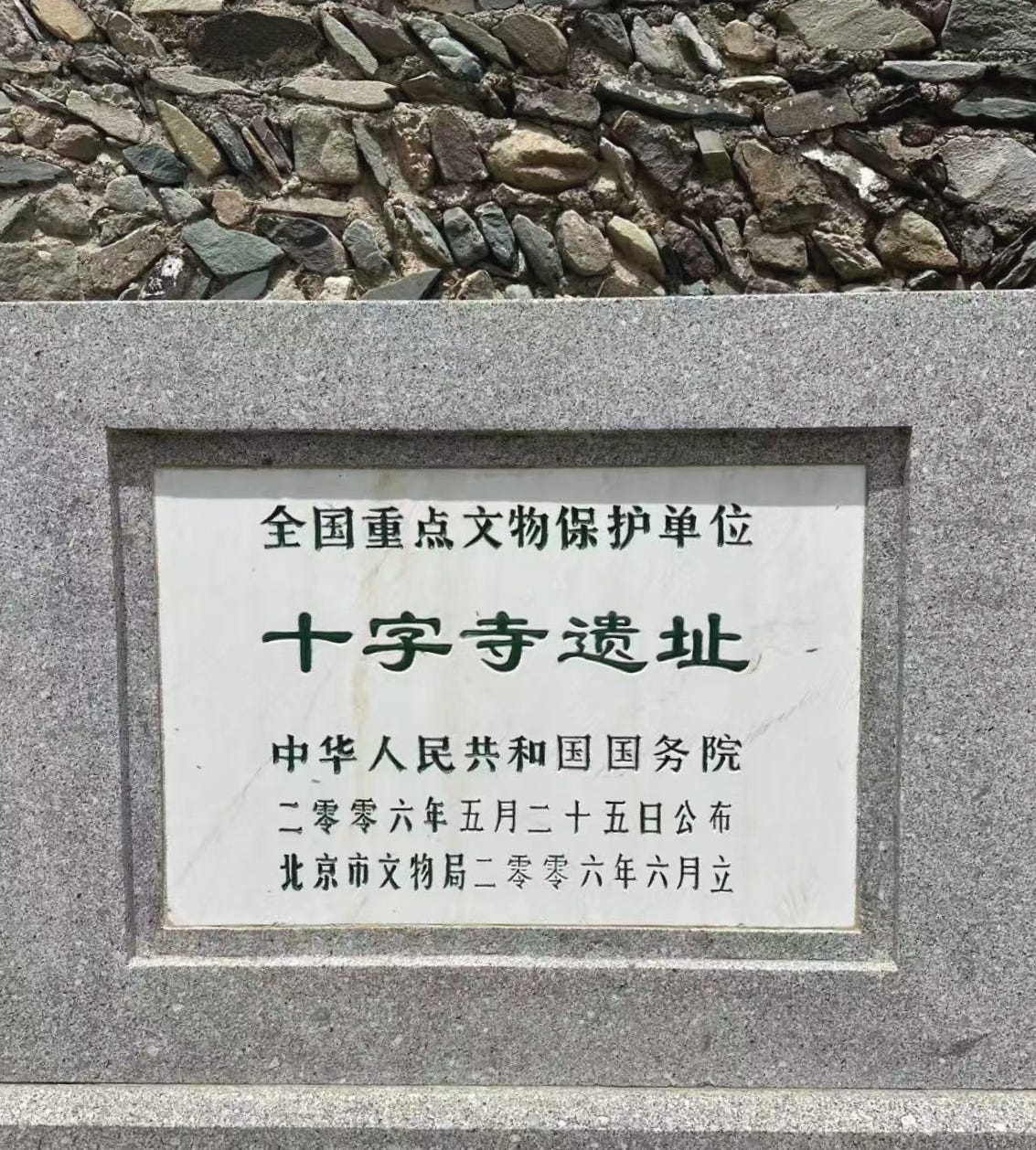
Located in the hills of Beijing’s Fangshan district, the ruins of the Cross Monastery (十字寺, Shizi Si) seem unremarkable at first glance—just two ancient ginkgo trees and two weathered stone steles standing quietly in the grass. Yet within this modest scene lies a story that bridges continents: the faint trace of Christianity’s earliest arrival in China, long before Jesuits ever set foot in the Ming court (16th century).
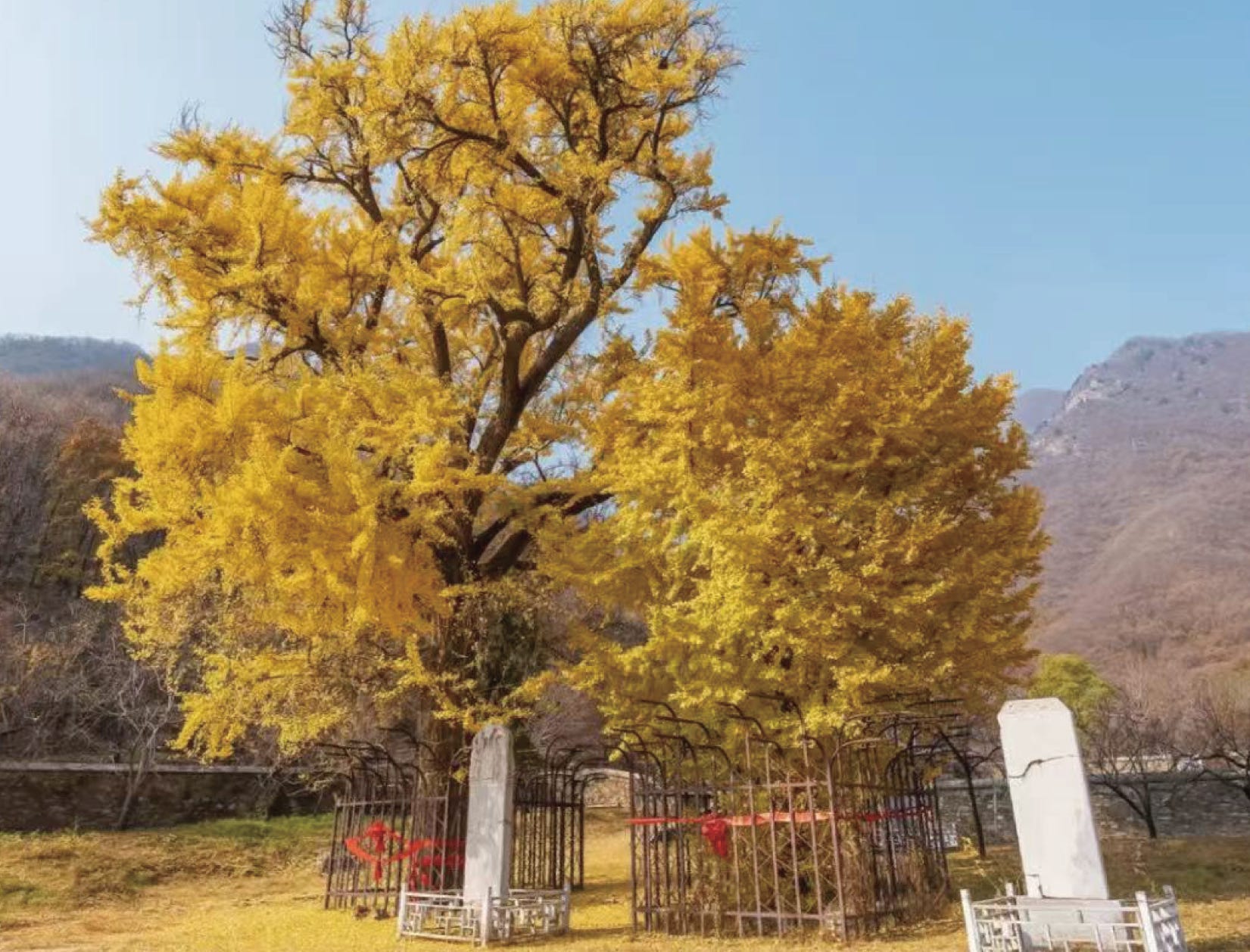
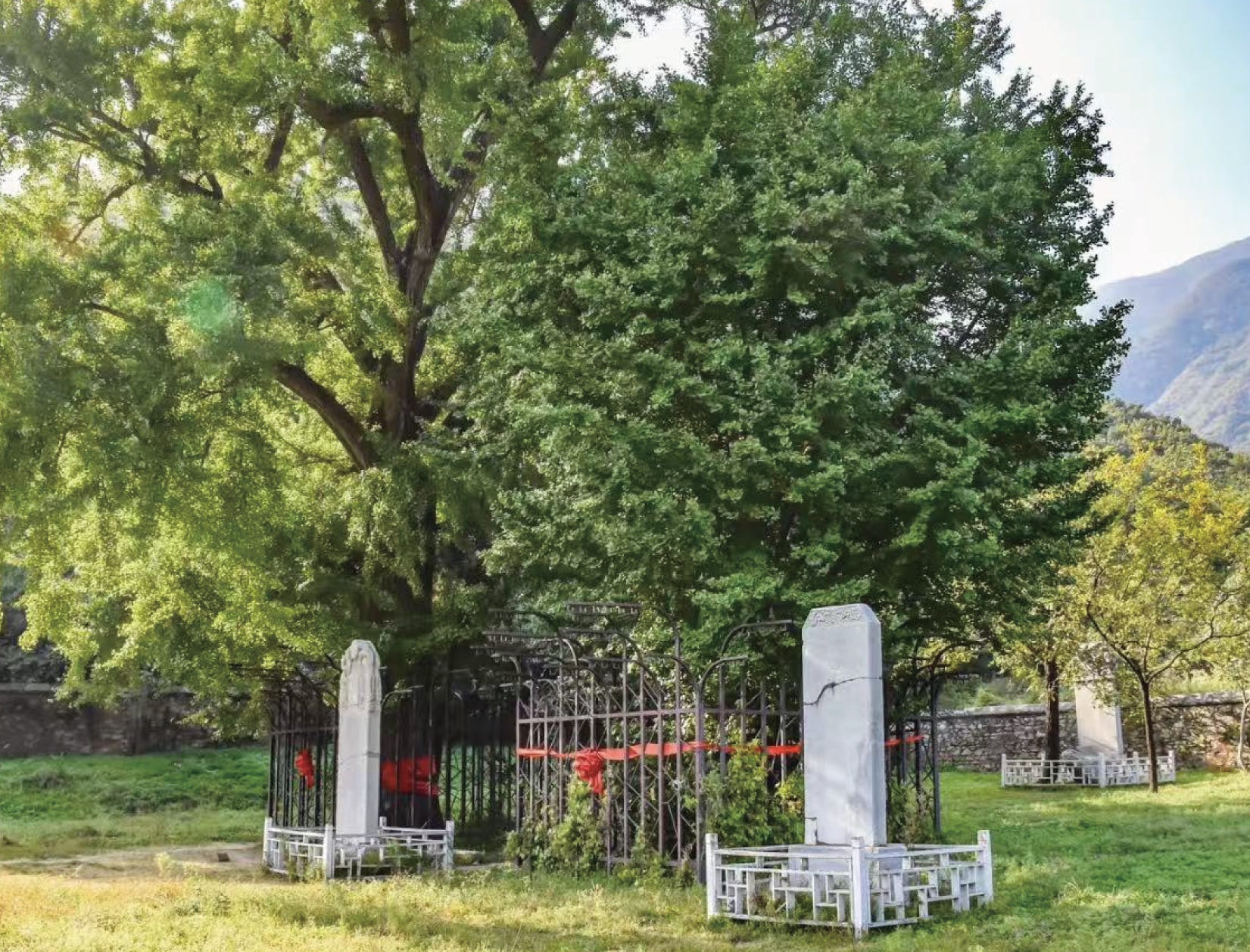
The two steles that remain today bear inscriptions from the Liao and Yuan dynasties. One, carved in the tenth year of the Liao Yongli era (960 CE), records the “Inscription of the Chongsheng Monastery on Sanpen Mountain.” (《三盆山崇圣院碑记》) The other, from the twenty-fifth year of the Yuan Zhizheng era (1365 CE), is titled “Imperial Stele of the Cross Monastery of the Great Yuan.” (《大元敕赐十字寺碑记》) Both were re-carved during the Ming Jiajing period (1522-1566). These stones, together with the enduring ginkgo trees, trace a long religious evolution: the site was first founded as a Buddhist temple by Master Huijing in the Eastern Jin dynasty (317–420); rebuilt under the Liao as Chongsheng Monastery; renamed during the Yuan dynasty , when Emperor Shundi granted it the title Cross Monastery and converted it into a Nestorian (景教, Jingjiao) church. In the Ming and Qing eras it returned to Buddhism, later fell into decline, and by the early twentieth century was largely forgotten.


In 1931, two carved stones bearing crosses and lotus motifs were unearthed here—artifacts that would reveal the site’s Christian past. Each cube-shaped stone carries a relief of a cross rising from clouds and lotus petals, surrounded by inscriptions in classical Syriac, the liturgical language of the Church of the East. The text reads:
Left: ḥūr lwteh — “Look unto it.”
Right: sbarū beh — “Place your hope in it.”

These short phrases come the Book of Psalms (Psalm 34:6a in the Peshitta version). Syriac, a branch of Aramaic once spoken in what is now southeastern Turkey, became the sacred tongue of the Nestorian church and spread across Central Asia through Persian and Mongol trade routes. The same verses have been found on Nestorian mirrors and tomb bricks discovered in Inner Mongolia and Chifeng—artifacts linked to the Öngüt (汪古部, Wanggu) tribe, a Mongol era tribe known for its Christian faith during the Yuan dynasty. This repetition suggests that the Fangshan inscriptions were not random choices, but part of a devotional formula—a short, universal prayer carried by believers across the steppe.
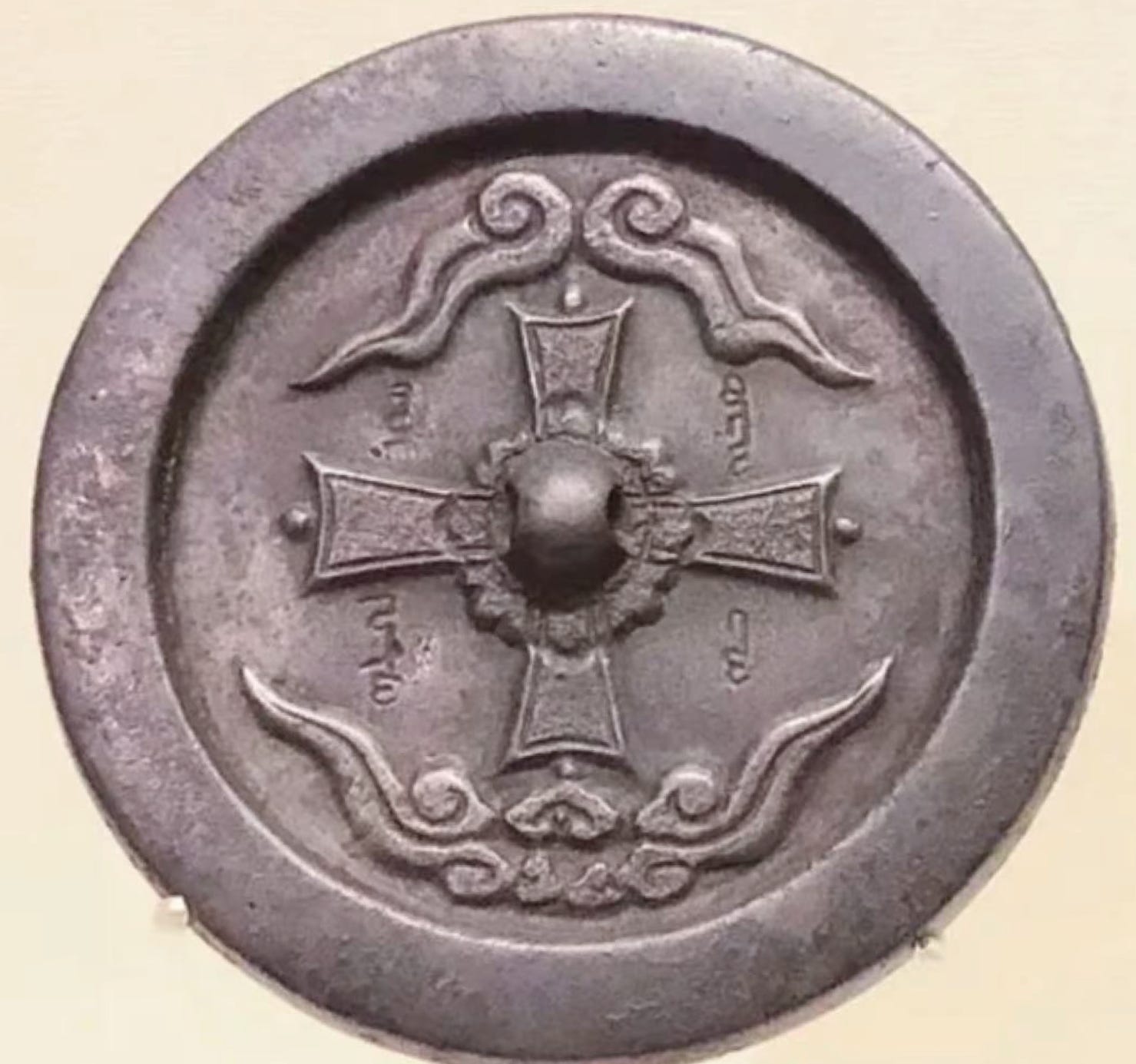
The Öngüt tribe, also known historically as the White Tatars, was a prominent and influential Turkic people who played a crucial role as allies and administrators for the Mongol Empire, particularly during the Yuan Dynasty. The Öngüts were among the most privileged and powerful non-Mongol groups. With the collapse of the Yuan Dynasty and the rise of the Ming in 1368, the Öngüt lost their privileged status. Over time, they were largely absorbed into the surrounding Mongol and Chinese populations.
If my insights brought you a fresh perspective, please consider supporting me by buying me a coffee. Your generosity fuels my writing.
Emperor Kangxi’s “Missing Person Notice”

Pope Francis, the first Jesuit pontiff in history, chose the papal name “Francis” not only to honor Saint Francis of Assisi but also as a subtle respect to Saint Francis Xavier (方济各·沙勿略), one of the founding members of the Society of Jesus (Jesuits). Saint Francis Xavier was among the earliest Catholic missionaries to East Asia and died in 1552 on Shang…
Ultimate Travel Guide to China

When I travel across China, I rarely follow lists of cafes or new landmarks. Instead, I follow the List of National Key Cultural Heritage Sites (全国重点文物保护单位). Over time, this list has become my atlas, guiding me to caves with fading pigments, brick walls that still hold the sound of old footsteps, and temples where history lingers in the shade. I keep ex…
In a novel by jiro isada called le Roman de la cité interdite in French, Soukyuu no Subaru (蒼穹の昴) in Japanese there is a long passage on the history of this place. Thanks for the post.
Fascinating!