

In the late sixteenth century, the Ming state made a seemingly tidy decision: it collapsed a messy mix of grain taxes, labor service, and local surcharges into a single payment, and fixed that payment in silver. This was the famous “Single Whip Reform” (一条鞭法). On the surface, it simplified everything. In practice, it did something more dangerous: it imposed a single silver standard on an internally diverse tax system, and pushed the resulting exchange-rate risk onto ordinary households.
Most people still lived in a world of grain, cloth, and copper cash. Their tax, however, was now written in taels (a unit of weight, 银两) of silver. To obey the law, they had to convert what they actually produced into what the state recognized. Whenever the relationship between grain and silver shifted, their real tax burden quietly rose, even though the official rate had not changed. The Single Whip did not just streamline taxation; it created a structural currency-mismatch between people’s incomes and their obligations.
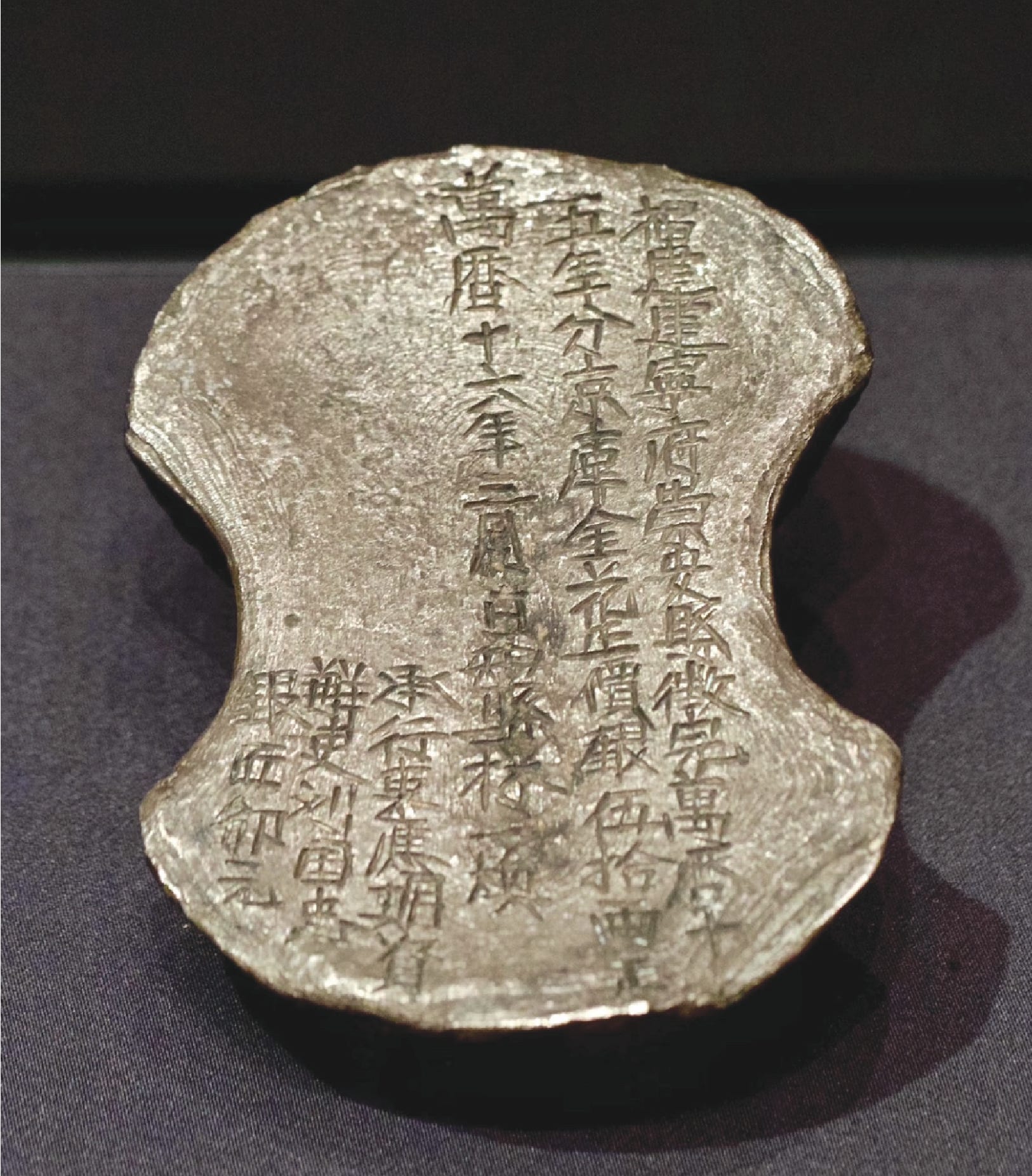
That mismatch only grew once China was pulled into a global silver circuit. Silver from Japan and the Americas flooded in to meet the empire’s fiscal demand, tying Ming finances to mines and trade routes far beyond its borders. When those flows later faltered, the silver price jumped, and the hidden exchange problem inside the tax system turned into open social and political crisis.
How a reform built around a single settlement medium: silver, reshaped who bore risk in the Ming economy, and how that pattern echoes in today’s dollar-centered world, where many countries also earn in one currency but must settle crucial obligations in another. The point is not that Ming silver and modern dollars are identical, but that the underlying tension, between a plural real economy and a single dominant unit of account, creates the same kind of pressure on those furthest from the monetary center.
Before the whip
Before Single Whip, Ming subjects owed the state an untidy mixture of things. Land tax was often paid in grain; head taxes and levies might come in kind or in copper cash; communities contributed labor for roads, transport, or military logistics. The exact mix differed from province to province. A family in Jiangnan might haul rice to a nearby granary; one in the north might be assigned days of labor or deliveries of fodder. The court set broad quotas, but how those obligations were converted into actual demands on households was negotiated locally.

From one angle, this patchwork was deeply unfair. It gave enormous room for the notorious “little extras” (耗羡、加派), small surcharges and informal exactions officials imposed on top of formal quotas. From another angle, it was oddly elastic. In bad harvests, obligations could be quietly adjusted in practice, even if the statute books did not change.
By the mid-Ming, this elasticity looked more like chaos. Population was growing, military costs were rising, and frontier defense was expensive. The court needed stable, predictable cash. Reformers like Zhang Juzheng (张居正) wanted fewer categories, clear numbers, and better enforcement. A system that had grown organically over two centuries now looked like a liability.
Turning everything into silver
Single Whip crystallized that frustration into a simple formula: one household, one assessed burden, one monetary tax. Corvée labor would be commuted into money. In-kind obligations would be priced and folded into the same sum. The tax register would show a clean silver figure rather than a jumble of grain, days and cloth.
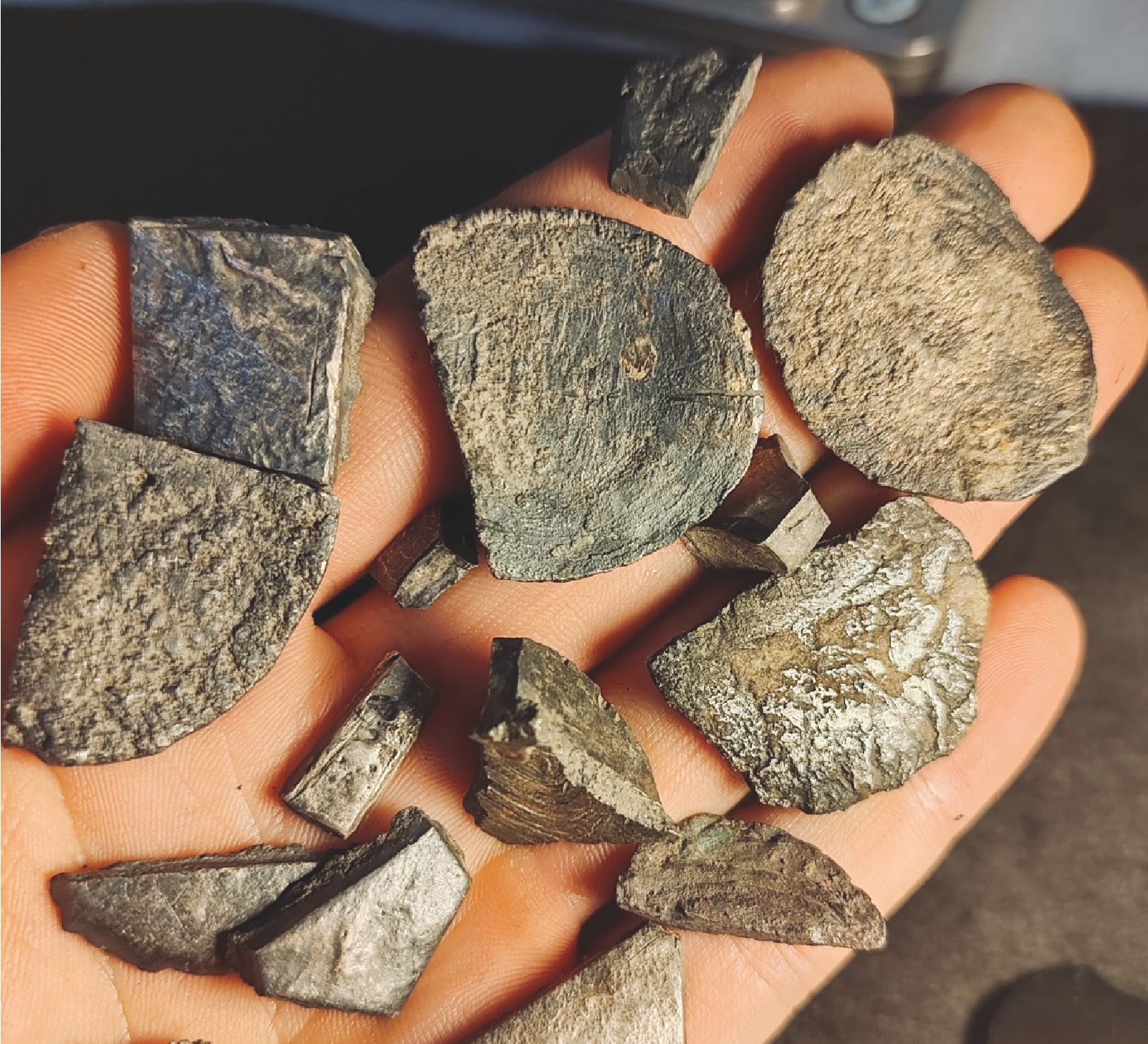
Formally, this was a rationalization, not an increase. At least on paper, the goal was to convert existing obligations into a transparent monetary equivalent, not to suddenly double the burden. Silver seemed ideal: it was dense in value, easier to move than sacks of rice, and already widely used in commercial regions. Officials could now reckon revenue in a single unit instead of juggling dozens of local categories.
In coastal and riverine regions like the lower Yangtze, this was almost a formal recognition of reality. Merchants, landlords, and wealthier peasants already settled large transactions in silver. Market towns had moneychangers. A tax bill written in silver might even feel more predictable than an official appearing to demand labor at arbitrary times.
But for many smallholders, especially in the interior and on the northern frontiers, the empire did not suddenly turn into a silver economy just because Beijing decided to count that way. Their lives still ran on grain, firewood, livestock and occasional copper cash. They did not mine silver; they had to buy it.
That meant every tax season began with a conversion problem. A family sold part of its harvest, or some timber or cloth, accepted whatever price the local market offered, and used the proceeds to purchase the silver needed to settle accounts with the state. The tax rate printed in the register was only half the story. The other half lived in the shifting exchange rate between what they had and what the tax system demanded.
China as a silver magnet
Once the state fixed taxes in silver, it created something new: a vast, reliable demand for that metal. That demand did not stop at the empire’s borders. It rippled out along trade routes, tugging silver towards China.
Sixteenth-century global history can be written as a story of silver moving east. Japanese mines produced large quantities of bullion; much of it ended up in China, routed through Portuguese and other intermediaries in exchange for silk and luxury goods. On the other side of the world, Spanish fleets shipped silver extracted under brutal conditions at Potosí and other American mines across the Atlantic, then on to Asia. From Acapulco, galleons sailed to Manila; from Manila, silver went into Chinese hands in return for porcelain, textiles, and tea.
The pattern was simple: silver could buy more in China than in Europe or the Americas. Traders who moved it there captured that difference. The Single Whip Reform did not single-handedly create this global circuit, but by making silver the backbone of state finance, it amplified China’s role as what one historian has called a “sink” or “magnet” for silver. The empire’s fiscal machinery became a powerful pump, drawing in silver to feed its tax obligations.
From a distance, this looked like success. The court wanted its revenue in silver; the world’s mines and merchants supplied it. Tax receipts could be counted in neat columns of taels rather than scattered across granaries and labor rosters. For a few decades, the system delivered what reformers had promised: clearer accounts, stronger control from the center, fewer excuses for local manipulation.
The grain world meets the silver world
Seen from the village, however, Single Whip re-wrote the relationship between subsistence and the state.
A farmer’s world was measured in mu (a unit of area, 亩) of land, in harvest yields, in how many mouths that year’s crop could feed. The tax demand, increasingly, was measured in fractions of a silver tael. Closing the gap between those two worlds required intermediaries: merchants who bought grain for cash, moneychangers who traded copper for silver, local brokers who smoothed the process and took their share.
This is where the slogan “rice cheap, silver dear” mattered. When harvests were good and grain prices fell, while silver held its value or rose, the same nominal tax in silver cost more in terms of grain. Even if the state did not change the numbers on the register, the real burden shifted with the metal’s relative price. That shift was not evenly distributed. Regions tied into export trade and commercial networks had easier access to silver and more favourable terms; regions far from those circuits struggled.
In effect, Single Whip centralized the unit of account but decentralized and privatized the risk. The state no longer had to worry about storing grain or organizing labor on the same scale. Instead, it let taxpayers and local markets absorb the volatility of silver.
When the flow falters
As long as silver flowed steadily into China, the system, with all its inequities, remained workable. The fragility only became clear in the early seventeenth century, when the global supply lines began to wobble.
In the 1630s, Japan tightened its controls on foreign trade. Spanish shipments of American silver across the Pacific also declined. At roughly the same time, the Ming court altered its copper coinage in ways that made silver even more expensive relative to small change. All of this pushed the internal price of silver up. The metal the tax system was built on suddenly became harder to obtain.
The consequences were immediate and uneven. In wealthy commercial regions, people still grumbled, but markets were deep enough to cushion the shock. In the northern and northwestern frontier provinces, where access to silver had always been thin, the situation became acute. Tax arrears rose. Local governments could no longer pay soldiers reliably. Disbanded troops and desperate peasants drifted into banditry and rebellion. The fiscal language of the state: numbers written in silver, no longer matched the realities of local economies.
The court’s response only underlined the problem. To make up for shortfalls, it sent commissioners to prosperous cities such as Suzhou to extract fresh revenue, famously imposing taxes on silk looms. Urban artisans and merchants, already feeling squeezed, rioted. At both ends of the empire, the same underlying issue surfaced in different forms: a fiscal system tied to a metal it did not mint and a geography it could not fully coordinate.
Single Whip did not “cause” the fall of the Ming in any simple way. Climate shocks, wars, factional politics, and long-term structural shifts all played their part. But the decision to base taxation so firmly on silver meant that every disturbance in the global monetary environment arrived in China as a disturbance in the tax system itself. The reform that had once promised clarity had turned into a funnel for external volatility.
The habit survives the dynasty
When the Qing conquered China, they did not rip up this system and start from zero. They kept much of the late Ming tax architecture, including the centrality of silver for formal accounts and land tax payments. The new rulers lightened some burdens and redistributed some land, especially in the early decades, but the habit of thinking in silver at the top while many subjects lived in a mixed copper-and-grain world persisted well into the nineteenth century.
Modern historians have argued about how decisive imported silver really was, and whether older accounts overstated China’s dependence on foreign silver. Those debates matter for specialists. For our purposes, the core pattern is what stands out. A state chose to simplify its fiscal life by fixing obligations in a single, standardized medium. In doing so, it shifted the hard work of conversion, which of turning local livelihoods into that medium, onto those who had the least control over the larger system.
That is also the bridge to the twenty-first century.
From silver to dollars
The US dollar’s rise after 1945 emerged from a very different context: world wars, the Bretton Woods institutions, American industrial and military primacy. Yet the end result was a familiar structure. Trade in oil and many key commodities is priced in dollars. Global reserves are held largely in dollars. International loans and debt obligations are often denominated in dollars, even when the borrower earns in a completely different currency.
No modern government is legally obliged by Washington to adopt Single Whip-style rules. But in practice, many find themselves in a position faintly reminiscent of those Ming taxpayers. Their revenues and economic life are denominated in local currencies; their crucial external obligations are denominated in something else. The gap between the two is bridged by markets, intermediaries, and exchange rates, all of which can move sharply without their consent.
This is why the slow erosion of dollar hegemony feels like a kind of reverse Single Whip. In the late Ming, a vast, diverse domestic economy was pushed toward a single fiscal medium, and through that, bound into a global silver regime. In our own time, a global system that has long been funneled through one primary currency is, very slowly and unevenly, drifting toward a more plural set of arrangements: more trade invoiced in other currencies, more regional payment systems, more experiments with bilateral settlement that cut out the dollar leg of every transaction.
The analogy has limits. The Ming court commanded subjects; the dollar order is sustained by a mix of contracts, markets, and state power rather than a single imperial edict. Silver was a physical metal, moved by ships and caravans; dollars are mostly digital entries in a banking system. But the rhyme is real enough to be useful.
In both cases, those who live furthest from the center of monetary power are the ones who feel the conversion costs most acutely. For Ming peasants, that cost was measured in extra sacks of grain sold at bad prices to get a few shards of silver. For many modern societies, it shows up in balance-of-payments crises, currency crashes, and sudden waves of austerity driven not by a lack of real resources, but by a lack of the right unit of account.
If the world is indeed moving away from a dollar-only settlement regime, the question is not just which currency, if any, might replace it. The more interesting question is the one Ming China forces us to ask: who will bear the risks of conversion in whatever system comes next, and how visible will those risks be?
This article is inspired by The Silver Stack and the Mixed Standard by Chor Pharn, which examines what China’s layered monetary past reveals about the future world. Highly recommended.


You touch on a key issue today --the weakening dominion of the dollar -- and pose the question of who pays the transaction costs in a financial system. I think these issues are going to be more closely watched in the near future as we continue to move away from the Bretton Woods economic order. The Ming example of silver as the single currency is instructive. Thanks for describing and explaining it.
Wow. This is brilliant. My wife (Chinese) teaches history (Ming, Qing) at a national university in Wuhan. I'm going to forward it to her and her grad students. It's such a timely well considered piece. Thanks much.