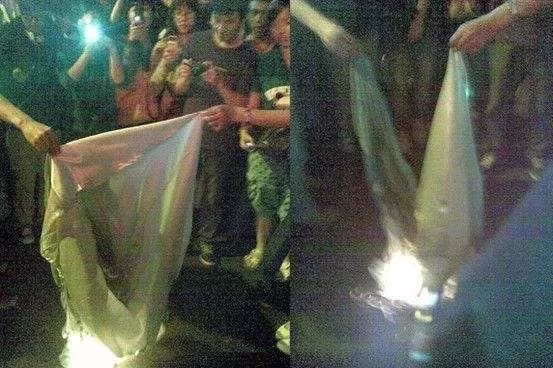
A young woman was surrounded by a crowd and made to take off her clothes in the street. It was Chengdu, the autumn of 2010. The crowd, returning from an anti-Japanese demonstration, had decided her long wrapped robe was a kimono. They pressured her until she stripped it off, carried it into the street, and burned it.
Sixteen years later, the same garment sits at the center of a very different quarrel. Scholars now argue over whether it has become a vehicle for Han chauvinism, a banner of ethnic supremacy. The charge has flipped completely. In 2010 the robe was punished for being too foreign. By 2026 it is attacked for being too native. Nothing about the cloth changed in those sixteen years.
This is the contradictory life of hanfu, the dress of the Han Chinese. To see how one garment can be charged with two opposite crimes, it helps to set the politics aside and ask a simpler question: what did this garment actually look like, before anyone fought about it?
What a person wore
For most of Chinese history, the ordinary person was named after their clothing. The word was bùyī , 布衣, “cloth-clothes”. It simply meant a commoner: someone of no rank, because people of no rank wore cloth. Not silk, not brocade, but plain woven fiber in the colors that fiber happens to be when you weave it and do nothing further: the oat and beige and grey-brown of unbleached thread. When the great strategist Zhuge Liang 诸葛亮 wanted to say he had begun life as a nobody, he wrote your servant was originally cloth-clothes 臣本布衣. The garment was the rank. To name what a person wore was to name what they were.
The truest, commonest, most statistically representative Han dress was plain. Splendor existed. But it was rare and was rationed by law. A bright robe in old China was not a fashion choice. It was closer to a rank permission.
Color was legislation before it was taste. Commoners were periodically forbidden “mixed colors” outright 散民不敢服杂彩; the founding emperor of the Ming banned ordinary people from wearing yellow, and certain reds and deep blue-blacks went too, in case that a farmer be mistaken on the road for an official. Saturated dye, gold thread, woven pattern, these were parceled out from the throne downward like ranks in a hierarchy.
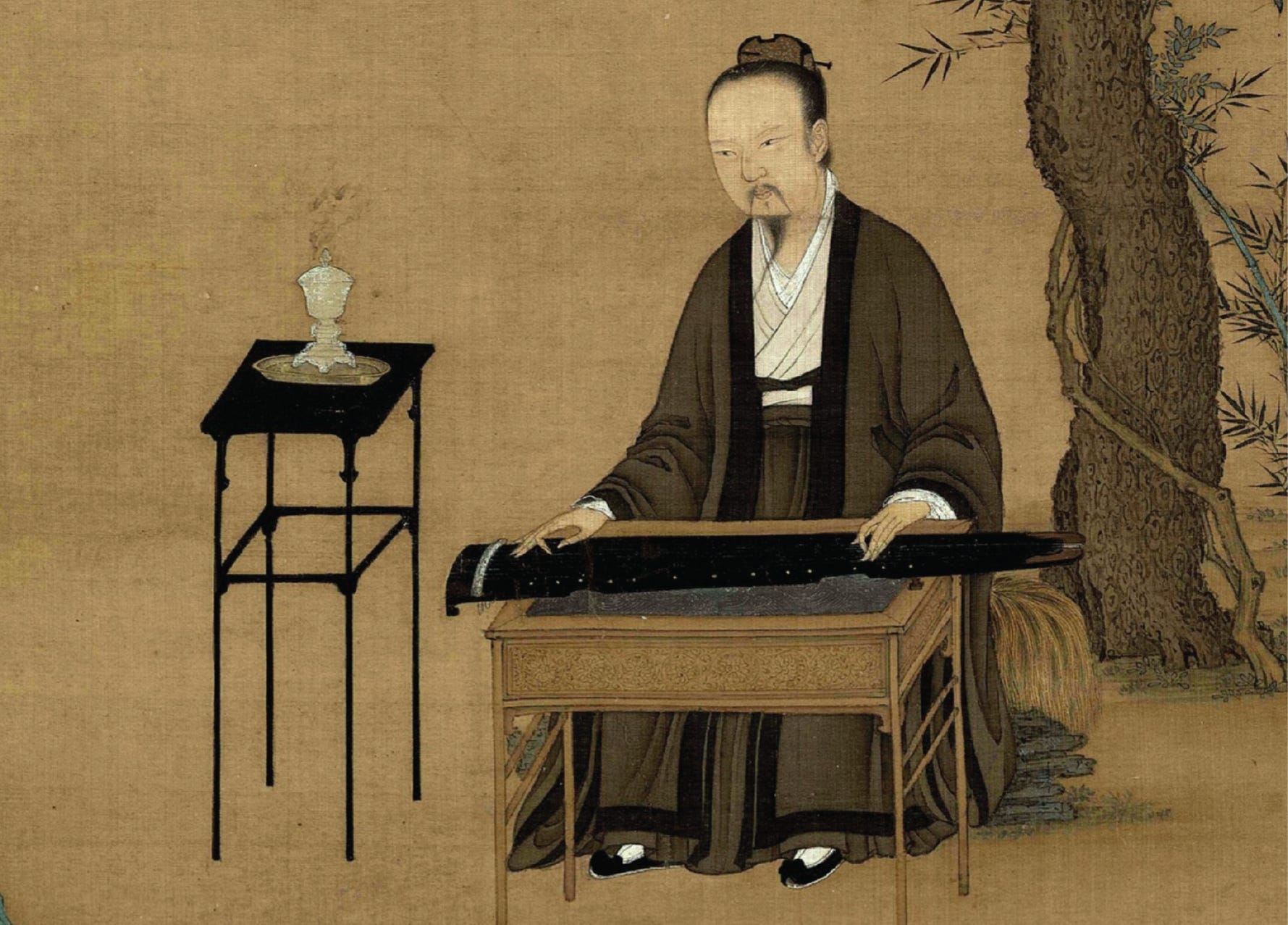
Even the shapes had a sober logic. Take the qūjū 曲裾, the early robe whose hem wraps in a long diagonal around the body before fastening at the back, the very silhouette revival shops now sell as the essence of flowing romance. That wrap was not, in the first place, about looking ethereal. Early lower garments were open-sided wraps worn without sewn trousers beneath, and the winding layer of cloth was what kept the body decently closed when its wearer sat or moved. Form followed the requirements of living: to hold warmth, to stay shut, to be worked and slept in. The clothing was an answer to a problem before it was an answer to a camera.

The mirror across the sea
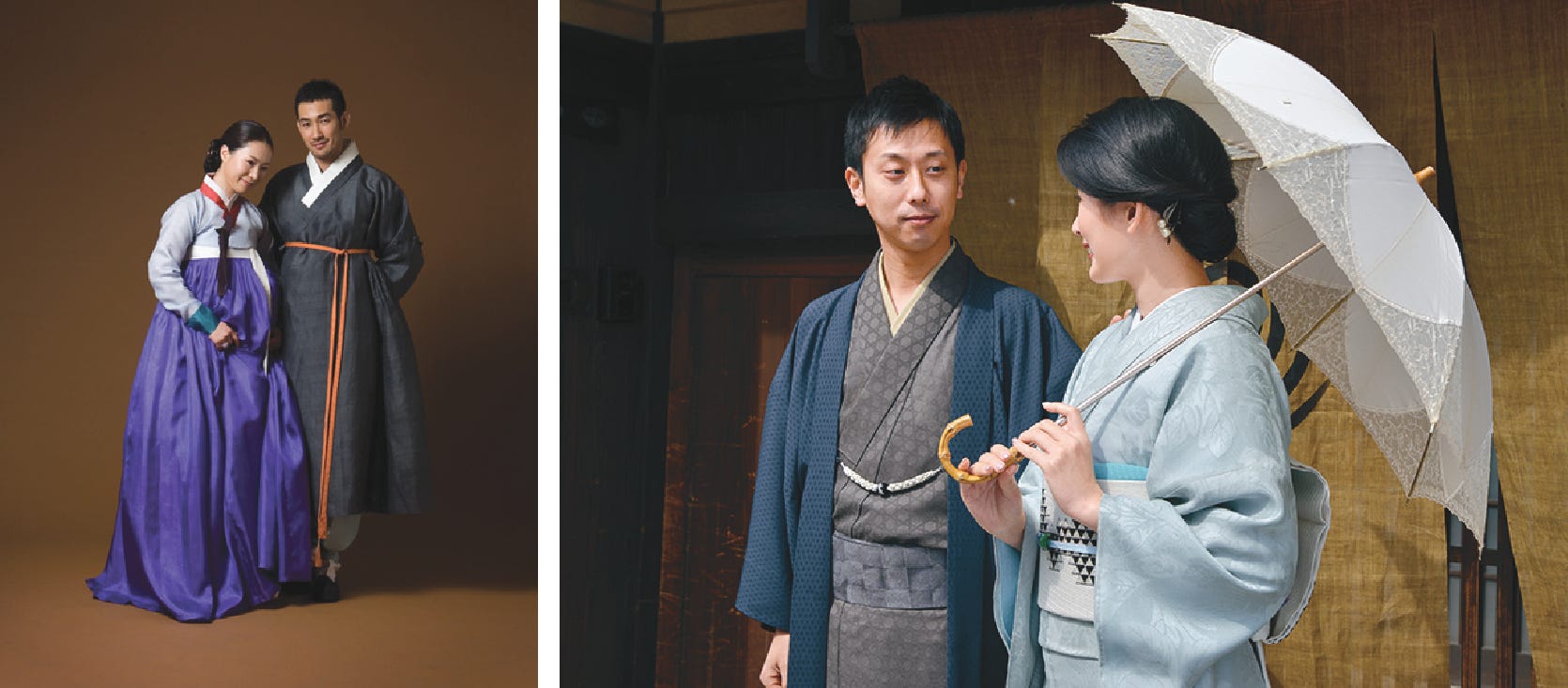
This system of dress, the crossed collar closing left over right, the sashes, the flat-cut robe, was not only China’s. For centuries it was East Asia’s. When Japan rebuilt its court and culture in the seventh and eighth centuries, it imported the Tang dynasty’s institutions wholesale, and the dress came with them; the early Japanese court robe was, in its bones, a Tang robe. The word the Japanese still use for kimono fabric, gofuku, 呉服, “the clothing of Wu.” It preserves the memory in plain sight: Wu was a region of southern China, and the name records where the cloth and the technique came from. Korea’s hanbok 韓服 grew from the same root. The crossed collar that a Chengdu mob took for a foreign insult was, historically, the shared grammar of the entire region.
But here the three countries walked down very different roads, and the difference is the whole point.
Japan kept its version, unbroken. The kimono evolved continuously across the Kamakura, Muromachi, and Edo periods into something wholly its own, straight-cut where the Chinese robe curved, its sash swelling into the great architectural obi, its sleeves sewn closed. It was never severed from its wearers. When Japan met Western dress in the Meiji era, it fixed this living garment into a standardized national costume, the visible sign of being Japanese in a world of suits. Korea did something similar, carrying the hanbok forward as national and ceremonial dress, worn at festivals and weddings.
China’s path had a break in it. In 1644 the Qing came down from the northeast and took the empire, and in 1645 the new dynasty ordered Han men to shave the forehead, wear the queue, and adopt Manchu dress, 剃发易服, “shave the hair, change the clothing,” enforced, in places, by execution. The slogan that survives from those years is blunt: keep your hair and lose your head, or keep your head and lose your hair 留发不留头,留头不留发. Over the following decades the older Han silhouette receded from public life, surviving mainly in the corners the new order left alone, on women, on Daoist priests, on actors in costume on the opera stage (优伶不从), and on the bodies of the dead (死不从), who could still be buried in Ming clothing. The everyday dress of the living became, increasingly, Manchu-derived.
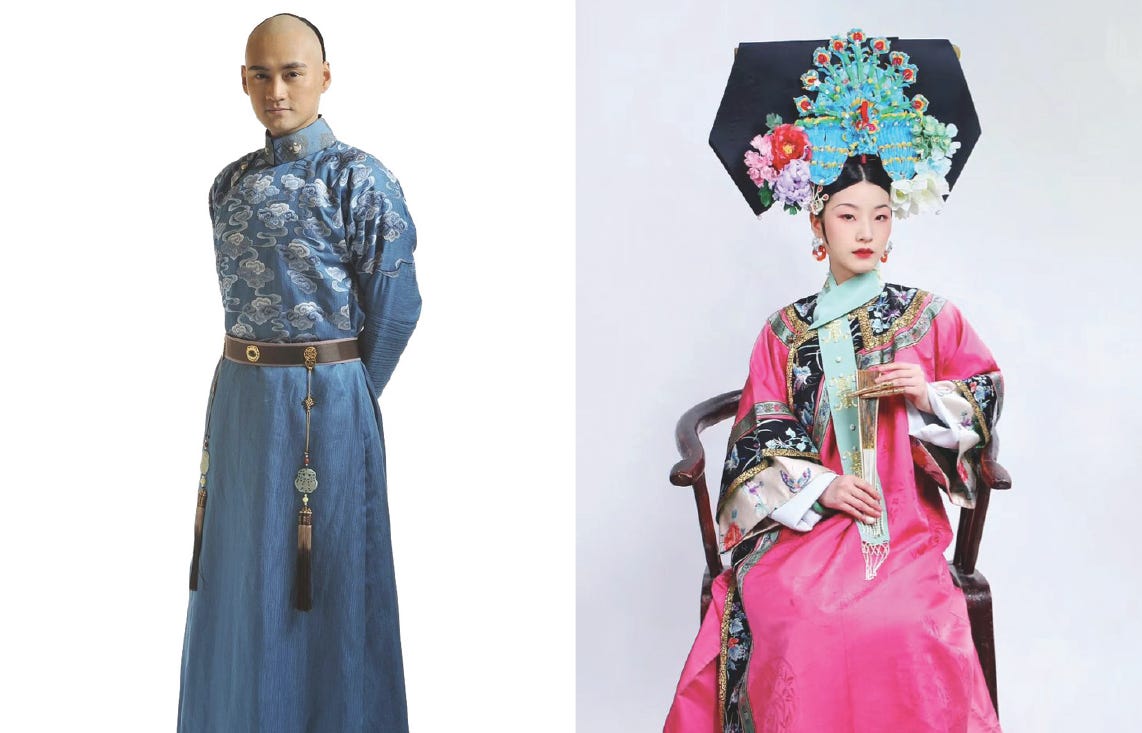
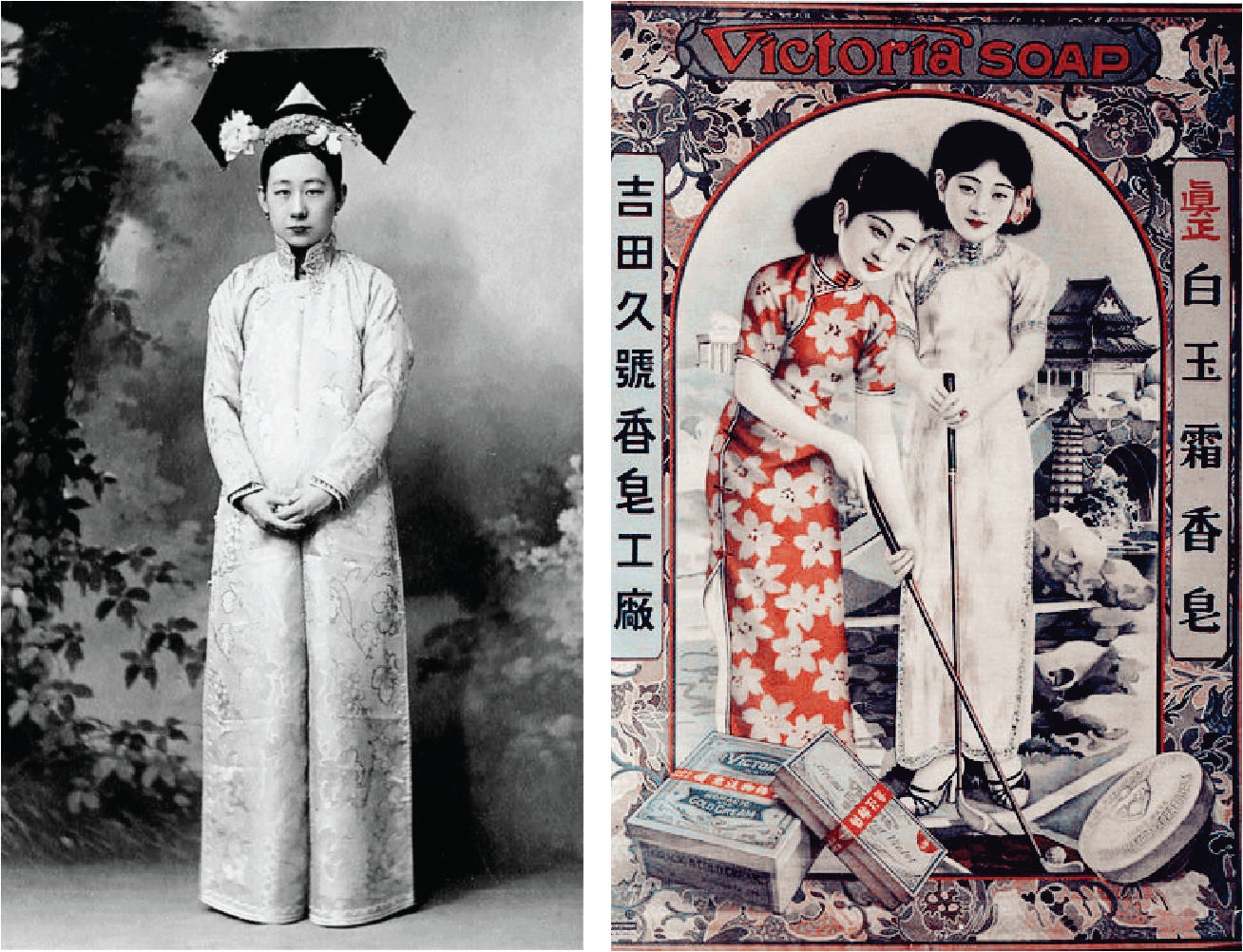
The Qing was sometimes considered as a foreign occupation that sat on top of a “real” China; but it was one of the dynasties that made China, that assembled the multiethnic, continental empire whose map the modern nation inherited, whose emperors were Confucian sovereigns and patrons of Chinese letters. Manchu dress is not alien to Chinese history. The qipao (旗袍, “banner robe”) that the world now reads as the very essence of Chinese elegance is itself Manchu in origin, and it began as practical clothing: narrow sleeves cut for drawing a bow, side-slits for mounting a horse, a waist-sash to stow rations on the hunt. Its body-hugging glamour came later, in 1930s Shanghai. The point is not that one layer is true China and the other false. The point is only that the thread of Han dress, specifically, was cut. And that a cut thread is something a later generation can decide to pick back up.
How a layer became a wound
What turned that cut thread into a grievance was not the Qing conquest itself but what came after it.
The Qing happened to be the dynasty on watch when the catastrophe arrived: the Opium Wars, the unequal treaties, the lost wars, the foreign concessions, the stretch that Chinese historiography would come to call the “century of humiliation.” The last imperial dynasty was the one that presided over the collapse, and so its visual signature became fused, in retrospect, with national defeat. The queue and the robe stopped being merely the dress of the era and became the uniform of the humiliated era.
Then two things hardened that fusion. The first came from inside China. The revolutionaries who set out to topple the Qing around 1911 needed a clear enemy, and they made one out of ethnicity. Sun Yat-sen’s program opened with the slogan expel the Tartar barbarians, restore China (驱除鞑虏,恢复中华); the firebrand Zou Rong 鄒容 wrote of washing away “two hundred and sixty years of cruel humiliation” to make the country “a clean land”; the scholar Zhang Taiyan 章太炎 filled pages arguing that the Manchu were not Chinese at all. The idea of the Manchu as alien occupier was, in large part, a deliberate revolutionary construction, a tool forged for a purpose. (Most of these men knew it was a tool: Sun later clarified that “expelling the Manchu” meant the Manchu government, not ordinary Manchu people, and within a decade “expel the Tartars” had given way to the official creed of “a republic of five peoples.” 五族共和)
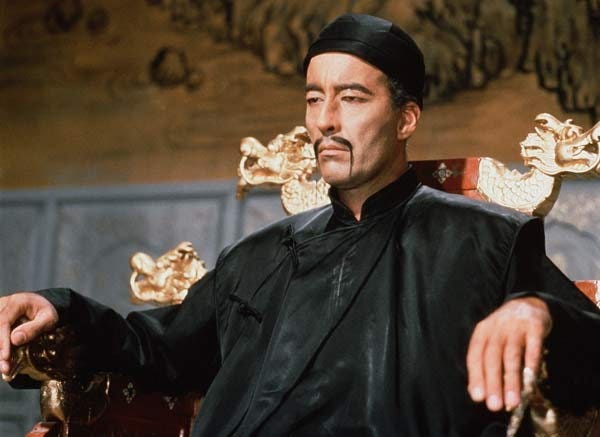
The second came from outside. As the Qing fell, the West was busy turning the very same signature, the queue, the long robe, the slippered villainy, into a monster. Sax Rohmer invented Dr. Fu Manchu 傅满洲 in 1913, mustache and trailing sleeves and all, having never met a Chinese person; the character became the face of the “yellow peril,” the cunning oriental bent on swallowing the world. In the immigration ports, it was the Chinese laborer’s queue and robe that marked him as sinister and unassimilable. The image of “Chineseness” that the West caricatured was, precisely, the Qing image, frozen and made grotesque at the very moment the dynasty was dying.