

In 2023, one of China’s most expensive blockbusters opened with a problem its Ming-dynasty source material never had: audiences didn’t hate Daji 妲己.
Creation of the Gods (封神) had spent lavish sums recreating the fall of the Shang Dynasty, the same story Chinese schoolchildren have known for centuries. The story where a nine-tailed fox spirit (huli jing 狐狸精) possesses a beautiful concubine, uses her body to seduce an emperor, and drives an entire civilization to ruin. The villain’s role was written into the cultural DNA. But something had shifted. Viewers were left with King Zhou’s gaslighting, his paranoia, his pre-existing cruelty. Daji, feral and amoral, became oddly sympathetic, less a seductress than a mirror held up to a monster who was already there.
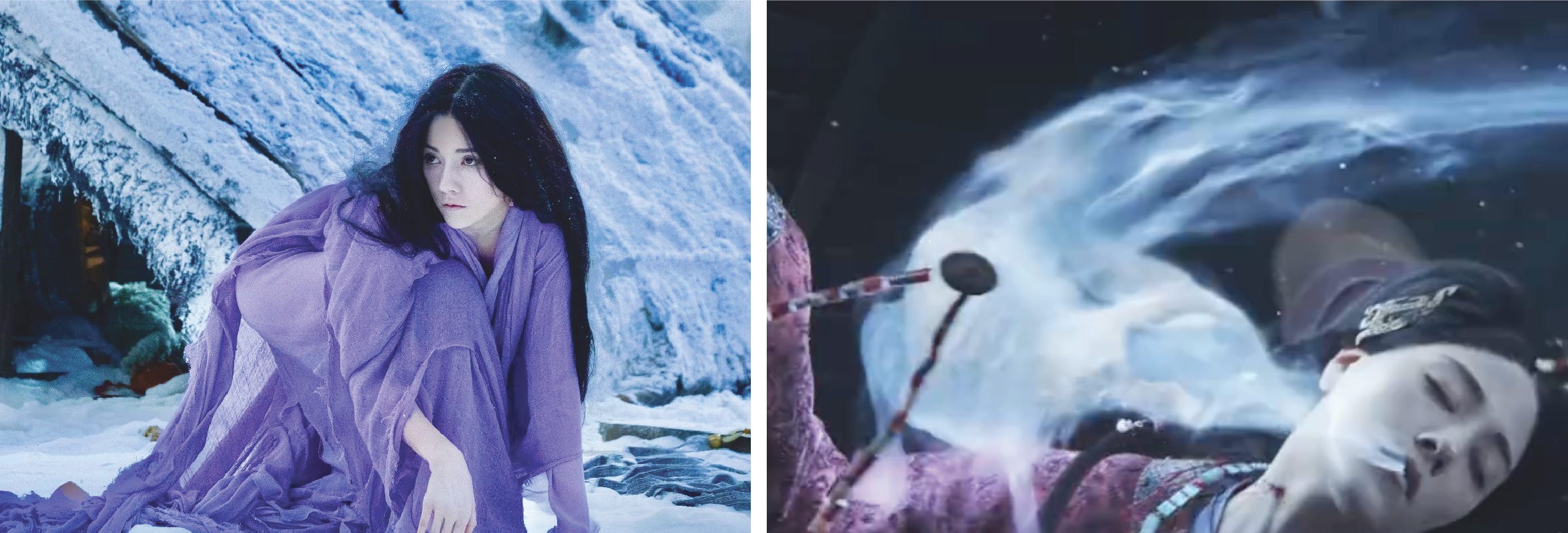
The reaction was not unanimous, and it should not be overstated. Film critics noted that Daji remains a largely passive figure even in this revisionist telling. But the direction of the conversation was notable: the instinct to locate evil in the female body was, for a significant portion of the audience, no longer automatic.
The Auspicious Fox
The oldest written record of the nine-tailed fox appears in the Classic of Mountains and Seas (山海经, compiled roughly 4th–2nd centuries BCE), where it is described as an auspicious creature, an omen of peace and abundance. The mythological founder-king Yu the Great 大禹 encounters a white nine-tailed fox at Tushan 涂山 and reads it as a divine sign, not a threat, but a mandate. During the Han Dynasty, foxes appeared in stone tomb carvings alongside the Queen Mother of the West (西王母, Xiwangmu), one of the most powerful female deities in the Chinese pantheon.
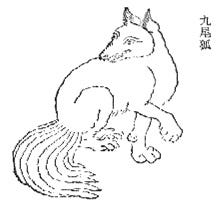
This early fox was not sexless, but neither was its sexuality threatening. It was associated with cosmic balance, with the productive tension between yin and yang. The Laozi and the Yijing contain the seeds of a gendered cosmology, but that cosmology had not yet calcified into the rigid prescriptions that would come later.
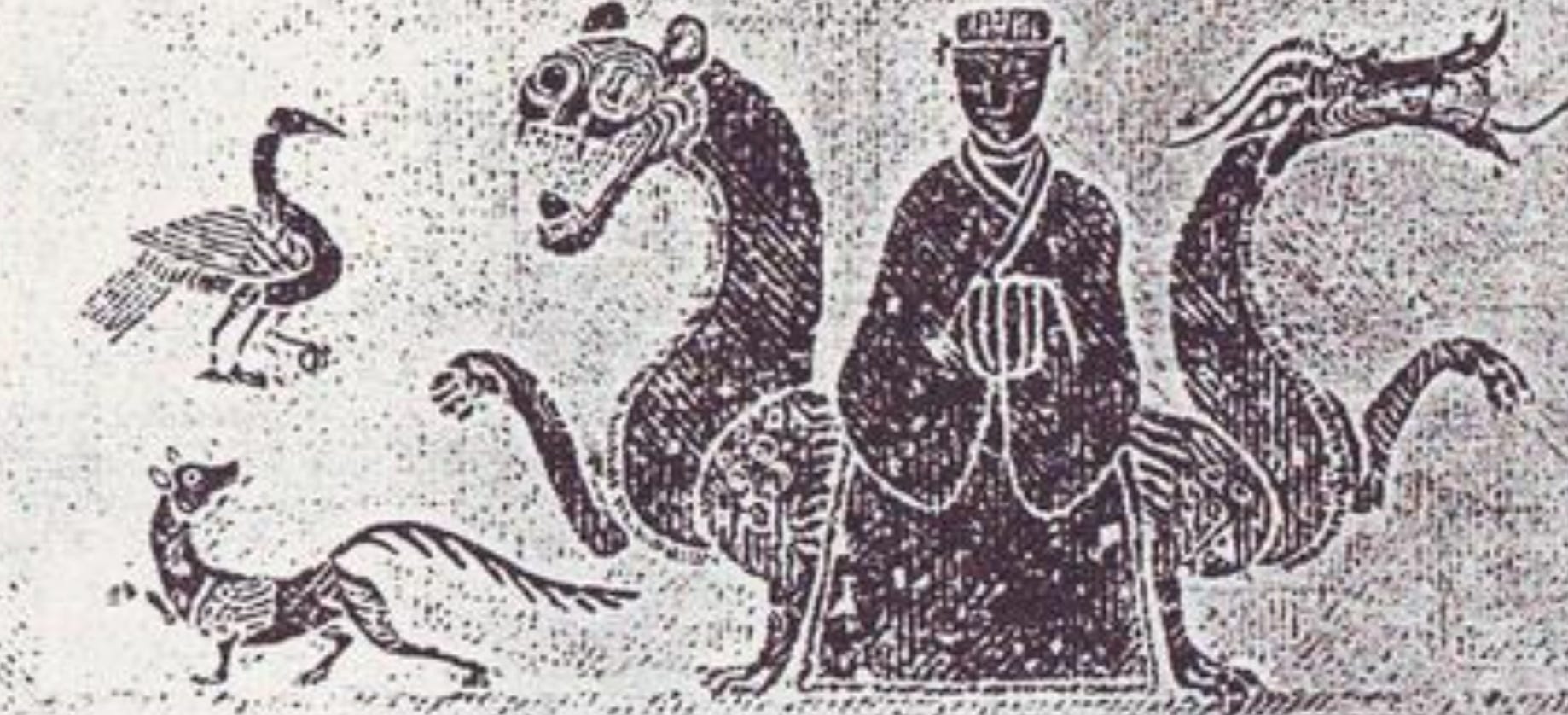
In the Tang Dynasty, fox spirits in literature were morally ambiguous, sometimes malevolent, often merely mischievous, occasionally even helpful. The Tang Extensive Records of the Taiping Era (太平广记) contains hundreds of fox tales, and their moral valence shifts story by story. The fox was supernatural, liminal, unpredictable. It was not yet the huli jing 狐狸精, the specifically female, specifically sexual, specifically dangerous creature it would later become.
The Machinery of Transformation
The standard account, repeated in popular feminist discourse, goes roughly like this: the Song Dynasty produced Neo-Confucianism, Neo-Confucianism oppressed women, and everything that followed was downstream of that ideological catastrophe. This account is not wrong, exactly, but it is too clean.
What happened during and after the Song Dynasty was a convergence of multiple pressures that found ideological expression in Neo-Confucianism, rather than being simply caused by it.
The Song state faced recurrent military humiliation from northern nomadic powers, first the Liao, then the Jin, ultimately the Mongols. This created a profound anxiety about social order, about the integrity of Chinese civilization. The Cheng-Zhu school of Neo-Confucianism (程朱理学) responded to this anxiety by seeking to locate moral authority in fixed, hierarchical relationships, sovereign over minister, father over son, husband over wife. The philosopher Cheng Yi’s famous declaration, “To starve to death is a small matter, but to lose one’s chastity is a great matter, 饿死事小失节事大” was originally framed as a statement about cosmic moral seriousness, applicable in principle to both sexes. But applied through the prism of a patriarchal bureaucratic state, it functioned very differently in practice.
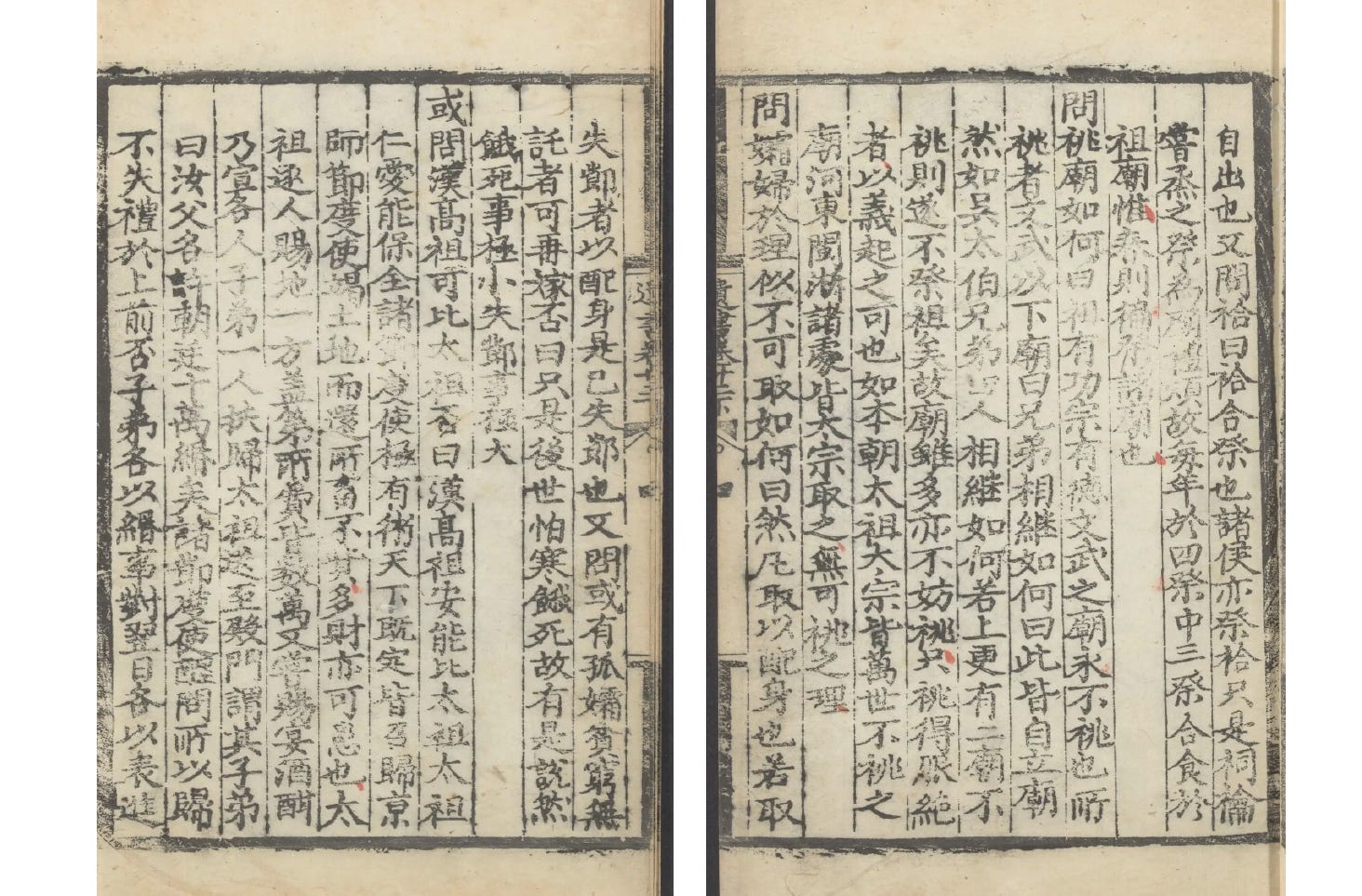
Simultaneously, the Song economic expansion and the maturation of the civil examination (科举, keju) system created intense pressure on elite family strategies. Controlling female sexuality was not purely ideological; it was bound up with inheritance, lineage legitimacy, and the management of property across generations. Neo-Confucianism provided the moral language for practices that had structural economic motivations. The ideology and the material interest reinforced each other.
It is in this context that the fox spirit begins its decisive transformation in Chinese literature. As female sexuality became more heavily regulated in practice, the literary imagination correspondingly produced a fox that embodied transgressive female desire in increasingly threatening forms. She acquired the specific mechanism of draining male yang vitality to nourish her own yin. She became associated not with cosmic abundance but with depletion, corruption, disorder.
Tang fox tales are aesthetically varied and morally plural. Song and Yuan fox tales begin to consolidate around a narrower set of types. By the Ming Dynasty, when Investiture of the Gods (封神演义, the source book of ‘Creation of the Gods’) was written, the nine-tailed fox had been fully weaponized as a narrative technology for explaining dynastic failure in terms that exempted male actors from responsibility.
The Architecture of the Scapegoat
The mythology surrounding Daji is a remarkably efficient piece of ideological work.
The historical Daji is essentially unknown. She appears briefly in Zhou Dynasty texts as a concubine of the last Shang king, associated with his cruelty. The fox possession is a later addition. By the time the Ming novel fully elaborated her story, she had become the load-bearing figure for an entire dynasty’s collapse, the beautiful vessel through which supernatural evil entered the human world and corrupted what would otherwise have been a competent ruler.
It displaces agency from a male actor to a female body, and then attributes that female body’s power to supernatural rather than human sources. King Zhou is not weak-willed; he is bewitched. Daji is not a person with intelligible motivations; she is a conduit for a fox demon. The human and political causes of dynastic decline dissolve behind the more satisfying figure of the seductress.
The historian and cultural critic Dai Jinhua (戴锦华) has spent decades analyzing how Chinese culture has used the female body as “a blank screen for male projection.” The Daji myth is a particularly explicit example of this process: the screen is not even blank, but pre-inscribed with the image of dangerous femininity, ready to receive the anxieties of any political moment that requires a scapegoat.
This pattern was not limited to Daji. The hongyan huoshui (红颜祸水, literally “beautiful face, dangerous water”) trope organized the official narratives of multiple dynastic crises: Baosi destabilizing the Zhou, Yang Guifei distracting the Tang Emperor Xuanzong before the An Lushan Rebellion. In each case, the mechanism is similar: male desire is projected outward onto female beauty, then the projected desire is blamed for the male actor’s failures.
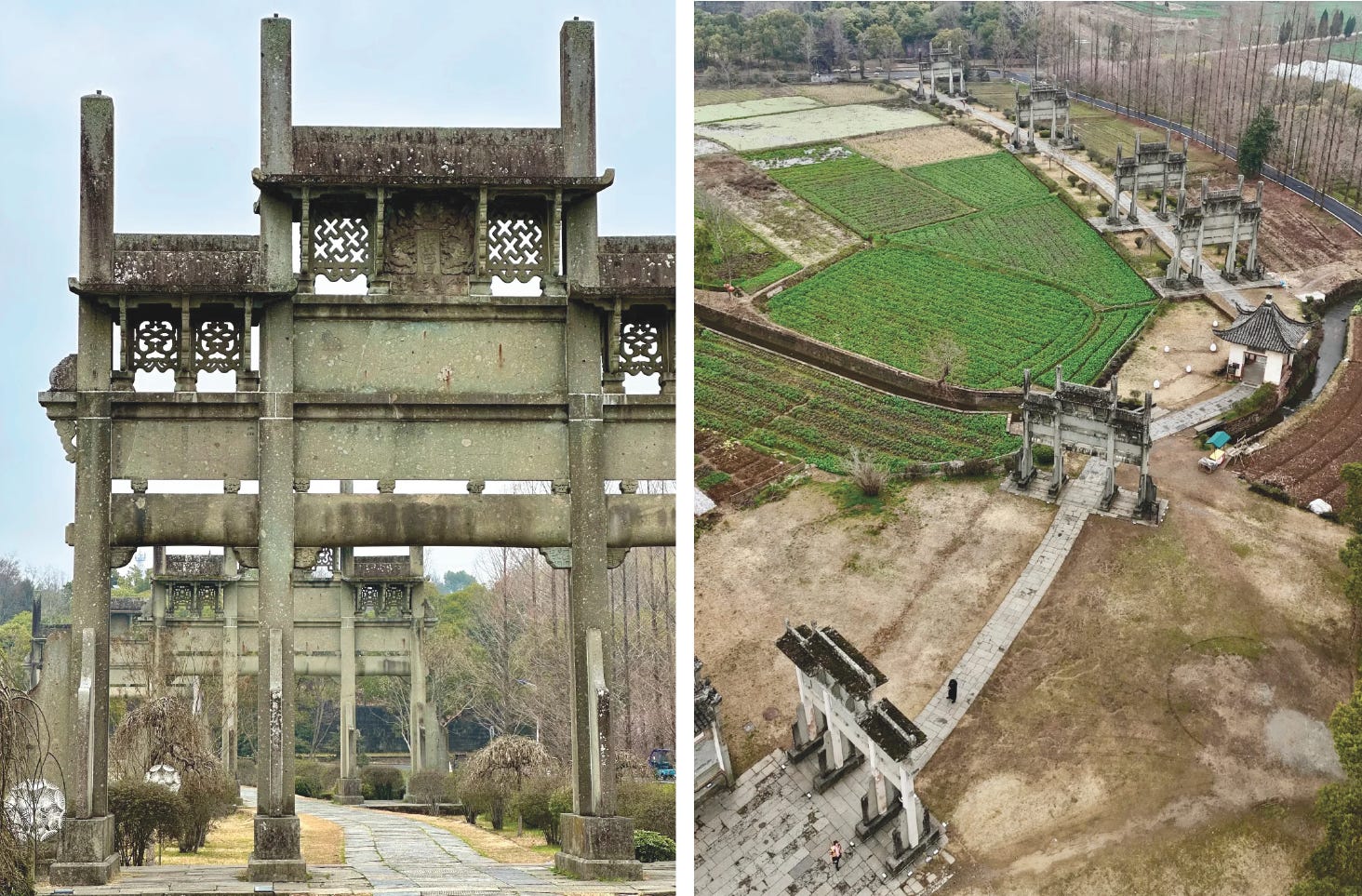
What the Ming and Qing periods added was institutionalization. The cult of female chastity (贞洁), enforced through state-sponsored stone arches (贞节牌坊) honoring widows who refused remarriage or died to preserve it, turned ideological pressure into official infrastructure. The scapegoat mythology and the chastity ideology were two sides of the same coin: women were either responsible for male failure, or responsible for preserving male honor.
The Interrupted Liberation
The 1949 revolution demolished much of this infrastructure, with genuine force and genuine consequences for ordinary women’s lives. The Marriage Law of 1950 banned concubinage, outlawed arranged marriage, and gave women rights to divorce and to own property. The mass mobilization of women into the industrial and agricultural workforce under the slogan “Women hold up half the sky” (妇女能顶半边天) changed the material conditions of millions of lives in ways that should not be minimized.
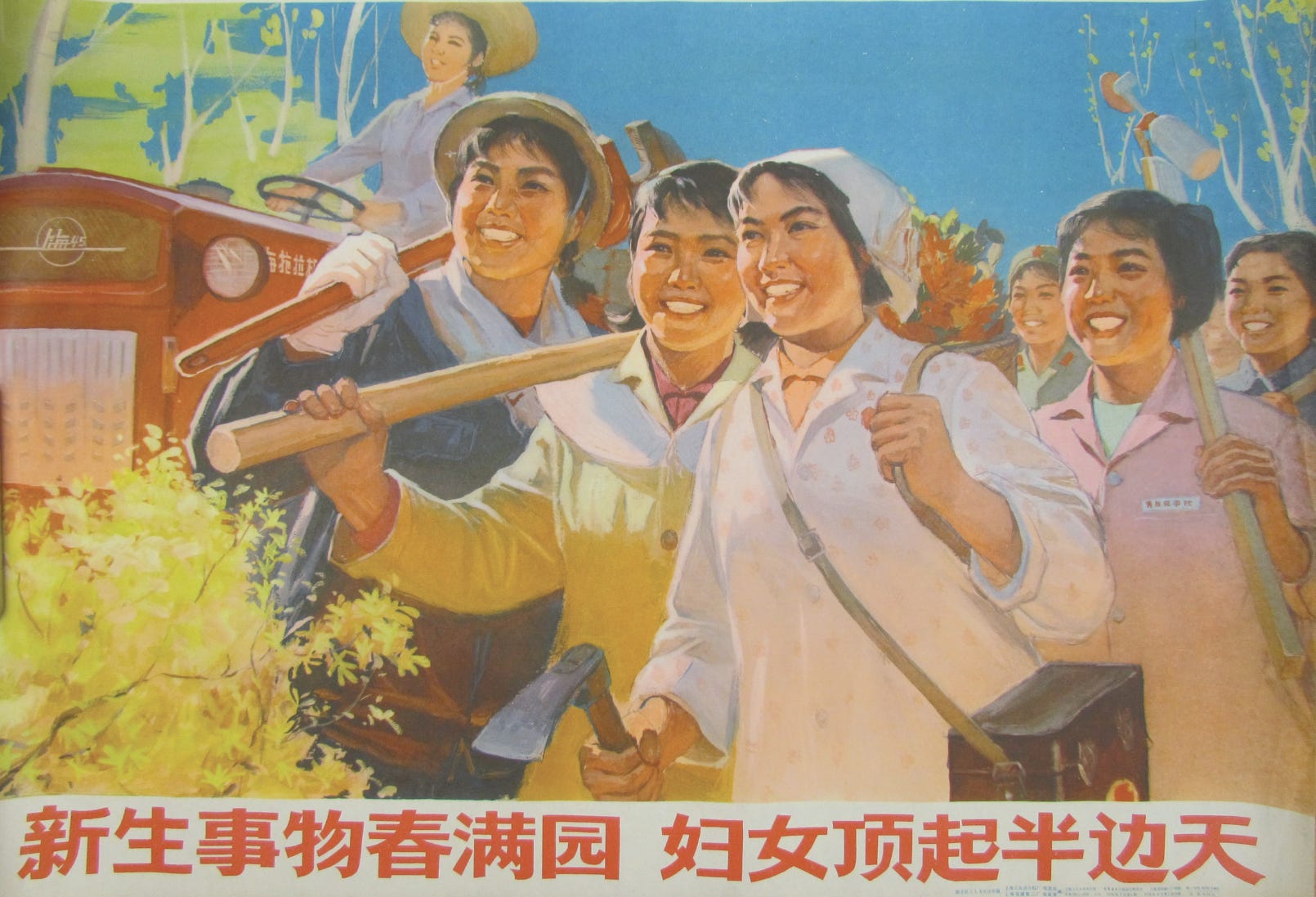
But the socialist liberation of women contained a structural limitation that has shaped Chinese gender politics ever since: it liberated women by de-gendering them, rather than by revaluing femininity itself.
The ideal figure of the Maoist era was the “Iron Girl” (铁姑娘): a woman who performed the same physical labor as men, dressed in the same uniform, and proved her equality by demonstrating that she could do everything a man could do. This model of equality took the male standard as its baseline and invited women to meet it.
The result was what scholars have called the “double burden”: women were expected to be Iron Girls in the public sphere and traditional women in the domestic one. The domestic sphere was largely unrevolutionized; the ideological pressure on women, however, was doubled.
When market reforms opened China’s economy in the 1980s and 1990s, the state apparatus supporting the Iron Girl model faded, but the double burden remained. Traditional patriarchal expectations returned, now amplified by consumer capitalism’s new aesthetics of femininity. The huli jing pejorative, applied to women perceived as sexual competitors or “home-wreckers,” came roaring back.
The Alliance of the Weak
The feminist discourse that gained significant momentum in China through the 2010s brought new analytical tools to these old cultural forms. And the tools that resonated most came, somewhat unexpectedly, from Japan.
The Japanese sociologist Chizuko Ueno (上野千鹤子) had been building her theoretical framework for decades before Chinese readers encountered her. Her academic work Patriarchy and Capitalism (父权制与资本主义) argued that sexism is not a cultural residue from pre-modern tradition but an acute, structural product of capitalist economic organization, that the two systems do not merely coexist but actively generate and reinforce each other. The modern family, in her analysis, is not a natural unit but a mechanism: it extracts women’s unpaid reproductive labor and converts it into the invisible subsidy that keeps the formal economy running. This framework gave Chinese women a precise vocabulary for something they had felt but struggled to name, that the “double burden” of the Iron Girl era was not an accident or a transitional problem, but a feature of how the system was designed.
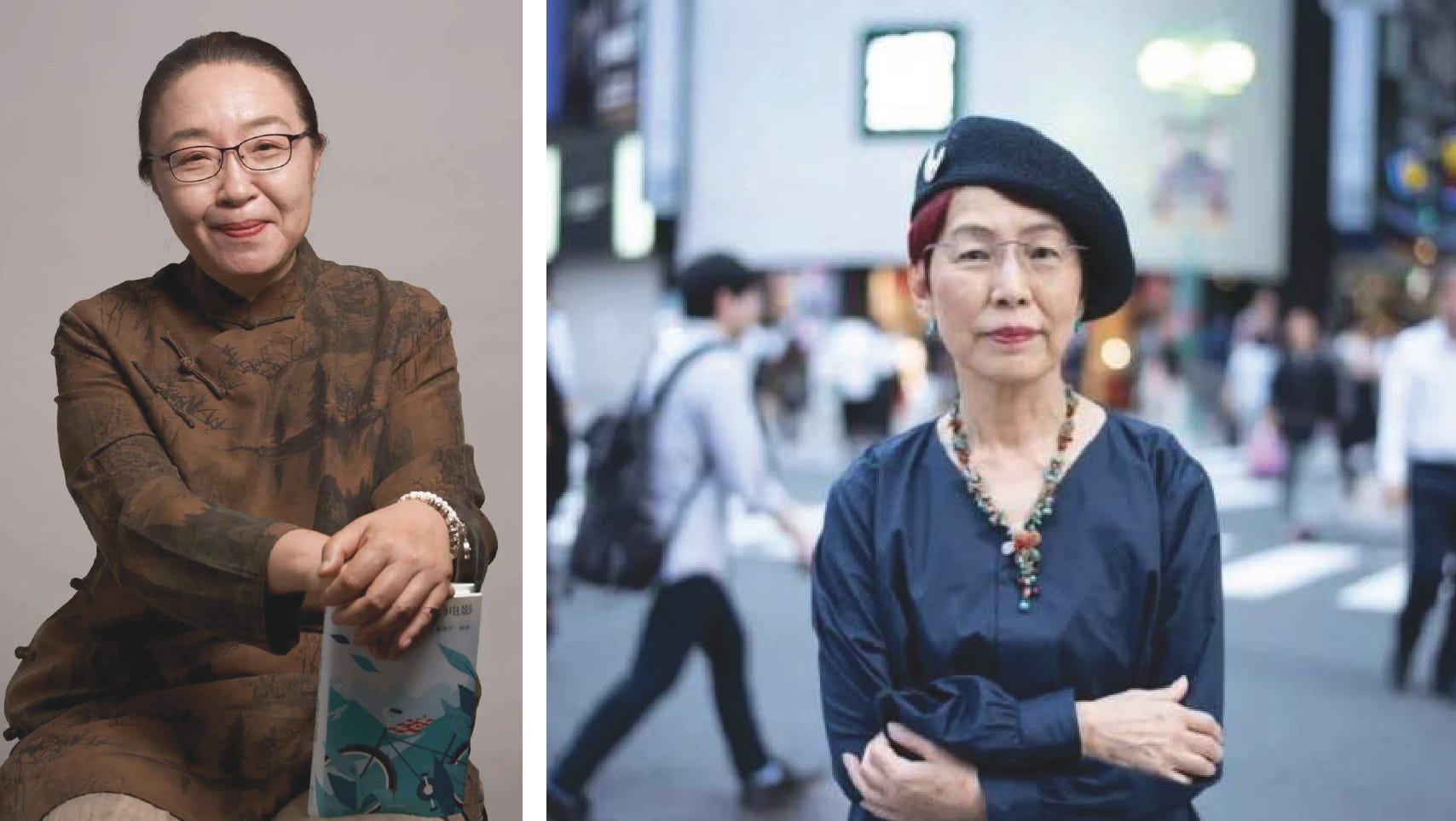
But it was Ueno’s 2019 matriculation speech at the University of Tokyo that made her a phenomenon in China. The speech went viral not because of its theoretical sophistication but because of a single sentence, quoted and re-quoted across Chinese social media: “Feminism is not about women becoming like men, nor about the weak becoming strong, it is about the weak being respected as they are.”
Her concept of misogyny (厌女) further complicated the picture. Ueno argued that misogyny is not simply individual men hating women. It is a structural condition in which men tend to express it as contempt for women, while women tend to internalize it as self-hatred and pass it on. Applied to the fox spirit mythology, the huli jing pejorative was not only deployed by men against women. It was deployed, perhaps more consistently, by women against other women: the neighbor who called a divorced woman a fox spirit, the mother-in-law who policed her daughter-in-law’s appearance, the female relatives who enforced the chastity arch’s logic long after the stone had crumbled. They are how misogyny reproduces itself through its own victims.
What Ueno’s framework ultimately demands is not that women climb the existing hierarchy more efficiently, but something more difficult: horizontal solidarity, the alliance of the weak, a coalition that extends beyond gender to encompass all those the system has decided to use and discard.
When Chinese women today refuse to automatically cast Daji as the villain, they are doing exactly what this framework would recognize: declining to use misogyny as a weapon against another woman, even a fictional one. That refusal is small. It happens in movie theaters and comment sections. But this is precisely where the alliance of the weak begins.
Reading the Fox Differently
The fox was never a stable symbol. It was always being made and remade by the people who needed it. When early Chinese cosmology needed an image of auspicious balance, the fox was that. When patriarchal ideology needed an image of dangerous female transgression, the fox became that. When contemporary feminist discourse needs an image of the woman wrongly accused, the fox, specifically Daji is becoming that.
The fox is a mirror that reflects the cultural assumptions of whoever is looking into it. What has changed in contemporary China is not the fox. It is who gets to hold the mirror, and what they are willing to see. The generation of Chinese women who grew up with Ueno and Dai Jinhua, who processed the #MeToo moment through feminist online communities, they are holding the mirror now.
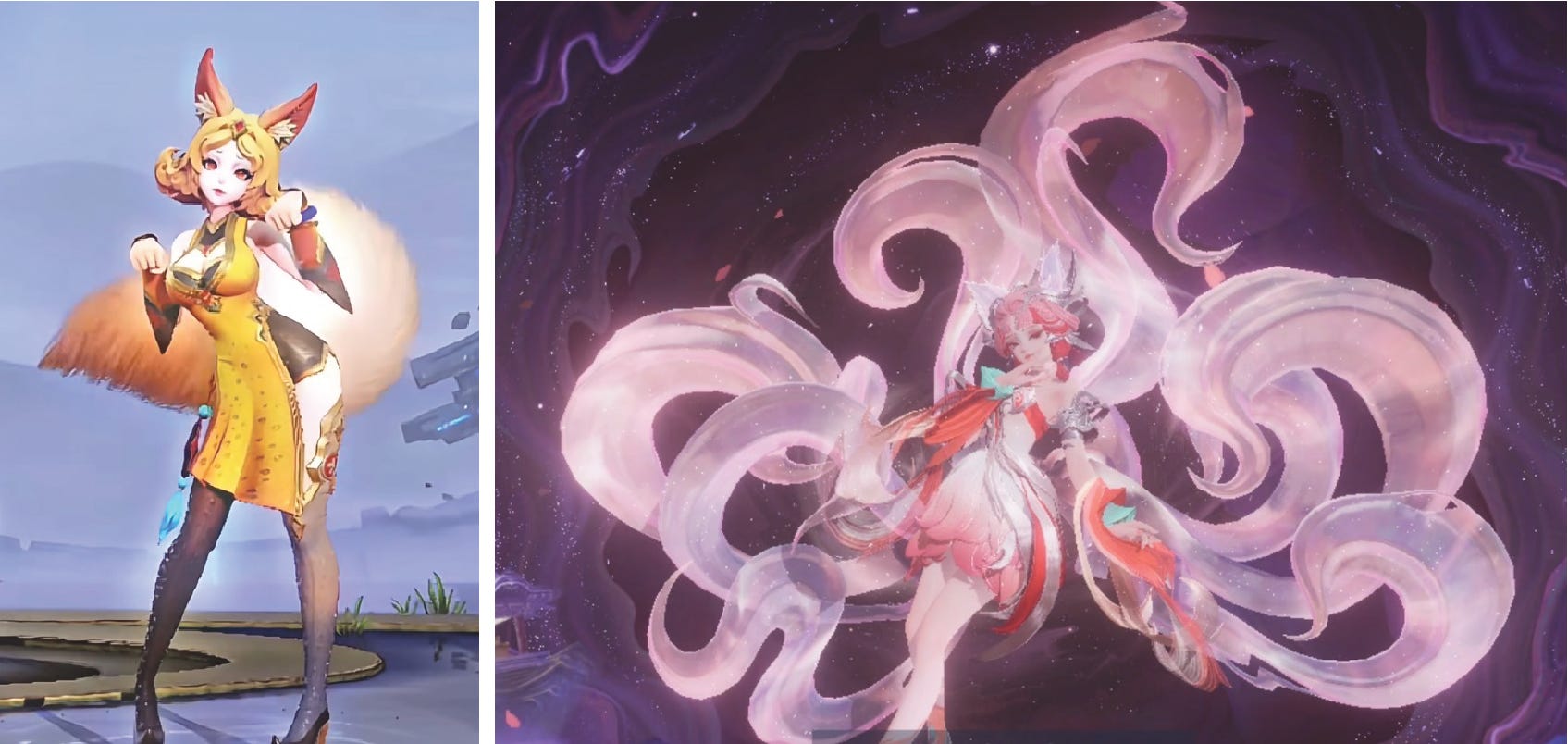
The same rehabilitation has reached far larger audiences through less obvious channels. Honor of Kings 王者荣耀, China’s most-played mobile game, with hundreds of millions of users. The game redesigns Daji not as a seductress but as a heartless puppet searching for her own humanity, and has since reimagined her as a goddess of harmony and good fortune: almost exactly the auspicious fox of the Classic of Mountains and Seas.
In early 2026, a series of AI-generated short videos went viral across Chinese social media, accumulating over fifty billion views. The premise was always the same: a woodcutter saves a dying fox in a snowy mountain, leaves behind food, and a year later a mysterious woman arrives at his door asking, “Did you once save a fox on a snowy mountain? 你是否在雪山救过一只狐狸” Every viewer knew what was supposed to happen next, the fox, transformed into human form, returned to repay the kindness. It is one of the oldest benevolent fox stories in the Chinese tradition, the template that predates the huli jing by centuries. But the woman in the video was never the fox. She was the roast duck that had been left behind. Or the snowy mountain. Or, in one version, a nuclear bomb. The fox never came back. The joke only works because everyone knows exactly where the fox was supposed to be.
If my insights brought you a fresh perspective, please consider supporting me by buying me a coffee. Your generosity fuels my writing.
Many thanks for this window into Chinese society across time.
I wonder how this intersects somehow with Macbeth, in my mind I visualize the recreation of Macbeth in the Spider Castle, from Kurusowa.
Thanks, learning so much from you. Also interesting take on feminism in China. No culture or society seems to have successfully addressed the position of women in society. On the one hand, conservative religion (in Christianity and Islam) assigns gender roles while emphasising the weak are equally valued as the strong. On the other hand, Western feminism (also it seems in China?) purport to dissolve gender distinctions at least in social roles. Each approach seems to have its own merits and shortcomings.