A teacher walked into a classroom of restless teenagers. Someone had been caught cheating on a quiz. The teacher didn’t name the student. Instead, she announced that the entire class would lose their lunchtime privileges for a week. Groans filled the room, but no one spoke. The guilty student kept silent, the innocent simmered in resentment, and a subtle current of fear settled over everyone.
This is a scene familiar to many who grew up in China: 连坐 (Lian Zuo), collective punishment. One person’s mistake implicates the group. It appears in classrooms, dormitories, and workplaces, lingering like a moral instinct passed down from another age. Yet it is far from a modern invention. Its roots run deep, back to the earliest legal systems of imperial China, when fear was used not merely to punish, but to govern.
Law Through Fear
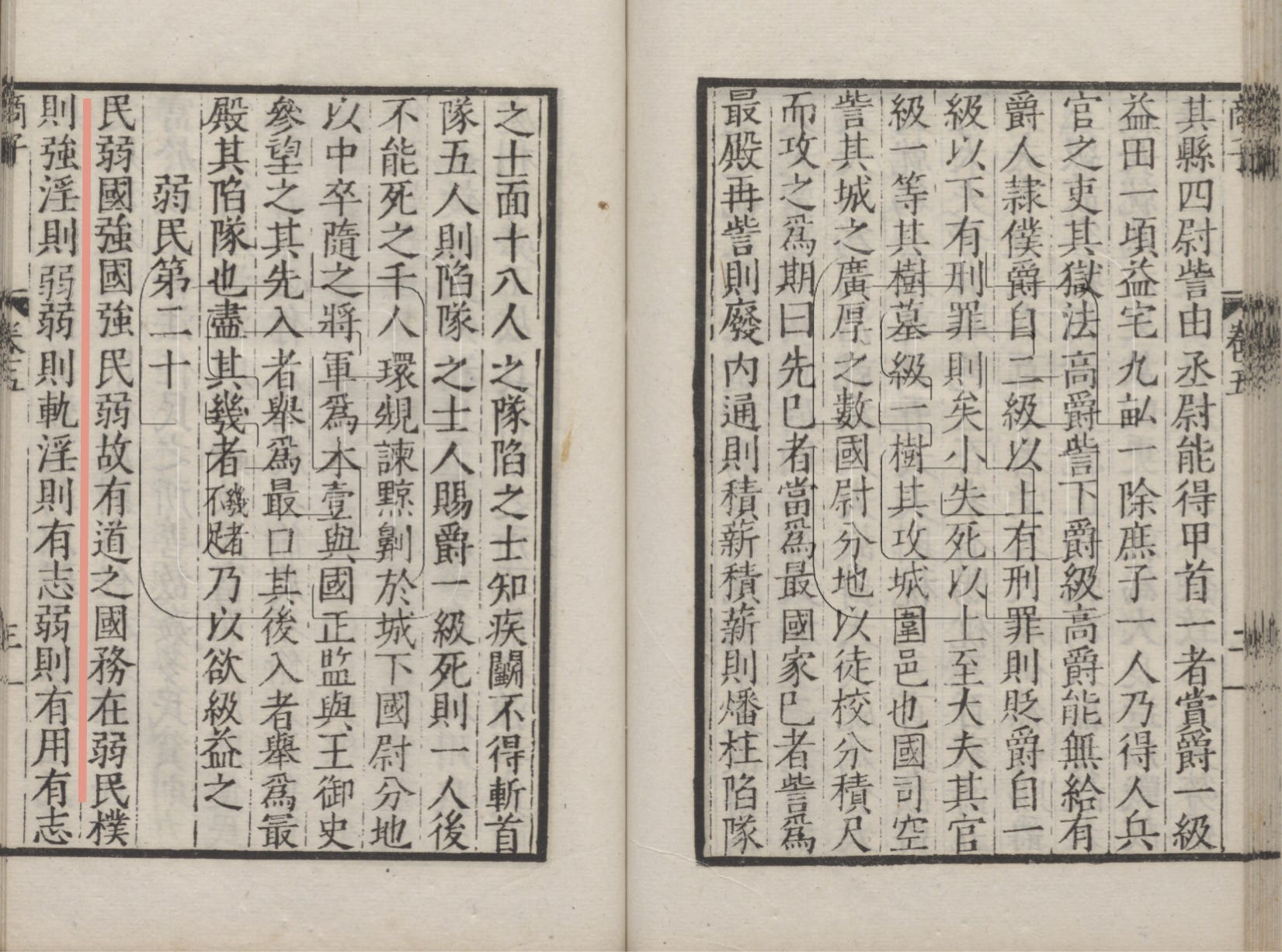
The idea of collective responsibility first took systematic form during the reforms of Shang Yang (商鞅) in the 4th century BCE, in the state of Qin (秦). To forge a disciplined society and efficient army, Shang Yang introduced the “system of ten households and five households” (什伍连坐). Ten families were bound together: if one committed a crime or failed to report a neighbor’s offense, all would be punished.