

If you visit the Hongshan Forest Zoo in Nanjing expecting a spectacle, you might be disappointed. You might spend twenty minutes staring at a dense patch of bushes, waiting for a jackel that never appears. You might walk past the wolf enclosure and see nothing but trees.
In a traditional zoo, this would be a design failure. In the new paradigm of Chinese zoological design, this is a triumph.
For decades, zoos were built for the human gaze. It’s a panopticon where animals were objects of “consumption,” always visible, always performing. But a quiet revolution is taking place in Nanjing. Under the leadership of Director Shen Zhijun, Hongshan Forest Zoo (红山森林动物园) is asking a radical question: What happens when we design a zoo not for the visitors, but for the residents?
The answer is a masterclass in empathy, architecture, and the ethics of observation. Here is how to design a zoo in the modern age.
The Architecture of Dignity: Erasure of the Cage
The first rule of ethical zoo design is that boundaries should be felt, not seen.
At Hongshan, you won’t find the gorillas behind steel bars. Instead, their domain is separated from the visitors by a river. This water barrier serves a dual purpose: it is a physical limit that keeps the animals safe, but visually, it is a continuation of the landscape.
For the gorillas, the absence of vertical bars changes the psychology of the space. They are not “imprisoned”; they are territorially distinct. They roam freely on their side of the bank, engaging in complex social behaviors without the constant visual reminder of captivity.
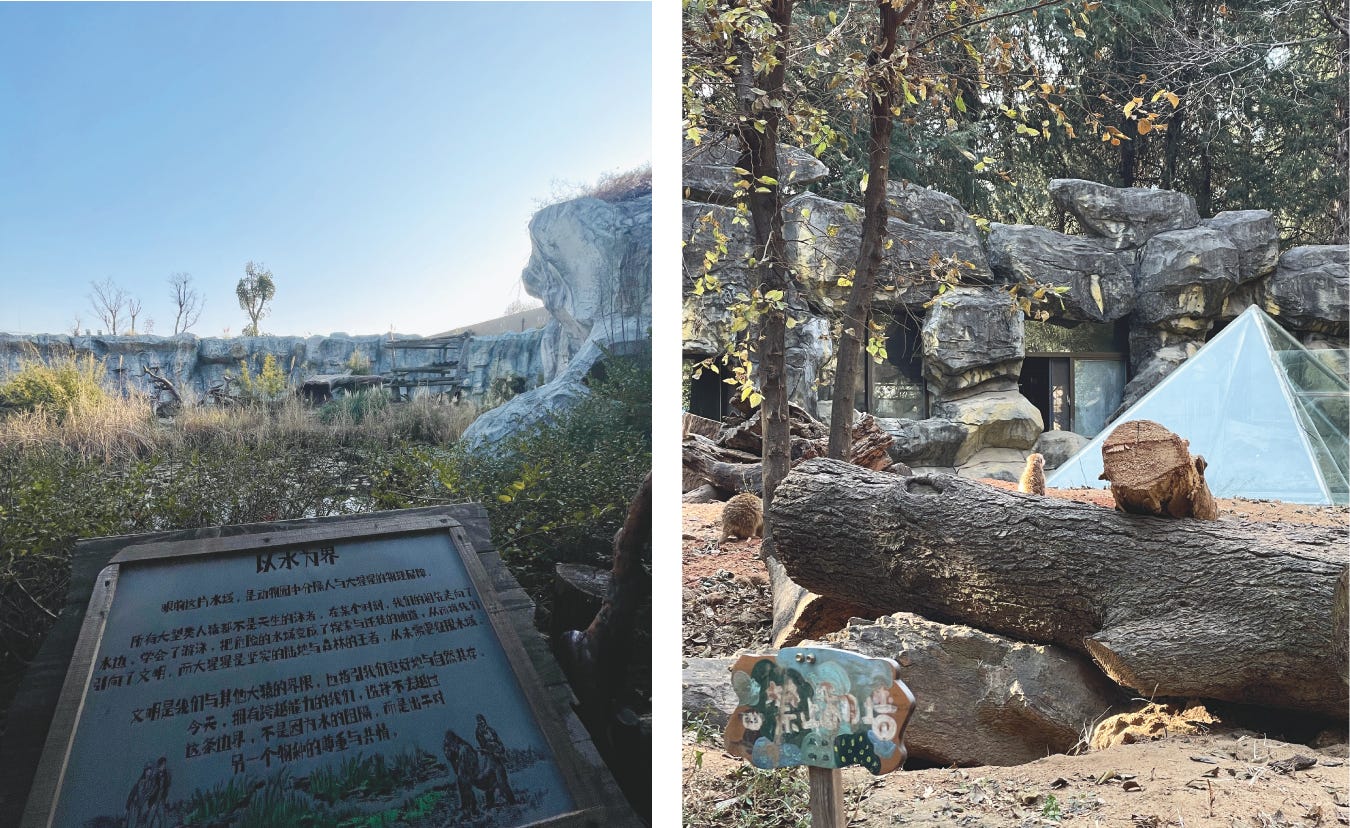
When you remove the cage, you remove the stigma. The river creates a boundary of respect, allowing the animal to exist as a sovereign being rather than a prisoner.
The Politics of Perspective
In the old world, humans looked down on animals, literally and metaphorically. The architecture of the classic bear pit or the sunken tiger enclosure reinforced a hierarchy of dominance.
Hongshan flips this axis. The giraffe exhibit is a striking example. The viewing platform is elevated, placing the visitor face-to-face with the giraffe at their feeding trough. When you look a giraffe in the eye, the dynamic shifts. You are no longer a spectator looking at a specimen; you are a guest meeting a host. The sheer scale of the animal becomes intimate rather than imposing.
This philosophy of equality extends to the ground beneath your feet. In the gorilla viewing area, the designers employed a subtle but profound psychological trick: continuity. The ground on the visitor’s side of the glass is paved with the same soil texture and scattered leaves as the habitat on the gorilla’s side. There is no jarring transition from “civilized concrete” to “wild earth.” This visual continuity creates the illusion that you are standing on the same piece of land as the gorillas, suggesting a shared existence where the only boundary is a thin, transparent pane, not a difference in status.

Architecture dictates hierarchy. By aligning the human eye with the animal eye, and by unifying the ground we stand on, we manufacture empathy. We stop observing a “thing” and start interacting with a “who.”
Discovery Over Consumption: The Hide and Seek Protocol
This is the most controversial and brilliant aspect of Hongshan’s design philosophy: The animals have the right to not be seen.
The zoo utilizes a network of multi-layered pathways and small, strategic observation windows. It is a labyrinth of discovery. Visitors are not funneled past glass boxes; they are invited to navigate a simulated ecosystem.
Because the environment prioritizes the animal’s need for cover, privacy, and natural terrain, seeing an animal becomes a reward, not a guarantee. This demands patience. It forces the visitor to slow down, to look closely at the foliage, to understand the habitat as much as the inhabitant.

A zoo should not be a vending machine for animal sightings. It should be a journey of discovery. By prioritizing the ecosystem over the view, the design teaches visitors that nature does not exist solely for their entertainment.
The “Fan Economy” of Conservation
How do you fund a zoo that refuses to exploit its animals? You turn the animals into icons.
Hongshan has pioneered a unique cultural model in China, blending animal welfare with the “fan economy.” When the zoo decided to eliminate animal performances, they lost a traditional revenue stream. They replaced it with storytelling and identity.
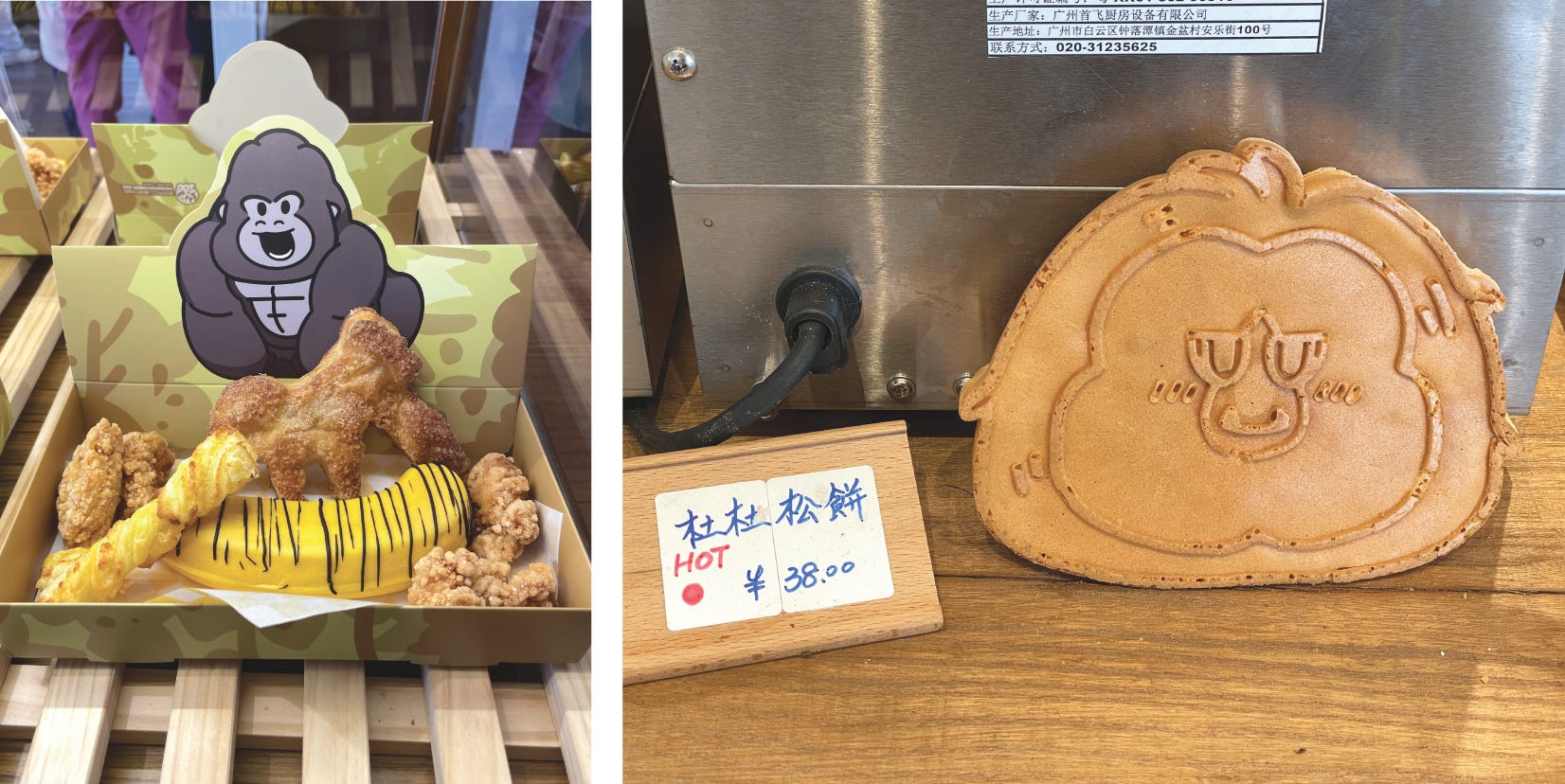
The zoo’s animals, like the now-famous red panda and White-faced Saki, have been transformed into cultural symbols through high-quality, animal-themed merchandise. But these aren’t just generic plush toys; they are specific characters with names and backstories.
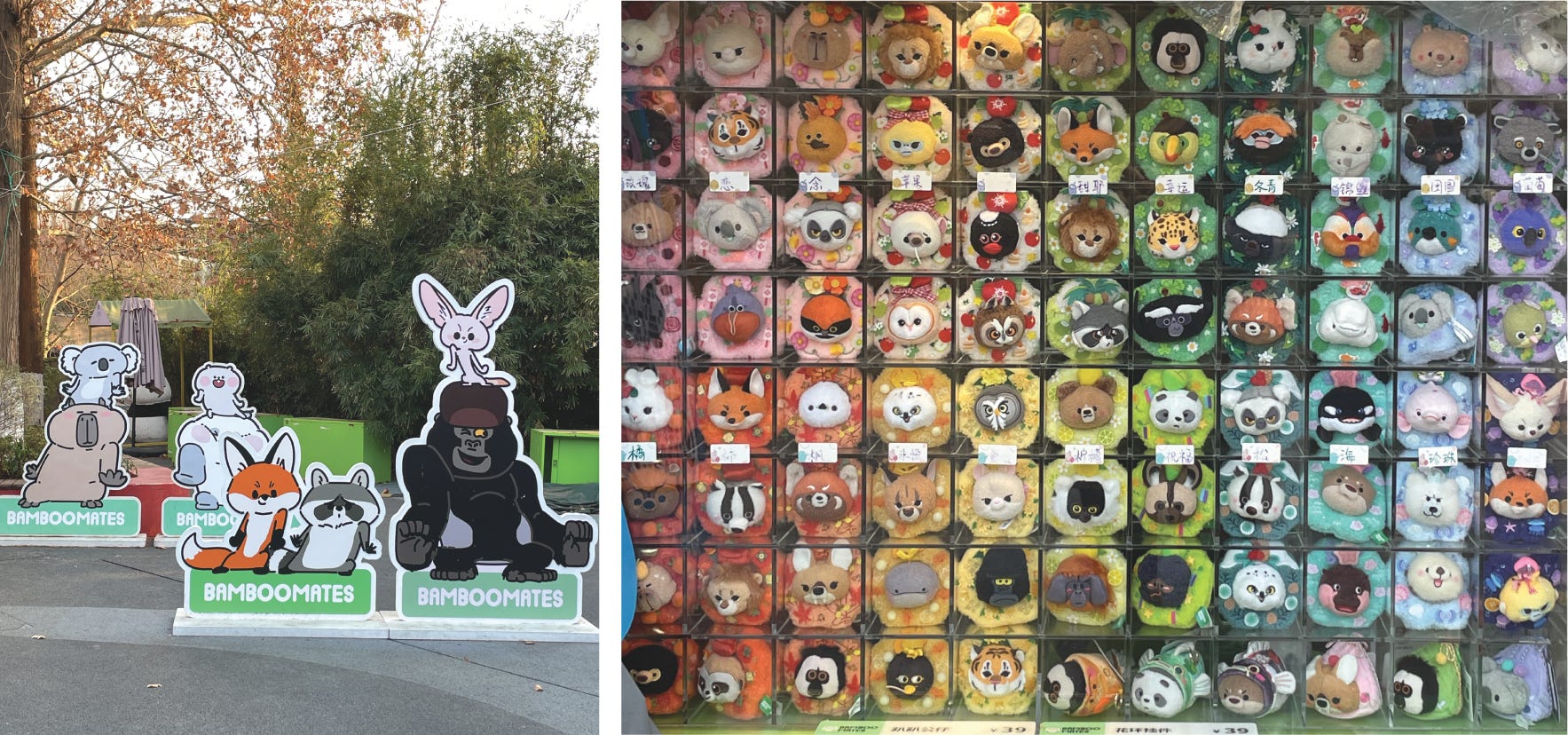
The zoo frequently launches public campaigns to name newborn or newly arrived residents, turning passive viewing into active participation. In one instance, the public voted to name four gorillas after Nanjing’s specialty vegetables, weaving the city’s local culinary culture into the zoo’s DNA. Similarly, the White-faced Saki is not just a biological specimen; he is known affectionately as “Dudu”.
Furthermore, the zoo introduced an adoption program that allows the public to “adopt” specific animals. This isn’t just for wealthy donors; it’s accessible to students, social groups, and families. It transforms the visitor from a passive tourist into an active stakeholder in the animal’s life.

Commerce can support conservation if the product is connection. By selling the “story” and “personality” of the animals rather than their physical performances, the zoo creates a sustainable financial model rooted in respect.
The Visionary: Shen Zhijun and the End of the Circus
None of this would be possible without a change in leadership philosophy. Shen Zhijun (沈志军), the director of Hongshan, is the architect of this new moral universe.
He was the first in China to cancel all animal performances, a move that was initially met with confusion. “Why pay if the monkey won’t ride the bike?” some asked. Shen’s answer was to double down on education and natural behavior. He argues that a zoo’s primary function is not entertainment, but to foster “public responsibility.”
This philosophy is written on the every walls of the zoo. You won’t find cold, clinical plaques that merely list Latin names and geographic distributions like a biology textbook. Instead, the zoo is filled with hand-drawn illustrations, quirky icons, and handwritten notes, much like pages torn from a zookeeper’s personal journal. These signs share intimate observations and daily dramas rather than dry data. By replacing the sterile “anatomy class” approach with warmth and humor, the zoo ceases to be a cold educational facility. Instead, it becomes a space that invites visitors to expand their imaginations and visualize the complex, emotional lives of the residents.

Design is political. The removal of the performance stage and the inclusion of human, hand-crafted touches signal that the era of animal servitude is over. It is replaced by an era of animal autonomy, where the goal is not to inspect a specimen, but to understand a life.
Designing a Relationship
A well-designed zoo is a paradox. It is a place of captivity that strives to create freedom.
Hongshan Forest Zoo succeeds because it designs for the relationship, not just the view. It admits that we can never truly replicate the wild, but we can replicate the dignity of the wild.
When you leave Hongshan, you may not have seen every animal. You may have spent an hour looking at a silent forest. But you walk away with something more valuable than a photo: the understanding that these creatures owe you nothing, and that is exactly why they are worth saving.
If my insights brought you a fresh perspective, please consider supporting me by buying me a coffee. Your generosity fuels my writing.
什么时候才能领养到🦊 I'd pay 💰💰💰💰 to adopt a fox
Beautiful. Entering a zoo to see animals, leaving that zoo grasping what humans should be