

When Steve Jobs traveled to India in 1974 in search of a guru, he popularized a pattern that still defines Silicon Valley today: the tech-bro spiritual quest. For decades, the American tech industry has been obsessed with Eastern mysticism, viewing meditation not as a religion, but as a biological hack to optimize the brain’s processing power.
Nowhere was this synthesis of tech and spirit more literal than at Maharishi International University (MIU) in Iowa. Founded in 1971 by the Beatles’ former guru, Maharishi Mahesh Yogi, MIU required all its students to practice Transcendental Meditation daily, whether studying business or engineering. It was a bizarre, fully accredited academic experiment that sought to merge empirical rigor with consciousness exploration.

While American tech executives were looking East for productivity hacks, a Chinese Computer Science student at MIU was preparing to take this synthesis back to its ancient roots. His journey would eventually lead to the creation of one of the most exclusive, grueling, and fascinating higher education institutions in modern China: The Zhejiang Taoist College.
The Cyberpunk Abbot
The architect of this modern Taoist renaissance is Abbot Zhang Gaocheng 张高澄. Born in the 1950s, Zhang was part of the first generation to enter university after the resumption of the Gaokao (高考, National College Entrance Examination) following the Cultural Revolution. He studied Computer Science, eventually teaching at Zhejiang University. Yet, running parallel to his coding and logic was a deep pull toward the esoteric; in 1982, he was formally initiated into the Taoist tradition at Tongbai Palace 桐柏宫.
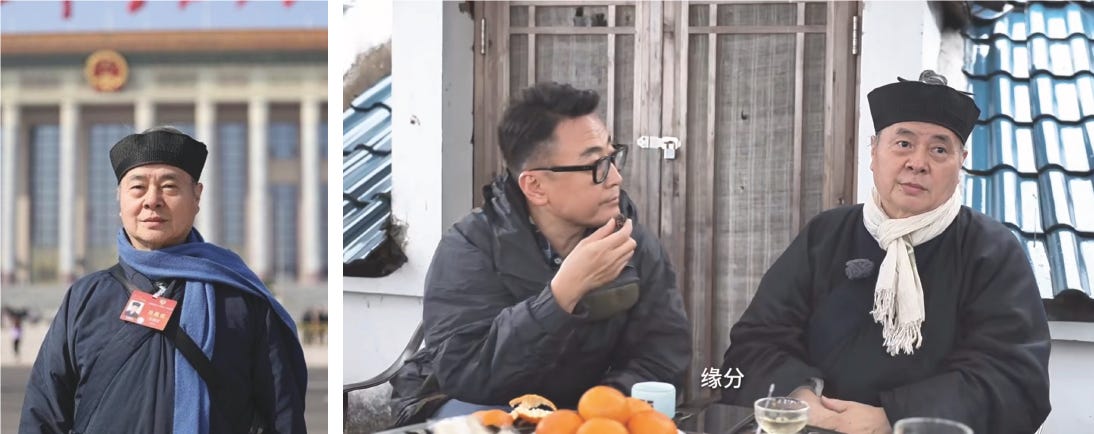
In 1986, Zhang traveled to the US to pursue a PhD in Computer Science at MIU. Over the next decade, allegedly, he built a tech company in Silicon Valley. While running his IT business, Zhang established the “American Lower Temple of Tongbai Palace” (桐柏宫美洲下院) in Coral Springs, Florida. He systematically expanded this network, opening 45 branch locations across North America and taking on over 25,000 disciples eager to learn Neidan (Internal Alchemy) and Qigong.1
Then, in 1999, the narrative violently shifted. The elderly Abbot of the ancestral Tongbai Palace traveled from China to Florida to transmit teachings to American disciples. Tragically, the old master suffered a heart attack and passed away in the US.
Tongbai Palace (桐柏宫) nestled in the Tiantai Mountains of Zhejiang Province, it is the historical “main server” of Taoist Internal Alchemy. It serves as the ancestral headquarters of the Southern Lineage of Quanzhen Taoism, a tradition formalized in the 11th century by the legendary Song Dynasty scholar Zhang Boduan, famously canonized as Ziyang Zhenren (紫阳真人, Perfected Ziyang).
Ziyang Zhenren is a towering figure in Chinese mysticism. He authored the Wuzhen Pian (悟真篇, Folios on the Awakening to Perfection), arguably the most important masterpiece of internal energy cultivation ever written. For centuries, Tongbai Palace enjoyed lavish imperial patronage. But by the mid-20th century, this ancient center of gravity had been literally drowned, its ancient halls submerged under a reservoir project in the 1970s. The abbot and the temple’s relics were relocated to Heming Guan (鹤鸣观), a small Daoist temple nearby.
Faced with a leaderless, physically devastated ancestral home, Zhang made a radical choice. He returned to China in 2000. He spent the next twenty years moving earth, raising funds, and physically rebuilding the Tongbai Palace from the ground up. The palace is also home to the Zhejiang Taoism College.
Beyond the “Two Taos”
As we explored in Inventing the “Two Taos”, modern scholars have created a dichotomy between “Daojia” (道家, philosophical) and “Daojiao” (道教, religious ritual). However, when turning to the living, breathing faith practices in contemporary China, the most profound structural dividing line does not lie between philosophy and religion. Instead, it manifests in the two major extant Daoist sects: Quanzhen (全真, Complete Perfection) and Zhengyi (正一, Orthodox Unity).
The historical origins and doctrines of Zhengyi and Quanzhen reveal Daoism’s contrasting attitudes toward engaging with or withdrawing from the secular world.
The Zhengyi sect traces its lineage directly back to the Tao of the Celestial Masters (天师道) in the late Eastern Han dynasty, making it China’s oldest organized Daoist tradition. Its clerics are often referred as hearth-dwelling (火居, huoju) or dispersed-dwelling (散居, sanju) priests. They are generally not required to live in monasteries, remain celibate, or strictly adhere to a vegetarian diet. Their core practice centers on fulu zhaijiao (符箓斋醮, talismans and registers, fasting and offerings), utilizing ancient rituals to communicate with deities, expel evil, and guide the deceased. Today, Zhengyi remains deeply intertwined with grassroots community life, particularly in southern China and overseas diaspora communities, serving as a vital spiritual tether for the populace.
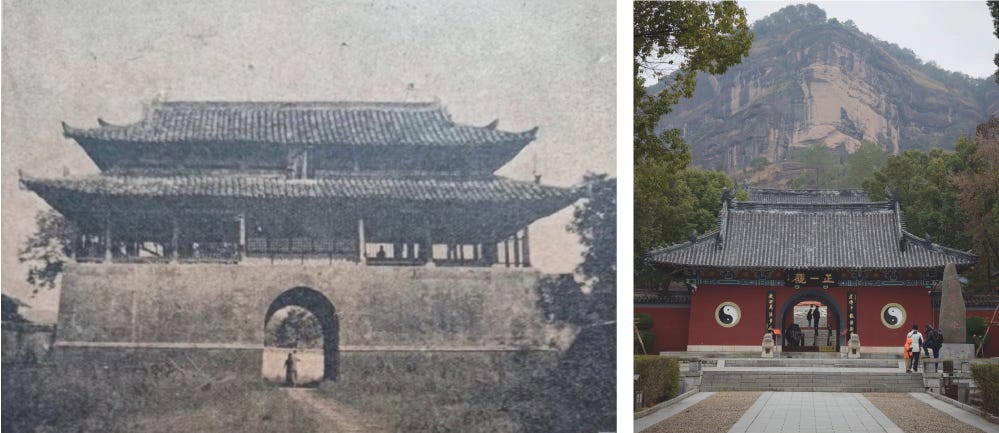
In stark contrast, the Quanzhen sect emerged during the turbulent Jin-Yuan transition in the 12th century, founded by Wang Chongyang 王重阳. Doctrinally, Quanzhen advocates for the “harmony of the Three Teachings” (三教合一, Daoism, Buddhism, and Confucianism), shifting the religious focus away from external talismanic rituals toward the internal cultivation of “nature and life” (internal alchemy or neidan). Institutionally, Quanzhen priests must leave their homes to live in monasteries, take strict vows, remain celibate, and maintain a vegetarian diet, exhibiting highly systematized monastic characteristics. Today, Quanzhen dominates northern China, with its headquarters at the White Cloud Temple (白云观) in Beijing, and forms the institutional backbone of contemporary Daoist academy education.

This sectarian divide creates a fascinating tension when observing the historical evolution of Tongbai Palace in the Tiantai Mountains. As the ancestral headquarters of the “Southern Lineage of the Golden Elixir” (金丹南宗, Jindan Nanzong) founded by Zhang Boduan, Tongbai Palace originally represented a middle path. Early Southern Lineage masters often lived like Zhengyi priests, concealed within secular society, cultivating internal alchemy without advocating for monastic renunciation. However, by the Yuan dynasty, the aggressive expansion of the Quanzhen sect led to the Southern Lineage being gradually absorbed into its institutional framework. This resulted in a unique syncretism: the internal alchemical heart-mind methods of the Southern Lineage encased within the strict monastic precepts of Quanzhen.
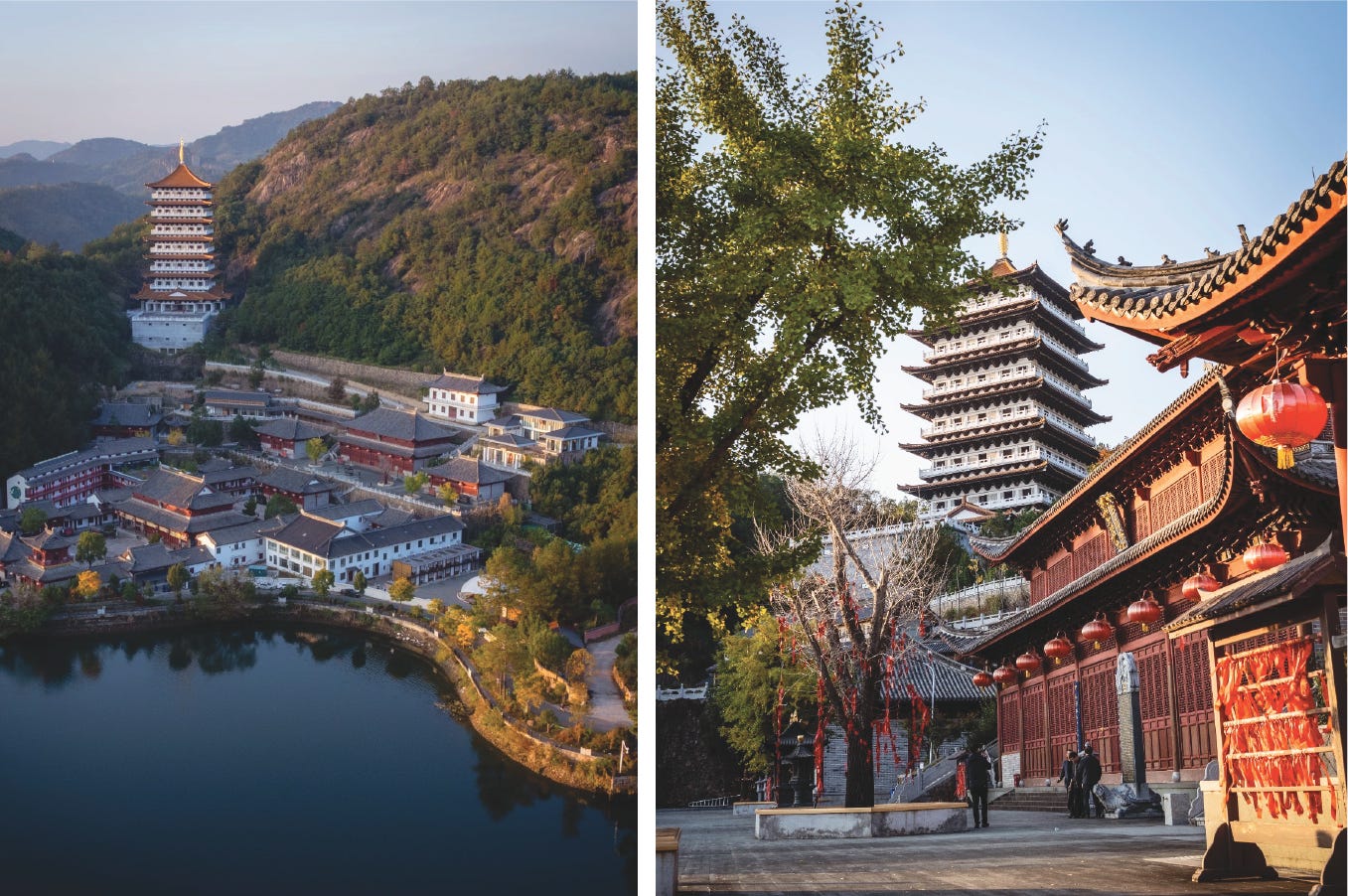
Today, Tongbai Palace is officially affiliated with the Quanzhen sect. Its abbot, directors, and students strictly observe Quanzhen monastic disciplines. Yet, nestled within the overlapping peaks of the Tiantai Mountains, they authentically transmit Zhang Boduan’s metaphor-rich Southern Lineage alchemical dharma. This intertwining of institutional affiliation and spiritual lineage illustrates how boundaries between philosophy and religion, or between Quanzhen and Zhengyi, can ultimately dissolve in the authentic, lived pursuit of the Tao.
An Outlier in Religious Education
Hosted at Tongbai Palace, the Zhejiang Taoist College (ZTC), compared to the dozen or so other state-sanctioned Daoist colleges in China, is an evolutionary outlier, exhibiting a kind of “species isolation” that sets it apart across three hardcore dimensions.
Extreme Physical Cultivation
While most Daoist colleges function similarly to liberal arts universities, which focus heavily on scriptural history, religious theory, and regulatory policy, ZTC operates on a completely different premise. Rooted deeply in its identity as the ancestral home of the Southern Lineage, the college prioritizes the core philosophy of xian ming hou xing (先命后性, cultivating the physical vessel first, before refining the spiritual nature).
This philosophy explains ZTC’s notoriously grueling admissions process. Applicants face physical evaluations that resemble special forces selection, including long-distance mountain runs and intense agricultural labor. This physical conditioning culminates in the Yuantang (圜堂), a physically agonizing, multi-day intensive meditation retreat allowing only minimal sleep. If a student’s physical vessel (命, ming) is not robust enough, they simply will not survive the curriculum. In the landscape of Chinese higher education, this extreme bodily tempering is entirely unique.
“True Hogwarts”: Demystifying and Systematizing the Occult
Furthermore, ZTC has earned a reputation as a real-world Hogwarts for its approach to Daoist mysticism. In many other institutions, the training leans heavily toward either pure academic research or the performance of folk rituals (chanting and playing instruments).
ZTC, however, dismantles these ancient arts and reconstructs them into systematic, applied technologies. By their junior year, students must specialize in rigorous empirical disciplines:
Yi (医 - Medicine): Traditional diagnostics, acupuncture, and herbalism.
Yi (易 - Divination): The I Ching, Fengshui, and numerology.
Dao (道 - Alchemy): Deep physical and mental cultivation (Neidan).
Keyi (科仪 - Rituals): The mechanics of liturgy, stepping the Big Dipper (步罡踏斗), and writing talismans.
What the outside world frequently dismisses as superstitious occultism, ZTC approaches as a strict, testable applied science, requiring students to pass rigorous practical examinations.2
Open Borders, Iron Rules
This radical curriculum is matched by a paradoxical administrative model: an extremely open admissions policy combined with a draconian closed-campus lifestyle. Institutions like the Daoist College of China in Beijing typically require applicants to already be ordained priests with official recommendations, aiming primarily to upgrade the administrative and academic credentials of the existing religious establishment.
ZTC opens its doors to the secular public. As long as you possess a genuine yearning for the Dao, anyone can apply, from unmarried fresh college graduates to burnt-out software engineers (age 18-28)3. Yet, once admitted, the environment is fiercely ascetic: strict celibacy, regular digital detoxes, pre-dawn morning chanting, and a mandatory vegan diet. This “wide entry, strict management” model has become a massive draw for highly educated youths seeking to escape the intense burnout of modern urban life to decode the underlying logic of existence.

Ultimately, if the Daoist College of China in Beijing is the “Central Party School” grooming high-level administrative clergy, and the Shanghai Daoist College is a “vocational school” training practical ritual specialists for the fast-paced metropolis, then ZTC is the “MIT of Taoism.” It functions as a geek cultivation boot camp, where a CS background abbot has utilized modern systems engineering to reverse-engineer and resurrect humanity’s most ancient assembly line of biological and spiritual transformation.
The Tri-Fold Fortune Telling
Graduates of the Zhejiang Taoist College step into a reality that most Chinese university students can only dream of. Equipped with a Bachelor’s degree in Taoism, they enter a highly specialized and incredibly stable job market. They are rapidly recruited and assigned to major temples, provincial Taoist associations, or cultural research institutes across the country. In an era defined by Neijuan (内卷, involution), the exhausting, inescapable race of modern Chinese urban life, a degree from ZTC offers a paradoxical salvation. By voluntarily submitting to intense physical discipline, shedding worldly ambitions, and deciphering ancient source code, these students secure one of the most stable, anxiety-free livelihoods available today.
But the cyberpunk reality of Abbot Zhang’s Taoism doesn’t end at the college gates.
During this year’s Lianghui (the “Two Sessions” national congress in Beijing), Zhang, attending in his capacity as Vice President of the China Taoist Association, became the subject of a massively viral social media moment. He was filmed holding a Huawei Tri-fold smartphone, casually “fortune-telling” the predicted health condition for surrounding journalists. He was calculating with a software program called “Life and Health Prediction Platform 生命健康预测平台” that he had coded himself.
The internet exploded. Chinese netizens completely bypassed the context of the meetings, flooding comment sections with a single, enthusiastic demand: Where is the download link for the Abbot’s fortune-telling app?
Interestingly, if you try to search for the original video today using keywords like “Abbot” (道长) and “fortune-telling” (算卦), you will find that it has vanished into the digital void. The original footage has been carefully scrubbed from the primary source, surviving only in fragmented re-uploads and whispered commentary. It’s like a mystic who understands that some things are meant to remain hidden.
If my insights brought you a fresh perspective, please consider supporting me by buying me a coffee. Your generosity fuels my writing.
《天台山道教史》 (History of Daoism on Mount Tiantai). 北京:宗教文化出版社 (Religious Culture Press), p.172. https://dfz.zj.gov.cn/zlyz/ossfs//h5/DQ-Z-331023-2012-001-0101/index.html
Wu, Xintao. "Daoist Academies Go Viral: Going up the Mountain Is Like Reaching the Shore." South Reviews. 吴鑫韬. “道教学院火了,上山就像在上岸.” 《南风窗》
Zhejiang Daoist College 2024 Admissions Brochure (浙江道教学院2024年招生简章) https://www.daoisms.com.cn/2024/07/11/108223/
Great article! I have a deep passion for philosophy, especially Taoist thought and its view on reality. I actually recently published a short book sharing my own interpretation of Taoism. Thanks for writing this - I really enjoyed your perspective.
I am writing a novel set in fantasy China during the Opium war, and features Taoism heavily including the 8 immortals. Thanks for this post and this blog. It has nice pictures which I take inspiration from.