

The first sentence of the Tao Te Ching functions as a fundamental warning to any outsider: “The Tao that can be told is not the eternal Tao (道可道,非常道).” For over four centuries, Western scholars, missionaries, and philosophers have largely ignored this boundary. They have poked and dissected the word “Tao” (道), attempting to force it into the linguistic and metaphysical frameworks of Latin, French, German, and English.
However, the struggle to translate “Tao” is not merely a technical puzzle for sinologists. From a Chinese perspective looking outward, this history of translation appears as a collision between two incompatible realities. On one side stands a Western tradition built on “Being” and the unique, rational centrality of the human observer. On the other stands a Taoist tradition of “Becoming,” where the human is no more significant than a gust of wind or a pile of “straw dogs.” (‘刍狗’)
To understand why the West has struggled to translate the Tao is to understand the limits of a worldview that insists on the special status of humanity.
The Jesuit Trap: Searching for God in the Void
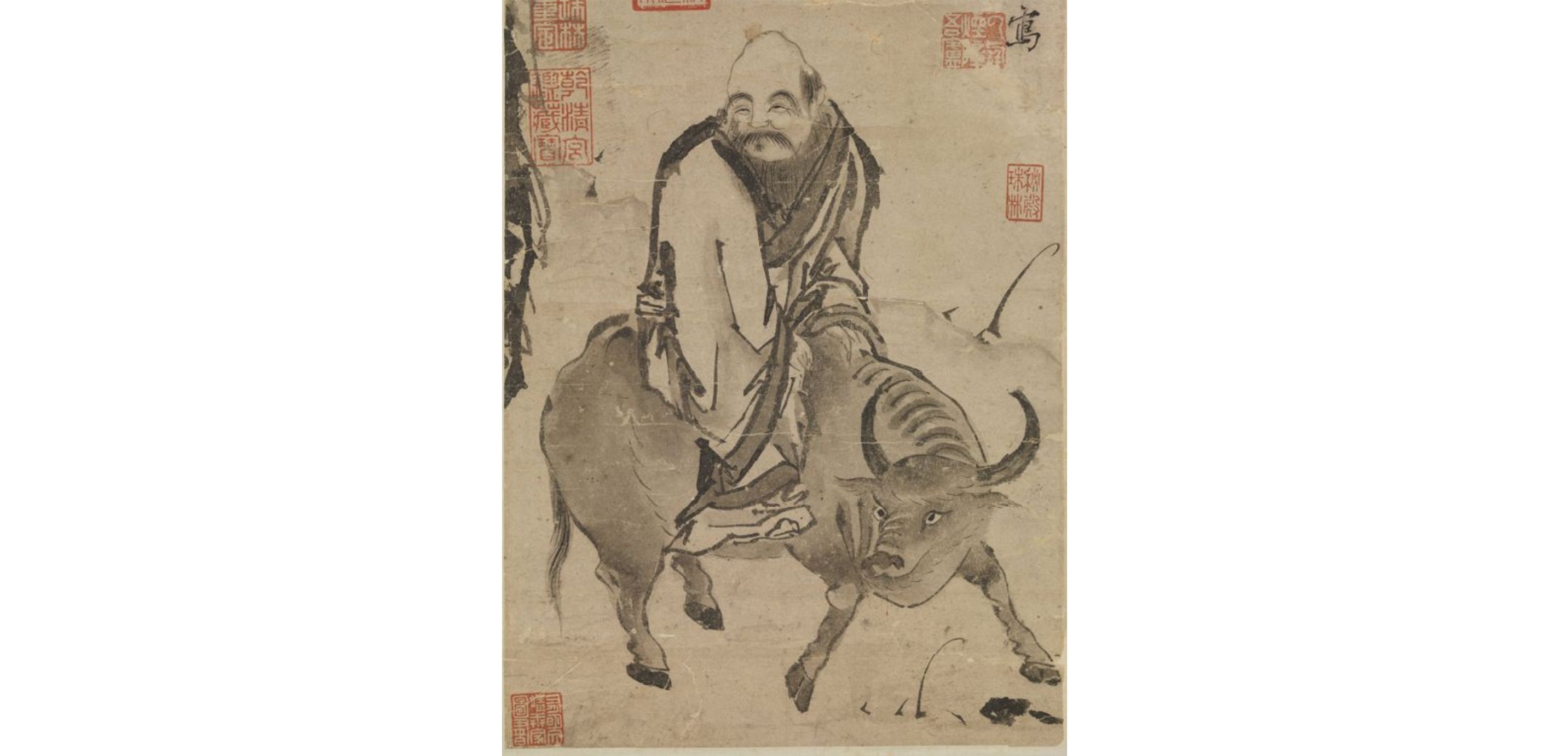
The history of translating the Tao began as an act of intellectual mapping. When 17th-century Jesuit missionaries, such as Matteo Ricci and his successors, first encountered the Tao Te Ching 道德经, they were not looking for a radical new philosophy. They were looking for a lost version of their own
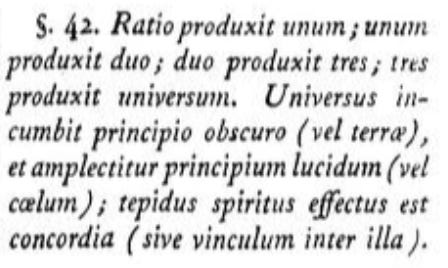
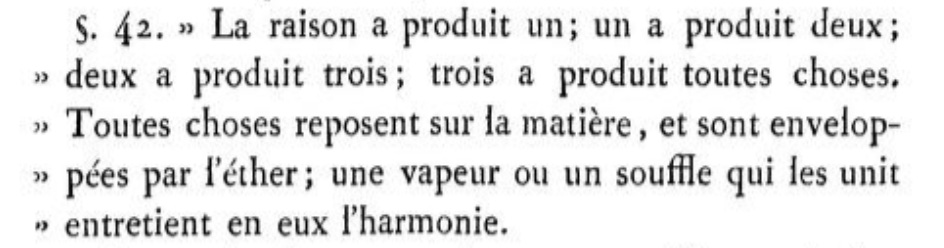
They observed the “Tao”, the source and order of all things, and reached for the most prestigious word in the Western arsenal: Logos.
In Christian theology, Logos is the “Word” of God. It is the rational principle that gave birth to the cosmos. By translating Tao as Logos, the Jesuits were attempting to “baptize” Lao Tzu 老子. The argument was that the ancient Chinese had intuitively discovered the Christian God but lacked the specific revelation to name Him correctly. This was the first great mistranslation: turning a decentralized, impersonal process into a centralized, personal Authority.

By the 19th century, the Victorian sinologist James Legge (理雅各) moved toward “The Way.” While this remains the most popular translation today, it carries subtle Western baggage. A “way” implies a walker. it implies a path laid out for an agent. It suggests a teleology, the idea that the universe is moving toward a specific, human-understandable goal. But the Tao has no goal, and it certainly does not move for the benefit of human progress.
For More on Jesuit in Qing China

The Metaphysical Wall: The Great Chain vs. The Ten Thousand Things
The difficulty of translation is rooted in the “Realism” that underpins Western thought. From Plato and Aristotle through the Enlightenment, Western civilization has been constructed upon the Great Chain of Being (scala naturae). This is a vertical hierarchy: God at the apex, followed by angels, then humans, then animals, then plants, and finally, inanimate matter.
In this system, human uniqueness is the cornerstone. Humans are the “rational animals,” the only beings endowed with a soul or a mind capable of reflecting the universe back to itself. This creates a permanent “subject-object” divide: the Human is the subject (the observer), and the universe is the object (the thing to be observed, named, and mastered).
Taoist Realism (emphasizes a deep alignment with the natural order and an understanding of reality as it truly is) operates on an entirely different plane. In both the Zhuangzi 庄子 and the Tao Te Ching, there is no concept of a rigid, hierarchical “vertical chain” of creation. Rather, the world is seen as a dynamic and interconnected flow of the Ten Thousand Things (万物, Wanwu), a continuous, ever-changing play of forms that exist in harmonious balance. Humans are not the apex of this system; they are temporary configurations of Qi (气, energy-matter), the same vital energy that animates a river, a rock, or a cloud. Everything is equally a manifestation of the Tao. In this sense, all things are part of a non-hierarchical unity, where distinctions between living and non-living, human and non-human, are ultimately fluid and transient.
Lao Tzu famously wrote:
“Heaven and Earth are heartless; they treat the creatures as straw dogs.”
天地不仁以万物为刍狗 |(天地不仁以萬物為芻狗)
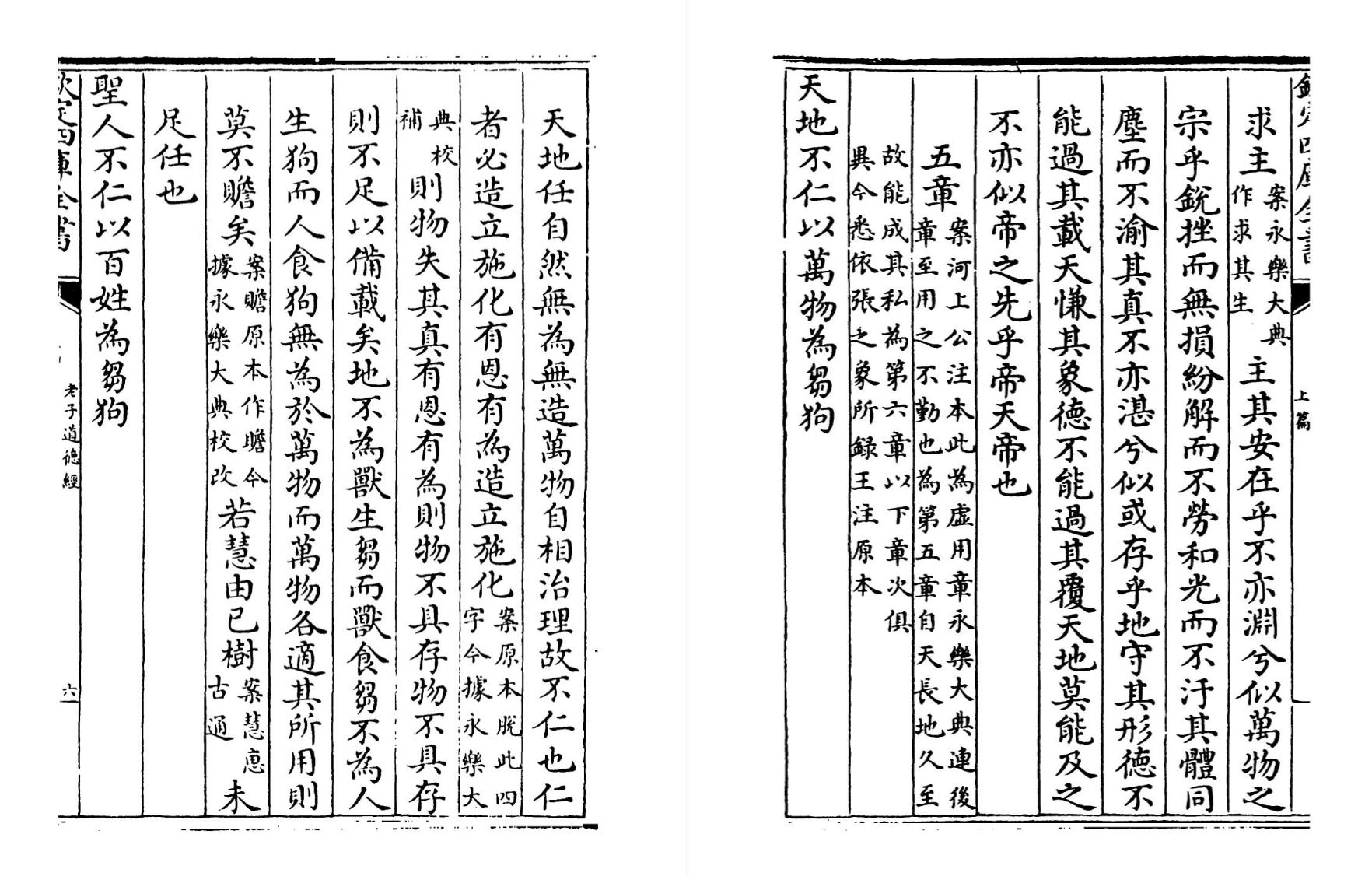
In ancient Chinese rituals, straw dogs were used as ceremonial offerings. During the ritual, they were treated with the utmost reverence. The moment the ritual ended, they were discarded and trampled in the dust. They were not hated; they were simply no longer relevant to the process.
To the Tao, humanity is a straw dog. This is not a statement of cruelty, but a statement of ontological equality. The cosmos is a cycle that does not prioritize human survival or human “uniqueness.” Translations often soften this “heartlessness” into “impartiality,” but such a move masks the shock of the original text. Taoism describes a reality where humans are not the protagonists.
The Grammar of Being vs. The Grammar of Flow
The problem of translation is also structural. English and other Indo-European languages are “Noun-Heavy.” There is a linguistic preference for things to stay still so they can be named. To the Western mind, the world is a collection of discrete entities acting upon one another.
Western Realism: The Subject (Human) acts upon the Object (Nature).
Taoist Realism: There is a process of “nature-ing” in which the human is currently participating.
The Tao is not a “thing.” It is not a noun. It is closer to a verb. It is the process of unfolding. When it is translated as “The Way” or “The Path,” a dynamic process is transformed into a static destination.
This linguistic friction is why Westerners often struggle with Wu Wei (无为, effortless action). In a world defined by human uniqueness, “action” must be a product of the human will. A person chooses to act. But in Taoism, the highest form of action occurs when the human will dissolves so that the Tao can act through the individual. This idea challenges the Western liberal tradition, which holds the ‘individual will’ as the most sacred force in existence, central to human dignity, moral responsibility, and autonomy. While the Western self is often defined by its capacity to choose and shape the world, Taoism views the self as an interconnected part of a larger, natural flow, advocating for effortless action that arises from alignment with the Tao, not from forceful human intention.
The Western ego asks: “How can I follow the Tao?” The Taoist text suggests that there is no “I” to follow it, and no “Tao” to be followed. The self is an illusion, a temporary aggregation of Qi. The Tao is not an external road or goal to be consciously pursued. It is the natural, underlying flow that connects all things. True alignment with the Tao comes not through active pursuit, but through the dissolution of the ego, allowing the individual to merge seamlessly with the Tao’s flow.
Become a “Straw Dog”
For centuries, the belief in human uniqueness gave the West the moral justification to treat the Earth as a resource—an “Object”—for “Subject” needs. It was believed that human technology and reason would eventually exempt the species from the laws of nature. Today, through climate instability and the rise of decentralized Artificial Intelligence, it is becoming clear that the universe is indeed “heartless” in the way Lao Tzu described. Nature does not negotiate with human exceptionalism.
The “Tao” may represent the ultimate realism for a post-humanist era. It suggests that the insistence on human uniqueness is not a sign of intelligence, but a sign of delusion.
By moving away from attempts to translate “Tao” into “God,” “Reason,” or “Logic,” and simply using the transliteration Tao (or Dao), modern scholars are finally allowing the concept to do its work. It acts as a “glitch” in the Western linguistic software. It forces a confrontation with a reality where: Order is not imposed from the top down: It emerges from within the system (Self-organization). Humans are not the observer: They are both the observed and the observation itself. Language is a cage: The more one tries to “name” the world, the further one moves from its truth.
Taoism offers an invitation to transcend the ego-driven, anthropocentric worldview. It invites to embrace the fleeting and interconnected place in the universe, to become, in a sense, a “straw dog”, humble, impermanent, and fully integrated into the flow of existence.
Beyond the Name
When a modern translation of the Tao Te Ching leaves the word “Tao” untranslated, it is a white flag of surrender. It is an admission that the categorical mind has met a concept it cannot colonize.
Translating the Tao is not about finding a better word in English. It is about decentering the human long enough to realize that the “Way” does not require a human walker to exist. The Tao was there before there were names for things, and it will remain long after those names have faded into silence.
Humanity is not the master of the sea; it is simply the foam on the waves. The ‘loss of uniqueness’ lies a different kind of freedom. It is the freedom of no longer needing to “translate” the universe, and finally beginning to live within it.


True. The linguistic baggage is subtle but I'd add that it can be clarified a bit. Notice the confusions start because, as English translators, we have to "fill out" the noun phrase with 'the' (Legge's choice) and decide on capitalization (to make it parallel with God vs gods). Or we could use 'a' or 'some' especially if we are influenced by Dàoism's second sage, Zhuangzi who sees Many dàos from many perspectives.
If you understand mereology you can cut the gordian knot and use dào with the grammar English speakers use for water (as Laozi illustrated)
And that helps with your sound insight that dào is not a command or obligation nor uniquely a guide for humans. There are dàos, as Zhuangzi reminds us, of worms and dirt. And you and I have many dàos to choose from and many dàos/ways of choosing. That is why Dàoism is more liberating than conventional "command moralities/religions. We are in dào as fish are in water (Zhuangzi again)!
Great overview of the inadequacies of translation and the agenda of the Jesuits in their translations.