

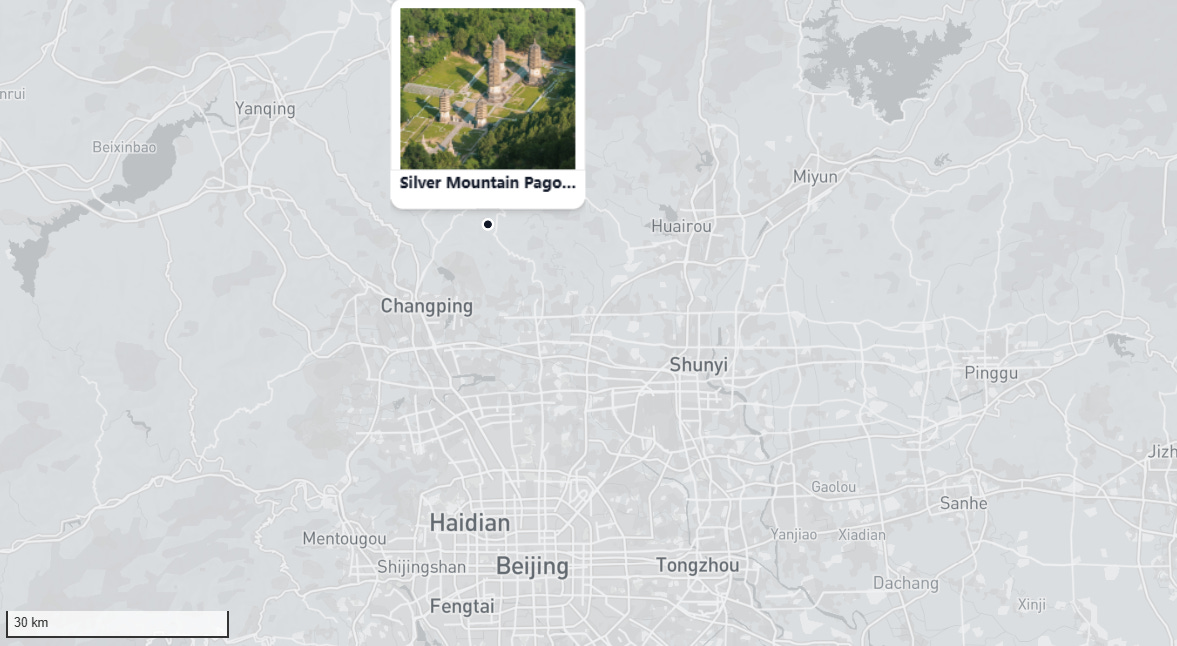
North of Beijing, the same mountains that carry the Ming Great Wall and the imperial Ming Tombs hide a quieter landmark: a field of memorial pagodas, some raised centuries earlier. Locals call these mountain and cliff “Iron Wall, Silver Mountain”. In the meadow below, stone towers stand like a small city, each one a monk’s grave turned into architecture.

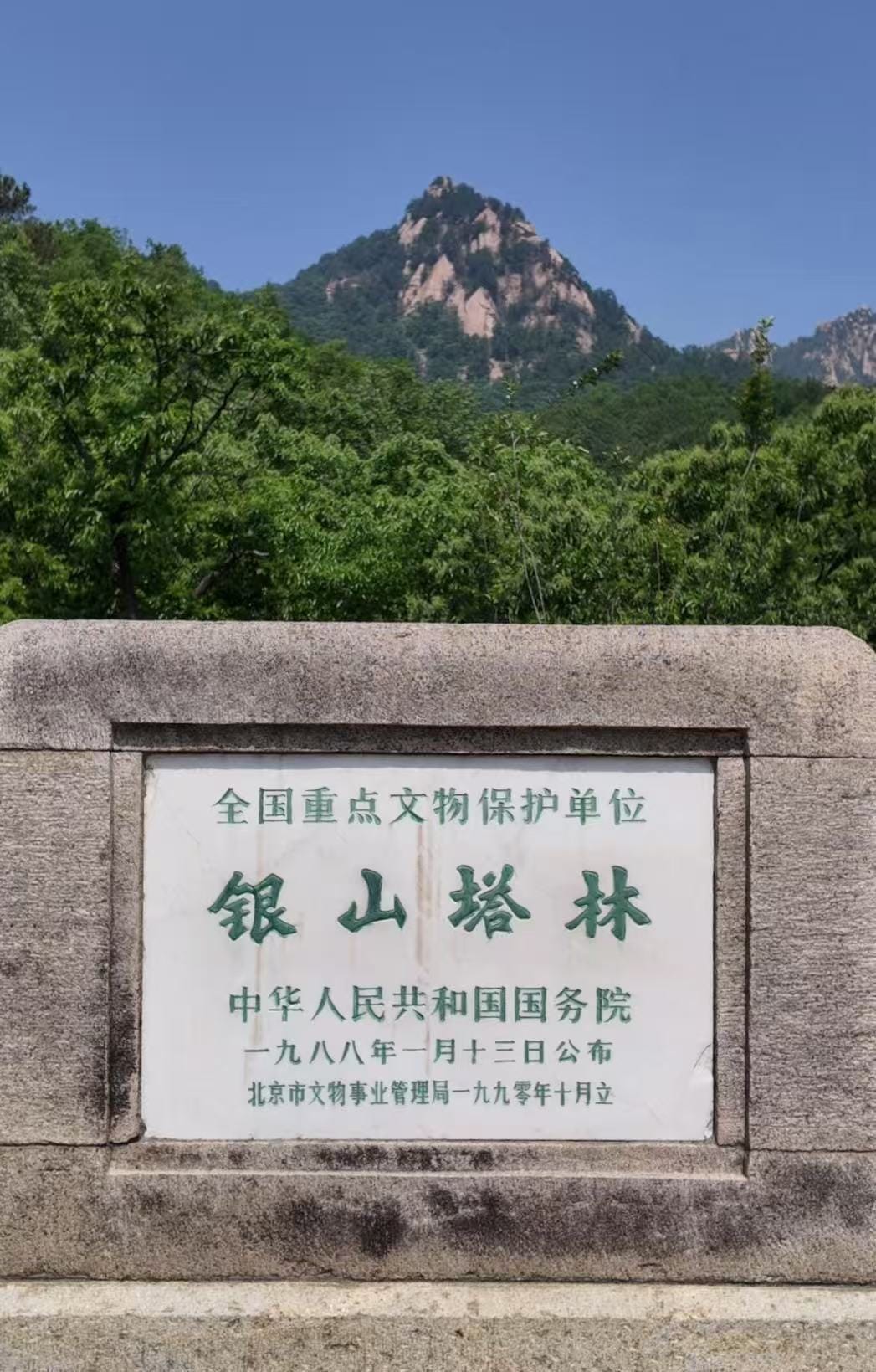
The heart of the site, today called Yinshan Pagoda Forest (银山塔林),is the former precinct of Fahua Temple (法华寺). It was the showpiece of the whole valley. You still find temple traces in the grass: foundation lines, column bases, stone steps, wellheads. From the Tang (9th century) onward, eminent monks were cremated and enshrined here according to rank, each with a lingta (灵塔), a funerary stupa/pagoda. Nearly twenty survive along the foot of the hill. That density gives the place its name: a “pagoda forest.”
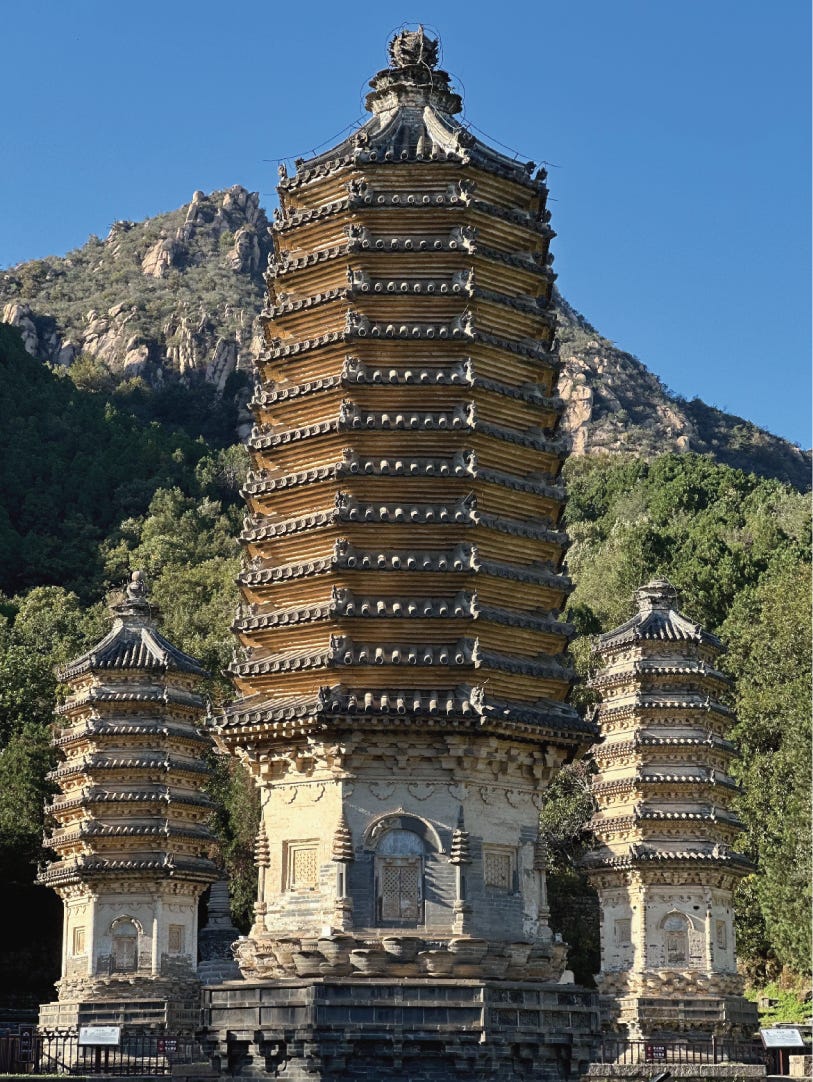
Under the Liao (辽, 10-12th centuries) it flourished as Baoyan Chan Temple (宝岩禅寺); under the Jin (金, 12-13th centuries) it was Yansheng (延圣寺); in the Yuan (元, 13-14th centuries) it returned to Baoyan; in the Ming (明, 14-17th centuries) the emperor Yingzong (明英宗) bestowed the title “Fahua Temple,” sealing its status as a royal monastery. At its peak in the Jin, sources counted some 500 monks and 72 subsidiary hermitages spread across the slopes. The roll of clergy is long: Liao masters Tongli (通理), Tongyuan (通圆), Jizhao (寂照); Jin-era Fojue (佛觉), Huitang (晦堂), Yixing (懿行), Xujing (虚静), Yuantong (圆通), Hejing (和敬), names that now live on as stone.
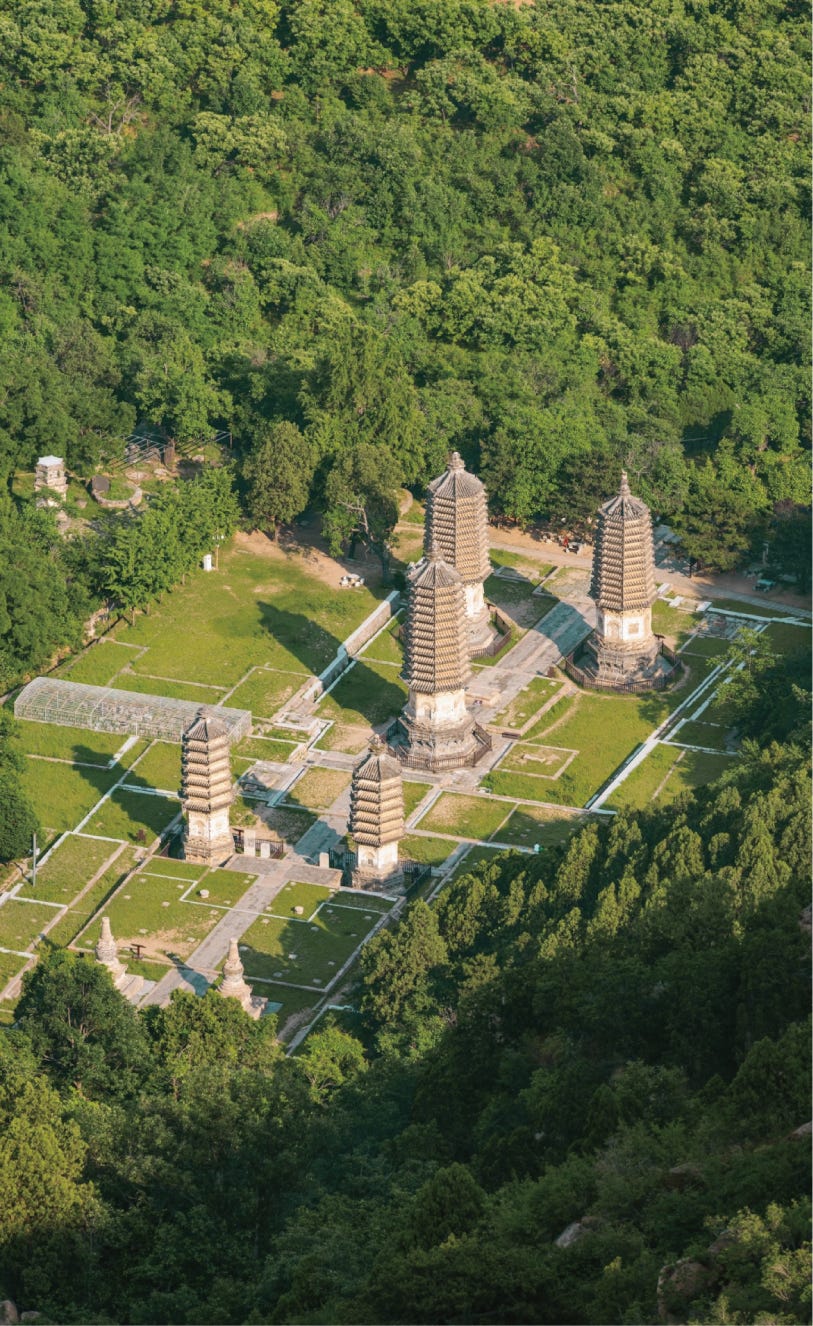
All the towers here are tomb pagodas, but they vary wildly in size. The tallest rise a little over 20 meters with bases seven meters across; the smallest stand no higher than a person. Two forms dominate: the dense-eaves tower (mi-yanshi 密檐式), a northern specialty that stacks thin, tight cornices up an octagon; and the domed stupa (fuboshi 覆钵式), which reads more like a compact reliquary. Yinshan preserves the best, most concentrated group of dense-eaves pagodas around Beijing.
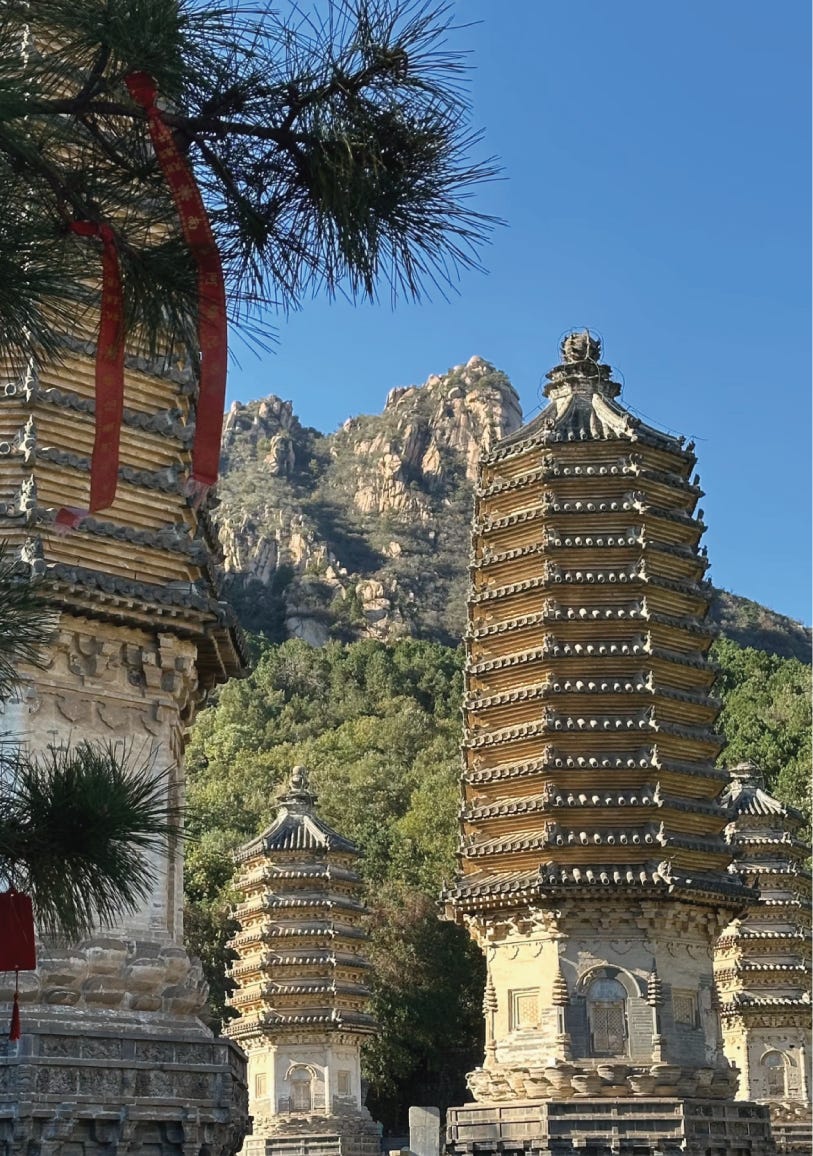
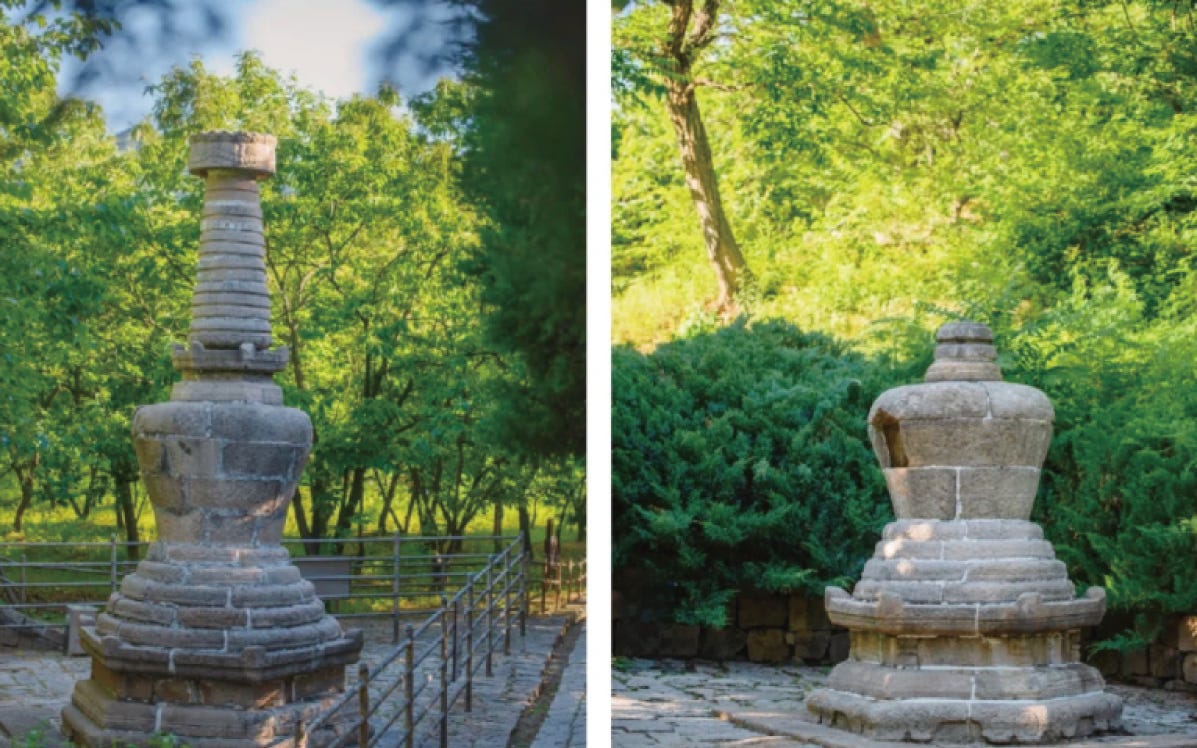
These choices were not mere style. In North China, where stone and brick outlast timber, builders translated the “grammar” of wooden temples into durable materials. The result at Yinshan is a legible dictionary of that translation: stone brackets for wooden ones, carved rails for real balustrades, imitation window frames to honor a temple that is no longer there.
The story is not only ascent. After centuries of decline, the main halls were dismantled during the war in the 1940s during Japan occupation. The towers were damaged but endured. In the decades after 1949, conservation teams stabilized the site. The Silver Mountain Pagoda Forest preserves a thousand years of northern Buddhist building practice in one compact field. It shows how a capital region layered faith, politics, and craft into forms that could weather war and abandonment.
If my insights brought you a fresh perspective, please consider supporting me by buying me a coffee. Your generosity fuels my writing.
Ultimate Travel Guide to China

When I travel across China, I rarely follow lists of cafes or new landmarks. Instead, I follow the List of National Key Cultural Heritage Sites (全国重点文物保护单位). Over time, this list has become my atlas, guiding me to caves with fading pigments, brick walls that still hold the sound of old footsteps, and temples where history lingers in the shade. I keep ex…
2000 Years of Chinese Buddhism

Can you imagine that in 2025, you can practice yoga, browse an art exhibition, or even dance with a cocktail in hand—inside a centuries-old Buddhist temple in Beijing? Once solemn spaces for meditation and monastic discipline, many temples across China have been reimagined as wellness retreats, cultural hubs, or lifestyle destinations.
Very interesting article on a beautiful place. I enjoyed it very much.
Nice piece, thanks much.