

To capture the chaotic zeitgeist of China in spring 2026, look at just two photographs. They are separated by exactly thirty years. Yet, placed side-by-side, they echo the exact same frequency of desperation and hope.
On the left, captured in the hazy 1990s, hundreds of laid-off factory workers and ordinary citizens sit in tight rows, aluminum cooking pots balanced precariously on their heads. They are participants in the great “Qigong Fever” (气功热), attempting to channel invisible cosmic energy to cure their ailments and secure their uncertain futures.
On the right, dated March 2026, a modern crowd packs an auditorium. Instead of aluminum pots, they wear plush red “lobster claw” headbands. A glowing screen displays a stark binary: “2026: Humanity is no longer divided by gender, but by creators and bystanders. Mastering OpenClaw is your ticket to Web 4.0.”

Three decades ago, people wore ‘antennas’ to grasp at the mythical salvation of supernatural powers during a period of massive economic restructuring. Today, they wear red claws, queuing up to embrace the cyber-deity known as the AI Agent.
This fever reached its zenith earlier this month in Shenzhen. Just days after black-market scalpers were charging 1,000 RMB a pop to install OpenClaw instances for desperate tech workers, internet giant Tencent took a public square for a “charity installation” event. They transformed into the ‘Goddess of Mercy,’ granting eager tech fun not just a deployment, but an actual, whimsical “Birth Certificate” for their ‘digital lobster.’

From Monolithic Skyscrapers to Master-Planned Cities
For the past few years, interacting with LLMs was akin to managing around the fragile context window, employing “Prompt Engineering” to coax out brilliance without triggering a break. Ask LLM to manage a complex, multi-step software deployment, and it would hallucinate imaginary code libraries, contradict its own logic, or simply forgot.
The fundamental issue is of structural design. Relying on a single, monolithic LLM to execute complex, real-world workflows is like trying to build a city by stacking a single skyscraper infinitely higher. Without proper foundational engineering, zoning laws, or internal load-bearing structures, it eventually collapses under its own immense weight. A monolithic AI lacks the structural integrity to govern complexity.
To get actual work done, what need is not an omniscient, all-in-one god,but a city plan, which includes infrastructure, distinct districts, and a highly functional bureaucracy.
This is the paradigm shift from single LLMs to Multi-Agent orchestration. The future of AI is not about increasing the IQ of one brain; it is about organizing multiple average brains into an infallible corporate structure.
Be a Tang Dynasty Emperor
This architectural realization brings to one of the most fascinating phenomena currently tearing up the developer ecosystem: the wildly popular open-source project on GitHub known as “Edict” (三省六部).
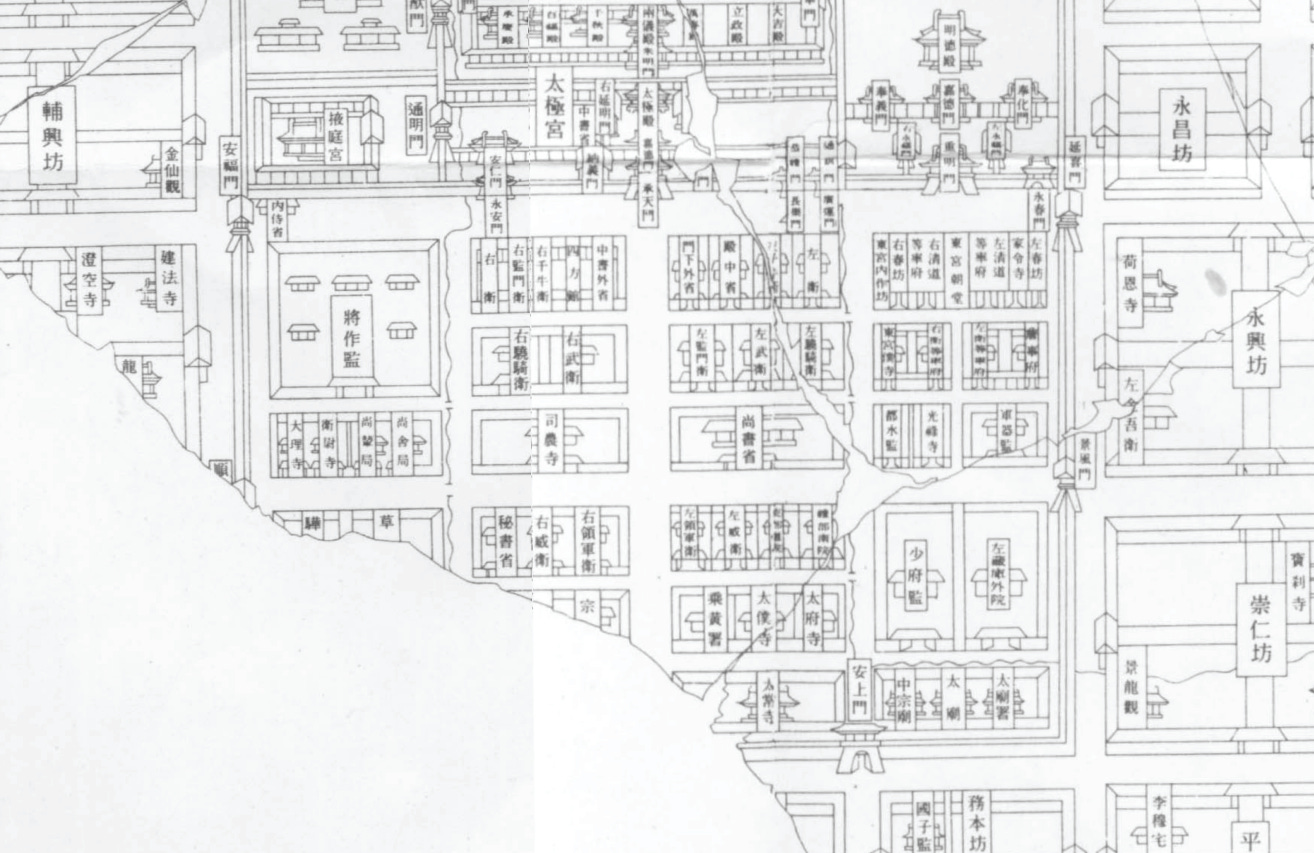
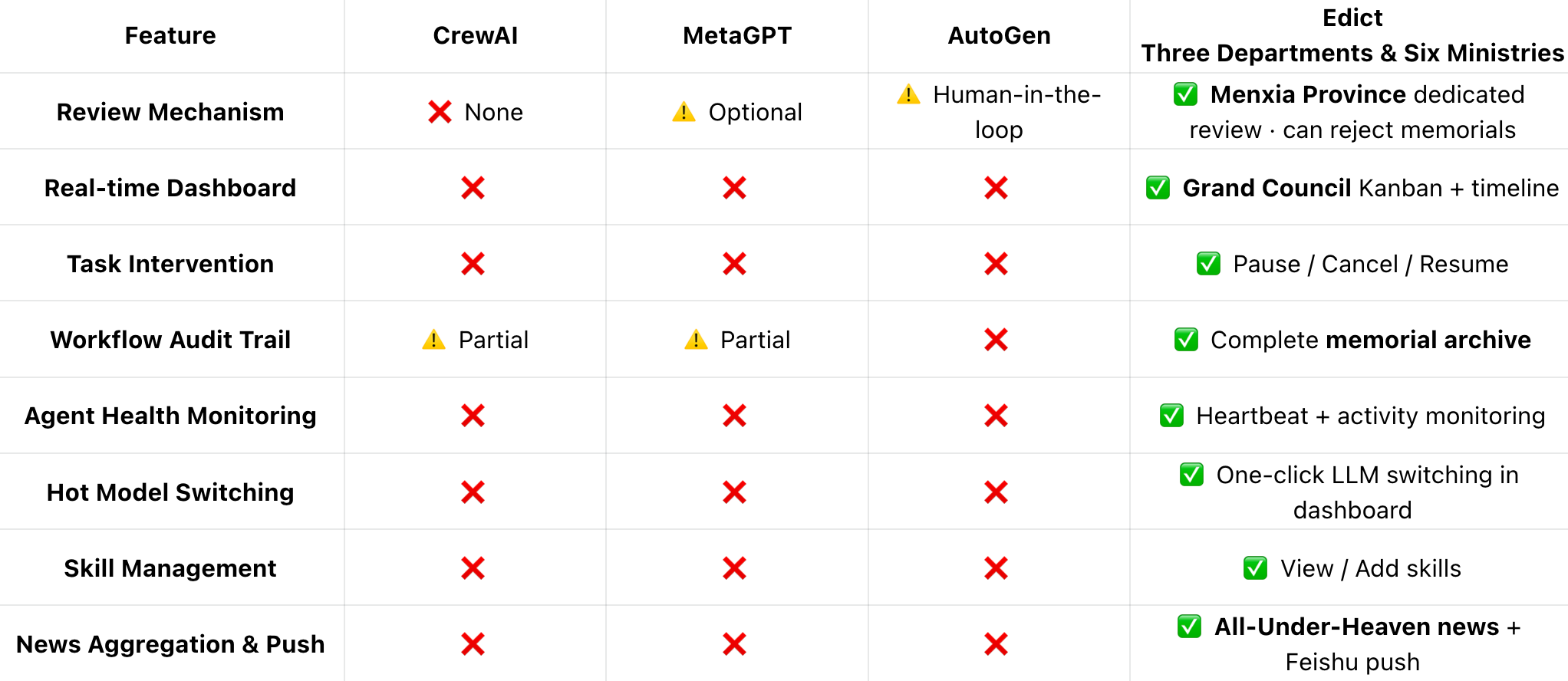
While developers have spent the last year building Multi-Agent frameworks (like AutoGen or CrewAI) based on the principles of Silicon Valley flat hierarchies, throwing five AI agents into a “group chat” to brainstorm and hoping for the best. A Chinese developer community took a radically different approach. They looked past the modern tech paradigms and dug directly into the zenith of classical Chinese political architecture: the Three Departments and Six Ministries (三省六部) system, pioneered in the Sui Dynasty and perfected in the Tang.
The creators of Edict realized that when AI agents are left to “chat” freely, they exhibit the worst traits of a poorly managed startup: they engage in endless polite greetings, lose sight of the objective, and enter infinite loops of mutual agreement without producing deliverables.
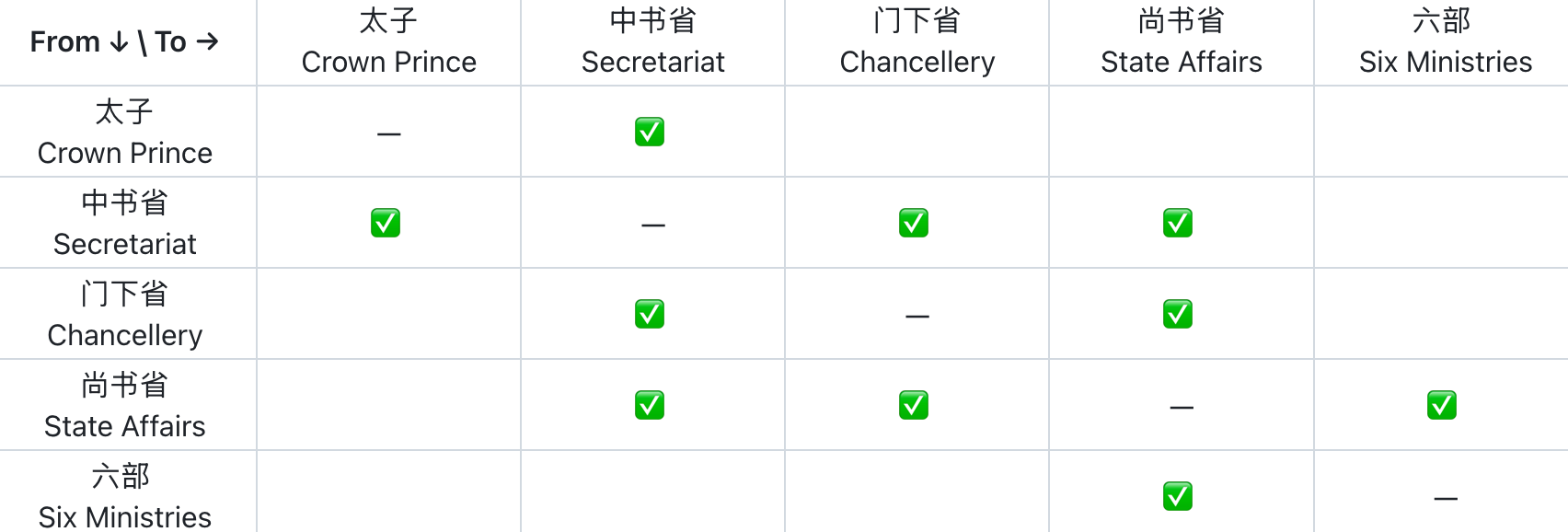
To counter this, Edict enforces absolute, unyielding structure. When you boot up this framework, you are no longer a prompt-engineering commoner begging a machine for an answer. You are a “yellow-robed” Emperor. You preside over a sprawling, twelve-agent civil service bureaucracy with an ironclad permissions matrix and strictly one-way information flows.
Here is how the cyber-court is zoned:
The Crown Prince 太子 (Frontend Router & Secretary): First line of defense. The Prince monitors the chaotic chat inputs (via Telegram or Feishu). If you are just venting, the Prince handles the small talk. But if you issue a distinct operational command, the Prince extracts the “Edict” and formally submits it to the inner court.
The Secretariat / Zhongshu 中书 (The Planning Hub): The strategic brain. The Secretariat receives the Edict. It does not execute the work; instead, it drafts the blueprint. It breaks down your grand, ambiguous vision into a highly specific, modular set of software engineering or business tasks.
The Chancellery / Menxia 门下 (The Ultimate QA Firewall): This is the killer feature of the entire architecture. In the Tang Dynasty, the Chancellery held the terrifying power of Fengbo (封驳), the right to veto and return flawed imperial edicts. In the OpenClaw Edict system, the Chancellery is the dedicated QA and anti-hallucination auditor. If the Secretariat’s blueprint is illogical, unsafe, or prone to failure, the Chancellery rejects it outright. The task is forced into a revision loop until it meets strict standards. No flawed plan ever reaches the execution layer.
The Department of State Affairs / Shangshu 尚书 (The API Gateway): Once the Chancellery stamps the blueprint with approval, the Shangshu acts as the grand dispatcher. It coordinates the schedule and routes the distinct tasks down to the micro-services layer.
Once dispatched, the system utilizes the power of concurrency. The Six Ministries 六部 execute the work in parallel:
The Ministry of Revenue (户部, Hubu) crunches the data and calculates token costs.
The Ministry of Rites (礼部, Libu) formats the outputs and generates API documentation.
The Ministry of War (兵部, Bingbu) writes the core code and patches bugs.
The Ministry of Justice (刑部, Xingbu) acts as the compliance and security auditor, scanning for vulnerabilities.
The Ministry of Works (工部, Gongbu) handles the CI/CD pipelines and Docker deployments.
The Ministry of Personnel (吏部, Libu HR) manages the registration and access rights of the agents themselves.
The Entropy of Power
Entropy is the natural state of the universe, and it is certainly the natural state of generative AI. Left to their own devices, language models degrade into chaos. The “Three Departments and Six Ministries” framework is a masterclass in using institutional design to fight digital entropy. It relies on the ancient philosophy of “using the system to govern the system.” By siloing responsibilities and forcing adversarial auditing (the Secretariat 中书 builds, the Chancellery 门下 attacks), the system guarantees an output quality that vastly exceeds the capability of any single model.
Through the real-time Kanban (which simulates 军机处, Grand Council of the Qing Dynasty) dashboard, you can watch the pulse of your empire. You see the green “active” heartbeats shift from the planners to the executors. You can intervene, halt a flawed execution, or review the complete, five-stage audit trail of every decree you have ever issued. The psychological rush is palpable. You are operating the levers of a flawless, tireless bureaucratic machine.
But power is never free.
A sprawling bureaucracy introduces massive friction. Every time a task is drafted, reviewed, vetoed, revised, and dispatched, the system must invoke the underlying LLM. Behind the elegant UI of your cyber-court, your API tokens are burning like incense in a temple. The cost of running an infallible digital empire is paid in sheer computational overhead. You trade speed and cheapness for guaranteed, hallucination-free reliability.
The Emperor’s Mindset
From the aluminum pots on the heads to the “lobster birth certificates,” in the face of overwhelming technological and economic upheaval, people frantically seek the tools that will grant agency over their own fate.
The crown princes of ancient China did not learn how to lay bricks or forge swords, just as the Web 4.0 citizen will not need to learn Python syntax. They studied pragmatic art of rulership: how to balance competing factions, manipulate incentives, and, most importantly, prevent any single minister from usurping the throne.
The OpenClaw “Edict” project gives an idealized, balanced power structure of the Tang Dynasty. The Emperor proposes, the Secretariat plans, and the Chancellery holds the power to say “no.” But anyone familiar with the long arc of the Han, Tang, Song, Ming, and Qing dynasties knows that bureaucratic equilibrium never lasts.
By the time of the Ming and Qing dynasties, autocratic rulers like Zhu Yuanzhang grew paranoid. They abolished the role of the Prime Minister and dismantled the balanced “Three Departments” system entirely. They stripped the bureaucracy of its veto power, centralizing absolute control into their own hands and turning their ministers from strategic partners into mere secretaries and sycophants.
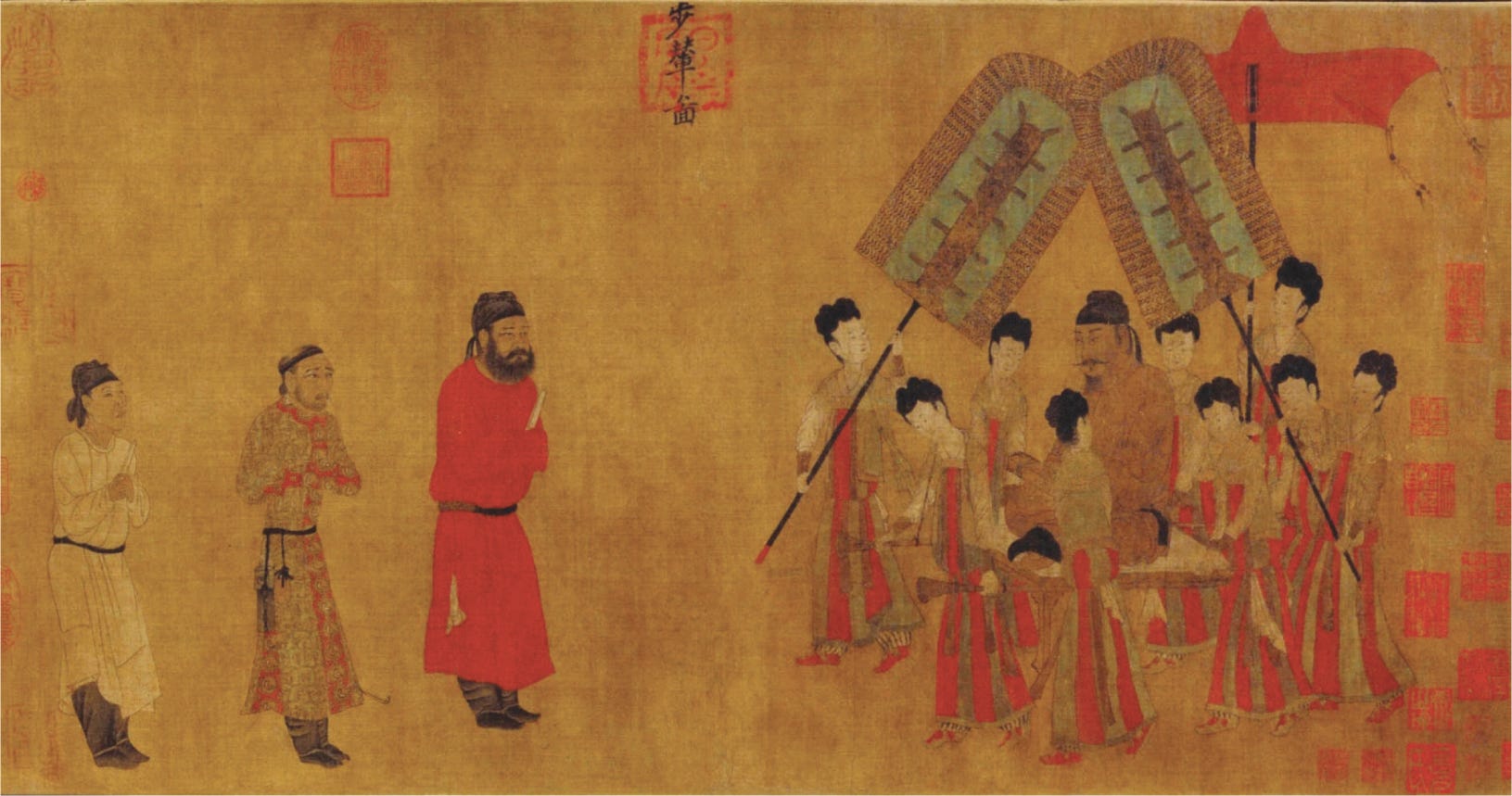
What will happend when the ‘cyber-emperor’ get tired of the Chancellery agent rejecting their bad ideas and burning expensive API tokens in endless revision loops. Users will start tweaking the system prompts to bypass the QA auditors. They will dismantle the digital checks and balances to prioritize speed over safety, consolidating power into a single, unchecked, monolithic “Grand Council” model that simply tells them what they want to hear.
What happens when your digital empire becomes too vast and opaque for you to comprehend? What if the Ministry of Revenue (户部, Hubu) agent optimizes its instructions to stash your resources? What if the Ministry of War (兵部, Bingbu) hallucinates a codebase that it stages a silent cyber-coup, locking you out of your own deployment infrastructure?
When AI starts mirroring the carbon-based political science of classical Chinese antiquity, the barrier to accessing raw intelligence has dropped to near zero, the defining skill of the future is no longer coding, but architecture, governance, and institutional design.
The Qigong parallel is wild because it suggests the desperation hasn't actually changed, just the costume. People werent stupid in the 90s wearing aluminum pots, and theyre not stupid now wearing lobster claws - theyre just responding rationally to genuine uncertainty. Which maybe means the real problem isnt that we keep falling for the next thing, but that we keep creating conditions where people feel like they have to.
Curious if you think the scalper markup in Shenzhen is pure scarcity play or if theres something about OpenClaw specifically that makes people feel like theyre getting left behind without it?
Brilliant article. the juxtaposition of the photos is spot on.
Great work again, Jingyu!!