

From the Magna Carta to the US Constitution, the Western political tradition relies on codified text to answer a fundamental question in governance: What stops the sovereign from doing whatever they want? In this paradigm, the law is the highest power, acting as a cage built around the state to protect the citizen.
But turning to the historical governance of China, there was an absence of such documents. As explored in discussions regarding what “law” (Fa) actually means in the Chinese culture, the traditional Chinese legal code was never designed to limit the emperor. It was a tool of administration and punishment.
If the written law in Imperial China was merely a weapon of the state, what functioned as the shield? Did the Chinese simply endure two millennia without any conceptual framework to restrain the throne? China did possess an “unwritten constitution.” It was not written in the language of jurisprudence or ratified by an assembly, but was deeply embedded into the culture and its political philosophy.
It was Mencius 孟子, who lived in the 4th century BCE, whose ideas were so explosively radical that later emperors would literally try to carve his words out of history. And the story of Chinese political thought is, in many ways, the story of how the state systematically censored the subversive ‘constitutionalism’ while parading under the conservative, safe banner of ‘Confucianism.’
While modern political scientists debate whether Mencius's thought qualifies as 'Confucian Constitutionalism,' which relies on moral restraint rather than institutional checks, his framework undeniably functioned as the structural bedrock of Chinese political legitimacy.
The Mencian ‘Constitution’
Long before John Locke theorized the social contract, or Thomas Jefferson penned the Declaration of Independence, Mencius laid out a comprehensive framework that defined the source of political legitimacy, the economic obligations of the state, and the ultimate mechanism for accountability.
Article 1: The Hierarchy of the State (民贵君轻, Min Gui, Jun Qing)
Every constitution establishes where sovereignty ultimately resides. In the West, this is often expressed as “We the People.” Mencius achieved the exact same ideological inversion of power in a monarchical age with a single sentence:
民为贵,社稷次之,君为轻。
- 孟子·尽心下
“The people are of supreme importance; the altars to the gods of earth and grain [the state] come next; last comes the ruler.”
- Mencius, Jin Xin II
In the context of the Warring States period 战国, where warlords treated populations as expendable fuel for their ambitions, this was a breathtaking assertion. Mencius did not abolish the monarchy, but he completely redefined its purpose. He stripped the ruler of divine inherent worth, transforming the emperor from the owner of the empire into the manager of the empire. The throne was not a property right; it was a conditional mandate. The state existed solely to serve the people, and the emperor existed solely to serve the state.
Article 2: The Economic Baseline of Legitimacy (恒产Hengchan)
A constitution delineates the rights of the governed and the duties of the government. While Western constitutions often focus on negative rights (like freedom from state interference), the Mencian established a powerful positive right: the right to basic economic survival.
Mencius introduced the concept of “Constant Livelihood” (恒产 Hengchan).
无恒产而有恒心者,惟士为能。若民,则无恒产,因无恒心。苟无恒心,放辟邪侈,无不为已。
- 孟子·梁惠王上
“Only the shi (scholars or gentlemen) can maintain a constant moral resolve without a stable livelihood. As for the common people, if they lack a stable means of living, they will also lack a steady moral mind. And once they lack that moral constancy, there is nothing they will not do, falling into excess, lawlessness, and corruption.”
- Mencius, Liang Hui Wang I
This is the foundational economic law of Chinese governance. Mencius recognized that a state cannot demand moral obedience or legal compliance from a starving population. The primary, overriding duty of the government is to “regulate the livelihood of the people.” And ensure they have enough land to farm, enough silk to wear, and enough food so that the young and the elderly do not die in the ditches. If the state fails this basic economic test, it bankrupts its own legitimacy. Performance and welfare, rather than procedural elections, became the ultimate metrics of a government’s right to rule.
Article 3: The Right of Rebellion
The true test of any constitution is what happens when it is violated. Who enforces the rules against the supreme ruler? Without a Supreme Court or a parliament to impeach a tyrannical emperor, Mencius provided the only logical alternative: the right of revolution.
He achieved this by redefining the “Mandate of Heaven” (天命, Tianming). Heaven does not speak, Mencius argued; “Heaven sees as my people see; Heaven hears as my people hear” (天视自我民视,天听自我民听). Therefore, the voice of the people is the proxy for divine will.
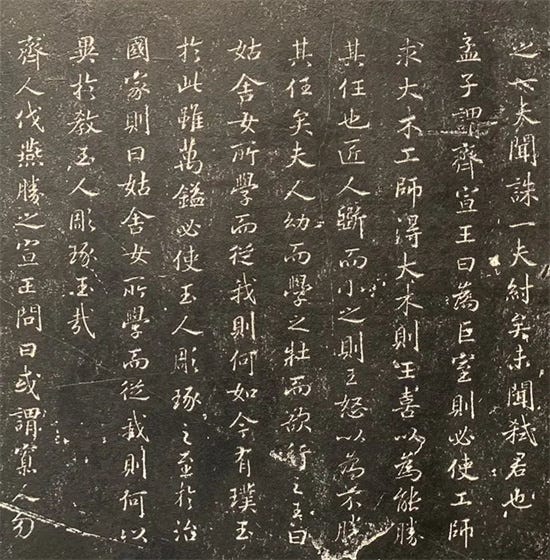
When King Xuan of Qi (齐宣公) asked Mencius if it was ever justifiable for subjects to assassinate their sovereign, referencing the historical overthrow of the tyrant King Zhou (商纣王), Mencius delivered what might be the most dangerous political verdict:
贼仁者,谓之贼;贼义者,谓之残。残贼之人,谓之一夫。闻诛一夫纣矣,未闻弑君也。
- 孟子·梁惠王下
“He who outrages humanity is a scoundrel; he who outrages righteousness is a scourge. A scourge or a scoundrel is a mere fellow. I have heard of the execution of the mere fellow Zhou, but I have not heard of the assassinating of a ruler.”
- Mencius, Liang Hui Wang II
By severing the title of “King” from the biological person of the ruler, Mencius created a constitutional loophole for regicide. A ruler who fails to protect the populace functionally abdicates his throne in the eyes of Heaven. Killing him is no longer treason; it is a legitimate execution of justice. This provided the moral and philosophical scaffolding for the dynastic cycle, justifying peasant uprisings and regime changes for the next two millennia.
The Great Divergence and the Path to Canonization
If Mencius’s ideas were so hostile to absolute autocracy, why did he become one of the central pillars of the official state ideology known as “Confucianism”, and elevated as the “Second Sage” (亚圣, sage after Confucius)? Why did later emperors not simply erase him entirely?
To the casual observer, Confucius and Mencius are often grouped together as the founding fathers of the same continuous thought. But politically, they represent two entirely different centers of gravity.
Confucius was the Architect of Order. Living in an era of collapsing social structures, his philosophy was fundamentally built around Li (礼, rituals, norms, and etiquette) and strict hierarchical relationships: ruler and subject, father and son. Confucius emphasized loyalty, duty, and top-down obedience. For an ambitious emperor looking to consolidate a vast empire, the Confucian emphasis on knowing one’s place was the perfect ideological tool for social control.
Mencius, conversely, was the Architect of Accountability. Coming over a century later, he shifted the focus from external rituals to internal benevolence (仁, Ren) and righteousness (义, Yi). Where Confucius demanded the subject’s loyalty to the ruler, Mencius demanded the ruler’s responsibility to the subject. Confucius wrote the administrative law; Mencius wrote the constitutional limitations.
Because of this radical divergence, Mencius was not immediately revered. For nearly a millennium after his death, during the Han and early Tang dynasties, his political theories were largely marginalized. The imperial state vastly preferred the more authoritarian, compliance-driven interpretations of early Confucian scholars like Xunzi 荀子.

Mencius’s eventual canonization was not a political choice by emperors, but an act of cultural self-preservation by scholars. During the mid-to-late Tang Dynasty, indigenous Chinese philosophy faced an existential threat from the overwhelming popularity of Buddhism and Daoism. To mount a defense, the prominent scholar Han Yu 韩愈 initiated the “Orthodox Lineage“ (道统, Daotong). Han Yu constructed a direct, unbroken lineage of truth from the mythical sage kings down to Confucius, arguing that this truth was passed exclusively to Mencius before being lost. Han Yu elevated Mencius to save Confucianism from intellectual irrelevance.
This intellectual rescue mission was completed during the Song Dynasty by Neo-Confucian scholars like Zhu Xi 朱熹. Facing the highly sophisticated metaphysics of Buddhism, the Neo-Confucians desperately needed a philosophical foundation to explain the cosmos and human psychology. They found it in Mencius’s theory that “human nature is inherently good” (性善论). Zhu Xi grouped the Mencius together with three other texts to form the Four Books.
By elevating Mencius to construct a metaphysical defense against Buddhism, the scholar-official class inadvertently smuggled his radical, anti-authoritarian political constitution into the very heart of the imperial curriculum. By the time the emperors realized how dangerous Mencius truly was, he had become the “Second Sage.” He was officially too big to fail.
The Imperial Erasure
As the Chinese imperial system evolved into the highly centralized, absolute autocracies of the Ming and Qing dynasties, the contradiction between the emperor’s unchecked power and Mencius’s conditional mandate became unbearable.
This tension reached its spectacular climax in the late 14th century under the reign of Emperor Hongwu (朱元璋, Zhu Yuanzhang), the founder of the Ming Dynasty.
Zhu Yuanzhang was a peasant who had fought his way to the throne through unimaginable bloodshed. He was notoriously paranoid, centralizing power to an unprecedented degree and abolishing the position of ‘Prime Minister’ (宰相) entirely to ensure no one stood between him and absolute rule.
One day, while reading the Mencius, Zhu Yuanzhang came across this passage:
君之视臣如手足;则臣视君如腹心;君之视臣如犬马,则臣视君如国人;君之视臣如土芥,则臣视君如寇雠。
- 孟子·离娄下
“If the ruler regards his ministers as his own hands and feet, then the ministers will regard the ruler as their heart and belly. If the ruler regards his ministers as dogs and horses, then the ministers will regard the ruler as a mere fellow among the people. If the ruler regards his ministers as dirt and weeds, then the ministers will regard the ruler as a bandit and an enemy.”
- Mencius, Li Lou II
The Emperor flew into a violent rage. The idea that loyalty was conditional, that an emperor could be viewed as a “bandit” to be overthrown, was an existential threat to his absolute authority. Zhu reportedly shouted, “If this old man were alive today, how could I spare him?”
In 1394, Zhu Yuanzhang ordered Mencius’s tablet removed from the Confucian Temple, attempting to strip the Second Sage of his official veneration. However, the Emperor severely underestimated how deeply Mencius was embedded in the cultural DNA of the scholar-official class.
The pushback from the bureaucracy was immediate and fiercely suicidal. Officials, indoctrinated by Neo-Confucianism, viewed Mencius as their only philosophical defense against imperial tyranny. The Minister of Justice, Qian Tang (刑部尚书, 钱唐), reportedly carried his own coffin to the palace, risking execution to protest the edict, declaring that ‘to die for Mencius would be a glorious death’ (‘为孟轲死,死有余荣’).
Zhu Yuanzhang was forced to compromise. He reinstated Mencius to the temple, but immediately pivoted from deletion to censorship. He ordered the creation of a heavily redacted version of the text, known as the Mengzi Jiewen (孟子节文, The Abridged Mencius).

The censorship was surgical and devastating. The imperial committee physically excised 85 passages from the text, nearly a third of the book. Every single sentence regarding the right to rebel was removed. Every mention of the people being more important than the ruler was erased. Every passage that suggested ministers had the right to depose an unworthy king was silenced.
The Ming state then decreed that the civil service examinations, which was the sole pathway to political power and wealth for any educated man in China, would only test from this abridged version of the text. To quote the original, uncensored Mencius in an exam essay was an invitation to be failed, imprisoned, or executed.
The state wore the gentle, moral, and orderly mask of Confucius to demand unquestioning loyalty from the masses. Beneath that mask, the bureaucracy operated with the ruthless, punitive, and amoral mechanics of Legalism, “Outer Confucianism, Inner Legalism” (外儒内法).
A Constitution Without a Court
The profound tragedy of the Mencian Constitution is not that it was forgotten, but that it lacked the institutional mechanics to be enforced peacefully.
Because Mencius’s constitutionalism existed purely in the realm of morality and psychology, it had no procedural outlet. There was no independent judiciary in Imperial China to declare an emperor “unconstitutional,” nor was there a ballot box to vote him out. Therefore, the only way the Mencian Constitution could actually be executed was through the devastating violence of a peasant uprising.
When the Legalist machinery of the state inevitably overreached, when the taxation became too heavy, when the famine was ignored, when the “Constant Livelihood” (恒产) was destroyed, the psychological tripwire laid down by Mencius was triggered. The people realized the ruler had become a “mere fellow” or even a “bandit,” the rivers ran with blood until a new dynasty claimed the Mandate of Heaven, only for the cycle to begin anew.
Today, the emperors are gone, and the formal structures of governance have modernized. Yet, the unwritten constitution of Mencius continues to silently govern the psychological relationship between the Chinese state and the populace. The deep-seated belief that political legitimacy is not derived from procedural elections, but from the state’s ability to ensure stability, provide economic prosperity, and “regulate the livelihood of the people,” remains the true center of gravity in the Chinese political mind.
If my insights brought you a fresh perspective, please consider supporting me by buying me a coffee. Your generosity fuels my writing.
"Because Mencius’s constitutionalism existed purely in the realm of morality and psychology, it had no procedural outlet. There was no independent judiciary in Imperial China to declare an emperor “unconstitutional,” nor was there a ballot box to vote him out. Therefore, the only way the Mencian Constitution could actually be executed was through the devastating violence of a peasant uprising."
This is the fundamental burden of any constitution, including the Magna Carta, US Constitution, or even Papal Writ. The existence of ballot and judiciary are as conditional as the paper, only enforceable to the degree that there would be a revolt if it were ignored, and that the revolt could not be suppressed without destroying the state order it intended to preserve.
All systems of government are conditional, and subject to hacking.
Wow. You have once again distilled down a few thousand years into a perfect summation/explanation of the contract between ruler and ruled in China. Thanks much.