

When Chinese intellectuals at the turn of the twentieth century began rebuilding their nation’s cultural identity, they faced a perplexing question: did China ever have philosophy?
It was not a trivial matter. To admit that China lacked philosophy meant conceding that it had no systematic way of reasoning, no logic, no metaphysics, leading to no intellectual foundation comparable to the West. Yet to claim that China did have philosophy required redefining what “philosophy” itself meant. Between these two positions stretched the century-long struggle over how China would be understood both by the West and by itself.
The Birth of “Zhexue” an Imported Category
The word zhexue (哲学) did not exist in classical Chinese. It was imported from Japan in the late nineteenth century, where translators, encountering the Western philosophia, coined new terms to fit it into the East Asian lexicon. When Chinese reformers such as Yan Fu (严复), Zhang Zhidong (张之洞), and Liang Qichao (梁启超) encountered these terms, they brought them back to China along with the very idea that knowledge could be divided into discrete disciplines: science, politics, economics, and philosophy.
This linguistic import carried with it a conceptual revolution. Chinese intellectual traditions, rujia (儒家, Confucianism), daojia (道家, Daoism), fajia (法家, Legalism), fojia (佛家, Buddhism), had long existed, but they were not seen as “philosophical systems” in the Western sense. They were moral, spiritual, and political teachings, practical in orientation, often concerned with self-cultivation rather than abstract reasoning.
To translate them into “philosophy” required reshaping their language, hierarchy, and purpose. Suddenly, Dao (道) had to be explained as “metaphysics,” Li (礼) as “principle,” Xin (心) as “mind,” and Zhi (知) as “knowledge.” What was once a way of life became a system of ideas. Every translation is also an act of transformation. To borrow the concept of ‘philosophy’ is to borrow the West’s way of asking questions.
Hu Shi and the Pragmatic Turn
Among those who took up this task most energetically was Hu Shi (Hu Shih, 胡适). A student of John Dewey at Columbia University, Hu Shi was one of the first Chinese thinkers to apply pragmatic philosophy to Chinese history. His Outline of the History of Chinese Philosophy (1919) sought to reconstruct early Chinese thought as a coherent intellectual tradition with its own logicians, empiricists, and rationalists.
For Hu Shi, the project was both scholarly and nationalistic. He believed that to modernize China, one must first prove that China had been modern all along, that its ancient thinkers had already possessed something akin to the scientific spirit. Confucius became an ethical humanist; Mozi (墨子), a utilitarian; Zhuangzi (庄子, also known as Zhuang Zhou 庄周), an early relativist.
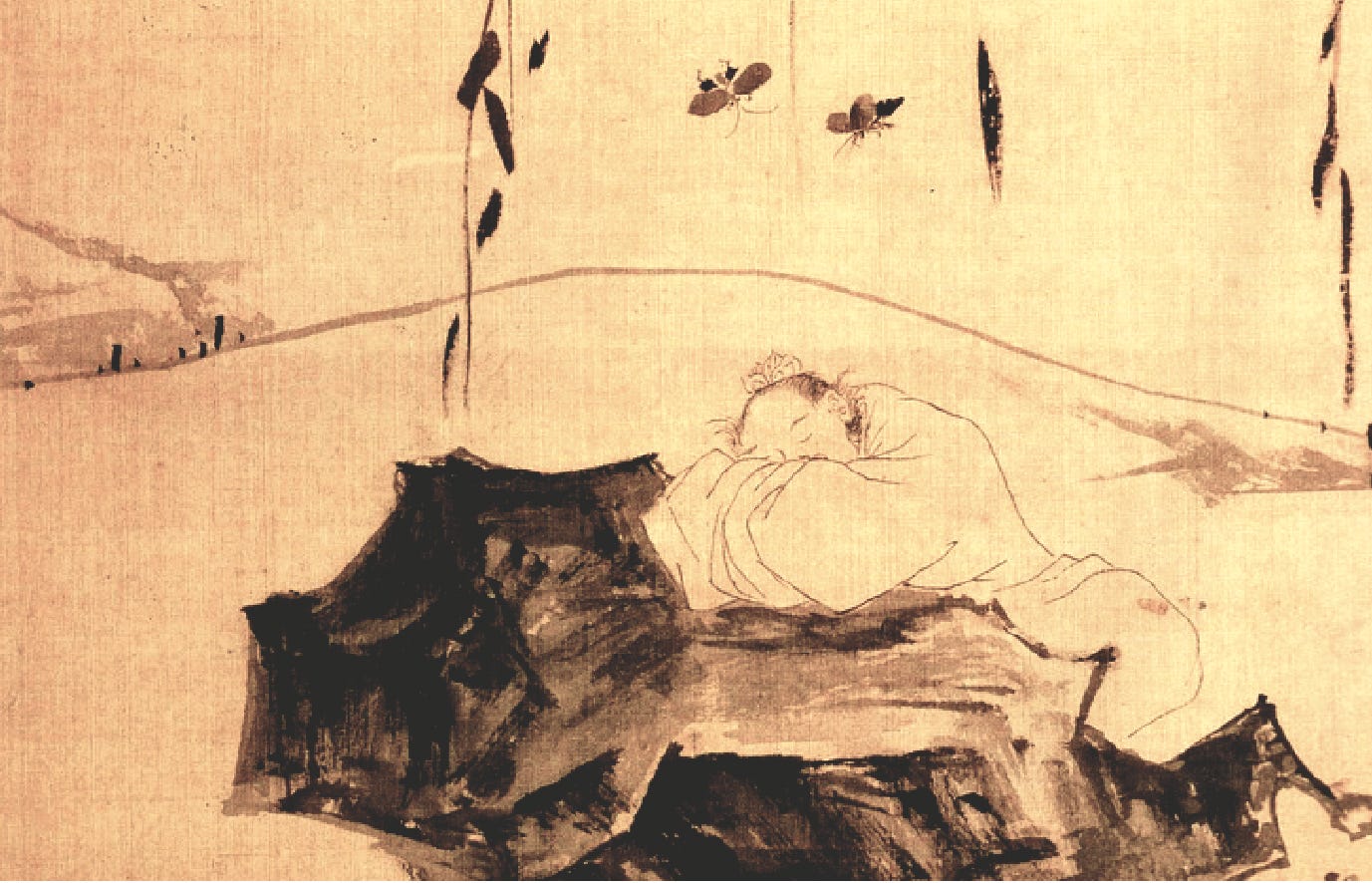
Yet this translation came at a cost. To fit Chinese thinkers into Western categories, Hu Shi had to recast their ideas into alien frameworks. Dao (道) became “reason,” De (德) became “virtue ethics,” and even wu wei (无为) the Daoist idea of effortless action was reinterpreted as a kind of pragmatic adjustment to circumstance.
Hu Shi’s project made Chinese thought legible to the modern university system. But it also stripped it of its original texture. In seeking to prove China had philosophy, he transformed it into something that looked more Western than Chinese.
Feng Youlan and the System of Chinese Philosophy
If Hu Shi’s approach was historical and pragmatic, Feng Youlan (Fung Yu-lan, 冯友兰) pursued something more systematic. Educated at Columbia and Harvard, Feng sought to rebuild Chinese philosophy in the image of Western metaphysics. His monumental History of Chinese Philosophy (1934) presented Confucianism, Daoism, and Neo-Confucianism as parts of an evolving philosophical system, complete with logic, ontology, and epistemology.
Feng described Li (礼, principle) and Qi (器, matter) in terms reminiscent of Aristotelian substance and form. He mapped the “School of Mind” and the “School of Principle” onto Western idealism and realism. His later Xin Li Xue (新理学, New Rational Philosophy) even proposed a synthetic system combining Neo-Confucian moral metaphysics with the logical clarity of analytic thought.
Feng’s ambition was vast: to make Chinese philosophy universal, to show that it could stand alongside Plato, Kant, and Hegel. But like Hu Shi, he was also a man of his time, a generation haunted by the fear that their culture might be deemed “irrational” or “unscientific.” To survive modernity, Chinese thought had to become “philosophy.”
The paradox was profound. In order to prove that Chinese thought was equal to Western philosophy, Feng Youlan had to reconstruct it in the image of the West. The very act of translation was also an act of self-colonization. It seemed that to make Chinese thought modern, Feng had to make it foreign first.
The Countermovement: Beyond Western Categories
By the mid-twentieth century, new voices began to question this philosophical translation project. Thinkers such as Mou Zongsan (Mou Tsung-san, 牟宗三), Tang Junyi (Tang Chun-i, 唐君毅), and Li Zehou (李泽厚) argued that the attempt to fit Chinese thought into Western categories missed its essence.
Mou Zongsan, one of the leading figures of the New Confucian movement, claimed that Chinese philosophy was fundamentally moral metaphysics, a philosophy that begins not from doubt or analysis, but from moral intuition. For Mou, the heart of Chinese thought lay in the cultivation of the moral self (cheng, 诚 and ren, 仁), not in constructing abstract systems.
Tang Junyi extended this argument: “Chinese philosophy is not about constructing a system,” he wrote, “but about transforming the self.” The purpose of knowledge in the Chinese tradition was not to conquer nature or to discover immutable laws, but to harmonize the human heart with the moral order of the cosmos.
Li Zehou later reframed this debate in Marxist and materialist terms. He argued that the West privileged cognition: the knowing subject, while China emphasized praxis: the moral actor. For Li, this meant that Chinese thought was not “pre-philosophical,” as some claimed, but post-philosophical: it already transcended the narrow epistemology of the West.
This generation no longer sought to prove that China “had philosophy.” They sought instead to prove that philosophy itself must expand to include the kinds of wisdom traditions the West had long dismissed as “thoughts,” “teachings,” or “ways.”
What Philosophy Leaves Out
At the root of this debate lies a linguistic problem. In Greek, philosophia means “love of wisdom.” Yet in its modern academic form, philosophy has become a technical discipline: logical analysis, argumentation, categorization. It privileges abstraction and coherence over intuition and moral transformation.
Chinese traditions, by contrast, were always grounded in practice: ritual, governance, self-cultivation. A ru (儒) scholar was judged not by his ability to reason but by his ability to act rightly. The Daoist sage pursued spontaneity, not system. The Buddhist monk sought liberation, not theory.
This difference of orientation is not trivial; it shapes the entire structure of knowledge. To call Confucius a philosopher, as Hu Shi did, is to shift the focus from how to live to how to think. It elevates theory over practice, reason over virtue. Yet for two thousand years, Chinese civilization flourished precisely because it treated wisdom as inseparable from life.
The problem, then, may not be that China lacked philosophy, but that philosophy as a modern category is too narrow to contain what China has.
The Politics of Translation
Behind the intellectual debate lurked a deeper anxiety: China’s place in the world. The late Qing and Republican periods were marked by humiliation, colonization, and reform. To claim that China had philosophy was to claim that it had civilization and that it could stand as an equal among nations.
Philosophy thus became a form of soft power, a marker of modernity. Chinese thinkers translated themselves into the West’s language not because they loved the categories, but because they feared being excluded from the conversation.
This is why the project of “philosophizing” Chinese thought carried both pride and pain. It was an act of self-assertion and of self-loss.
Beyond the Frame
When Hu Shi and Feng Youlan tried to rebuild Chinese philosophy a century ago, they were doing more than writing history; they were rebuilding a bridge between civilizations. They succeeded, but only by bending their tradition into foreign shapes.
Their struggle reminds us that philosophy is not a neutral mirror of truth. It is a cultural invention, which a way of organizing experience, of deciding what counts as knowledge. Every civilization has its own version.
To think across traditions is not to translate one into the other, but to let each transform the way we see. The future of philosophy may lie not in uniformity, but in resonance: a world where Confucius and Socrates, Zhuangzi and Spinoza, can speak again on equal terms.
If my insights brought you a fresh perspective, please consider supporting me by buying me a coffee. Your generosity fuels my writing.
How China's Past Haunts Its Political Present

In 2012, when China’s sweeping anti-corruption campaign began, many observers interpreted it as a way to consolidate power and weaken rivals. That interpretation captured an important part of the story. Yet the campaign also struck a familiar chord for many within China: throughout history, rulers who failed to check corruption saw their dynasties decay…
The question “did China ever have philosophy?” already hides a mistake.
It assumes that philosophy is the starting point. But historically it rarely is. What we call philosophy is usually something that appears after life has already been lived and reflected upon.
In many traditions—Chinese, Japanese, Greek, or otherwise—the first layer was not abstract theory but practice, cultivation, and perception. Only later did someone step back and try to describe what was happening.
Confucianism, Daoism, and other Chinese traditions were not originally constructed as theoretical systems. They were ways of living, forms of ethical and social cultivation, practices embedded in ritual and everyday life. The word philosophy itself (哲学, zhexue) only appeared in China in the late nineteenth century, imported through Japan as a translation of a Western academic category.
So when twentieth-century scholars tried to “prove” that China had philosophy, they often translated these traditions into Western conceptual frameworks: Confucius became a humanist, Mozi a utilitarian, Daoism a metaphysics. But this move may say more about the categories of modern academia than about the traditions themselves.
The deeper question is not whether China had philosophy. The deeper question is why we assume philosophy must take a particular form—systematic theory, abstract metaphysics, analytical argument.
If thought begins in lived experience rather than in theory, then philosophy is not the origin of wisdom but a secondary crystallization of it.
In that sense, the real divide is not between “thought” and “philosophy,” but between living insight and the frameworks that later try to capture it.
Language always arrives late. Concepts are traces left behind by experience. And when we mistake those traces for the source, we start asking questions that already contain their own confusion.
Certainly the good life and being, certain strand of Platonism and Socratic philosophy can be harmonized with the Chinese approach. In many ways, Chinese philosophy was already existential.