

On the western edge of Beijing’s old city, the second ringroad highway runs directly over the ruins of the Ming dynasty walls. Driving along it, the view is striking: a massive chimney from the Beijing No. 2 Thermal Power Plant, once one of the capital’s main sources of heat. Beside this industrial relic, half-hidden among Khrushchev-era apartment blocks, stands something far older and quieter, a brick pagoda. This is the Tianning Temple Pagoda (天宁寺塔), once the tallest structure in Beijing and the oldest surviving above-ground building in the city. Rising 57 meters, its silhouette belongs more to a medieval chronicle than to the middle of a twenty-first century neighborhood.
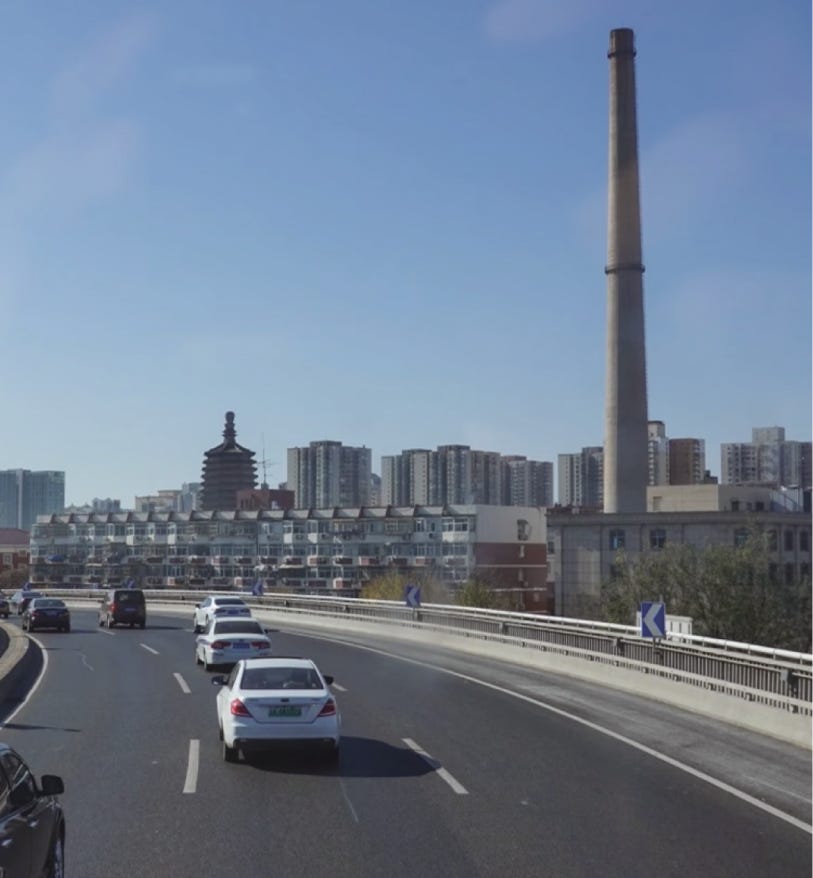
The Tianning Pagoda, built during the Liao dynasty in the early 12th century, is one of the oldest surviving structures in Beijing. Much of the original monastery complex has vanished. What remains is this solemn, commanding tower, a Buddhist relic that has outlasted emperors, invaders, and urban redevelopment. Its very survival, like that of other brick pagodas in northern China, reflects a broader pattern: the wooden temple halls have long since disappeared, but the pagodas endured, maintained as enduring symbols of devotion to the Buddha and the divine.
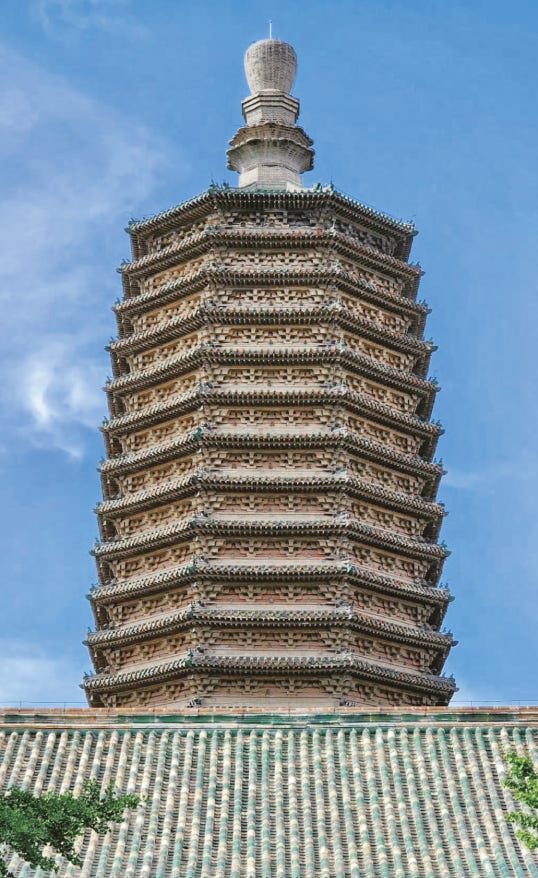
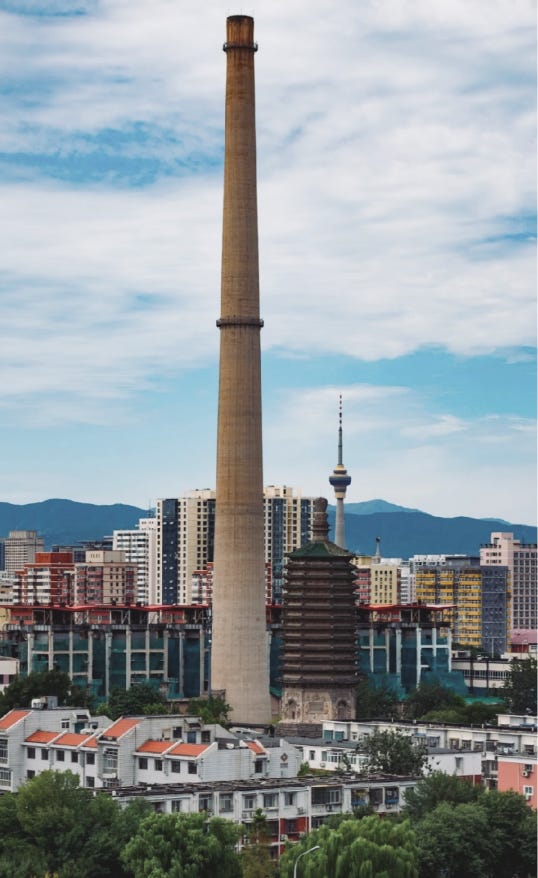
Step closer and the pagoda reveals its extraordinary detail. Tianning is built of dark grey brick, its surfaces covered with intricate carvings. Dragons coil around its base, their bodies merging with lotus blossoms and flame motifs. Layers of eaves project outward, each rimmed with delicate brackets and molded tiles. The tower seems to rise like a fossilized flame, at once massive and ethereal. In a city better known for the grandeur of the Forbidden City or the modern spectacle of the Bird’s Nest Stadium, this quiet, weathered pagoda feels like an artifact from another dimension.
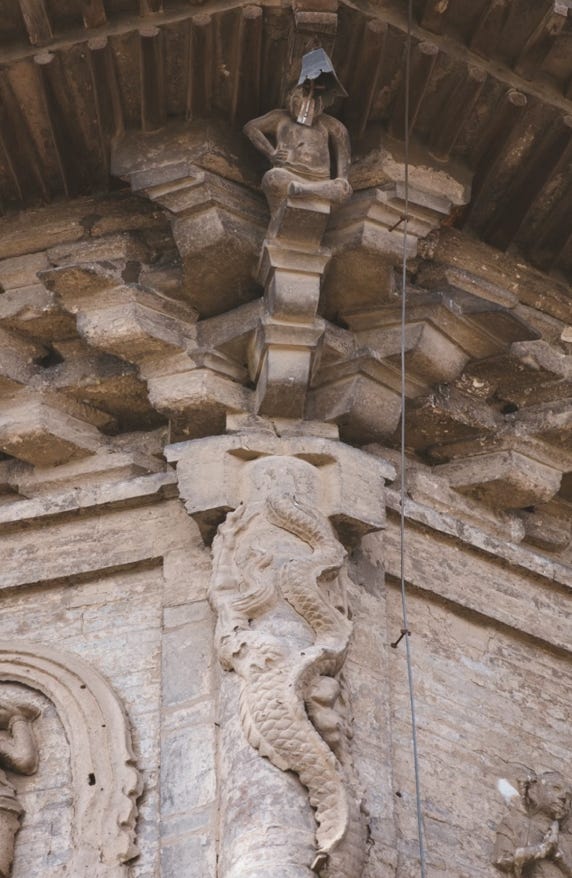
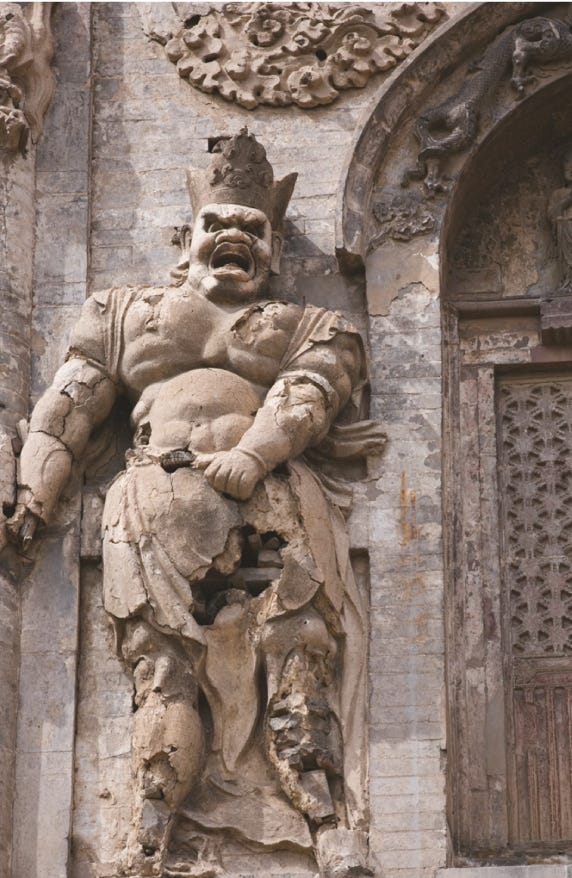
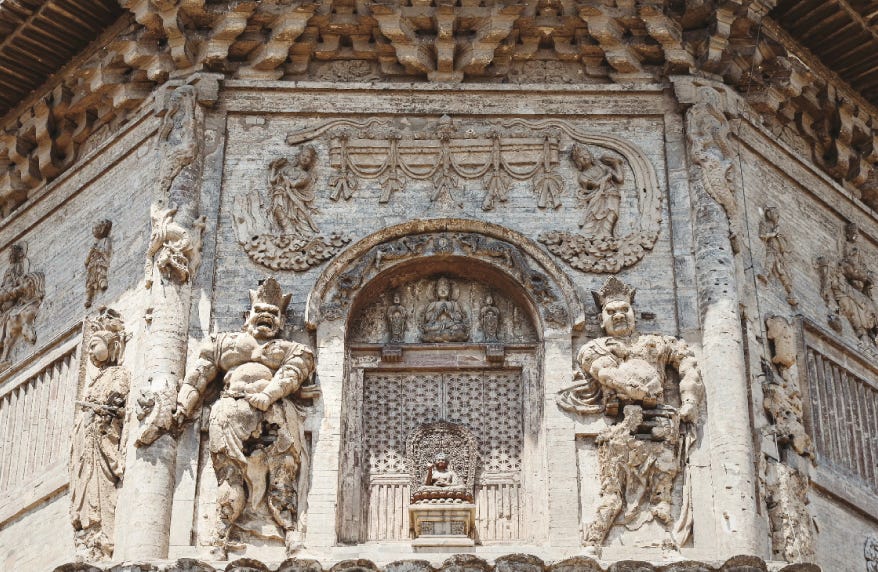
The pagoda was originally part of a Buddhist monastery patronized by the Khitan rulers of the Liao dynasty, a nomadic people who controlled northern China between the 10th and 12th centuries. Buddhism was both a spiritual anchor and a political tool for the Liao court, a way to connect their steppe origins with the sophisticated traditions of Chinese civilization. Most of the grand timber halls, Buddhist temples, and pagodas that still stand in northern China were first built under the Liao and their successors, the Jin. The Tianning Pagoda, erected as a reliquary to house sacred Buddhist texts or relics, embodied that ambition. Placing a pagoda at the heart of a Buddhist temple originated from the Indian stupa tradition, but over time the form gradually transformed into a distinctly Chinese structure, as seen in Tianning’s brick pogada.
That the pagoda still stands is something of a miracle. Over the centuries, dynasties rose and fell, Beijing itself was burned and rebuilt, and religious life shifted with changing tides of imperial favor. The rest of Tianning Temple crumbled. By the twentieth century, the pagoda had become a lonely survivor, battered by neglect and pollution. Around it, the Beijing Record Factory took over much of the land—just as many other factories and schools, facing a severe housing shortage after the founding of the People’s Republic, moved into the grounds of former temples. During the Cultural Revolution, when countless shrines were destroyed, local residents quietly protected the pagoda. In 1961, the government listed it as a nationally protected cultural relic—a designation that likely saved it from demolition when the surrounding district was redeveloped.

Fahai Temple - Beijing’s Secret 'Sistine Chapel'

On the western edge of Beijing, beyond a tangle of highways and smokestacks, stands a temple few tourists ever hear about. Fahai Temple (法海寺) is small, almost modest, yet inside its main hall lies a treasure that art historians whisper about with awe: Ming-dynasty murals so vivid they are considered a pinnacle of Chinese art.
Ultimate Travel Guide to China

When I travel across China, I rarely follow lists of cafes or new landmarks. Instead, I follow the List of National Key Cultural Heritage Sites (全国重点文物保护单位). Over time, this list has become my atlas, guiding me to caves with fading pigments, brick walls that still hold the sound of old footsteps, and temples where history lingers in the shade. I keep ex…
Wonderful! This is on my next Beijing list. Thanks for the tip! 🙏