

In the Confucian ranking of professions: shi, nong, gong, shang (士 scholar,农 farmer,工 artisan,商 merchant), commerce sat at the bottom. It was tolerated, taxed, and morally side-eyed. Unsurprisingly, economic conflict rarely became the headline of classical chronicles. Yet, when we look closely, states repeatedly used markets, tastes, and border regulations as tools of power. This essay sketches three episodes—Qi vs. Lu, Song vs. Liao/Jin, and Ming vs. the Mongols—to show how “trade war” logic operated across three very different strategic postures: peacetime first-strike, tense interdependence, and dominant embargo management.
Silk as Bait, Grain as Blade: The “Qi Silk and Lu White”
Qi Silk and Lu White: 齐纨鲁缟, Qi Wan Lu Gao
The scene opens in the state of Qi, on the Shandong coast, during the Spring and Autumn (8th-3rd centuries BC). Qi and Lu were neighbor states. Qi was famed for glossy patterned silk (wan), and Lu for austere white silk (gao). The story runs like this: Qi deliberately set off a fashion for these fabrics. Qi court edicts and elite taste pushed demand up; merchants and households in Lu and other rivals shifted labor from fields to looms to chase the boom. Then, once that shift had sunk costs and tied up manpower, Qi abruptly closed its own markets and restricted grain shipments.
The sequence was simple and ruthless: create demand, pull rival labor into textiles, shut the gate, tighten grain supplies. Cloth piled up unsold, farms had been neglected, and shortages followed. Within a season, the overexposed neighbors were negotiating on Qi’s terms. No armies moved; policy worked through incentives and timing.
Whether or not the anecdote is literal reportage, it captures a real doctrine from the Guanzi (管子)’s “Light and Heavy” (轻重, Qingzhong) chapters: shape preferences, engineer scarcity and abundance, and you can move prices—and rivals—without moving troops. In other words: make your rival’s strength unfashionable, and you can tax their pride. “Qi silk and Lu white” is a story about first-mover, peacetime offense: no siege lines, only a campaign waged through taste, price, and policy.
Song vs. Liao/Jin: Tense interdependence and rules that leak
Fast-forward to the Song (10th-13th centurie), the court confronted steppe and semi-steppe regimes (Liao, then Jurchen Jin) across fortified frontiers. Each side needed what the other had: the Song needed war horses; the north needed tea, textiles, salt, copper cash, books, and grain. That mutual dependence produced a paradoxical economy of confrontation: legal border markets and hard embargoes coexisted with omnipresent smuggling.
Both sides criminalized selling each other strategic goods: horses. Jurchen statutes imposed the death penalty for exporting horses; Southern Song decrees likewise made letting horses cross the line a capital crime. Tea and salt movements were tightly policed; the Song regulated who could cross, when, with what, and even forced trade through licensed intermediaries at state-run frontier markets (榷场, quechang). These restrictions aimed to keep the enemy hungry for remounts and to keep silver, salt, and tea under fiscal control. In practice, the rules leaked. Officials complained about unstoppable salt and grain smuggling; merchants dodged high duties by going off-book; even during famine, grain flowed across the Huai when prices made it irresistible.
The Song didn’t only punish; it designed the interface: legal border fairs under tight surveillance, quotas, and time limits. These “state monopolized markets,” used by Liao/Jin and the Song alike, institutionalized a managed exchange that could be dialed up (to buy calm) or down (to apply pressure). At sea, the Song likewise experimented with monetization and export controls (notably over copper cash), toggling openness and restriction to steer strategic flows.
As an instrument of coercion, the Song’s trade policy sometimes bit but rarely strangled. Embargoes on horses and metals signaled resolve and raised transaction costs; managed markets bought tactical calm. But the frontier was long, prices carry messages, and smugglers solve equations. The net result is a classic “rules that leak” regime: policy set the baseline price and risk, and trade found the cracks.
Unlike Qi’s fashion offensive, the Song couldn’t simply cut trade; it needed the frontier economy to work just enough to feed its army, while denying the enemy the things that mattered most.
Ming vs. the Mongols: Dominant embargo and the on-off frontier market
The Ming (14th-17th centuries) inherited a different frontier. After the Yuan collapse, Mongol polities fractured across the steppe, raiding and bargaining along a frontier the Ming fortified with the Nine Garrisons and pass systems we now group under the Great Wall. Trade didn’t vanish behind those walls; it was routed. Gates functioned like tollbooths, and exchange ran through licensed border markets. The practical choice was never “open vs. closed,” but controlled access vs. no access, a posture that favored a stronger agrarian state.
Ming rulers believed that material scarcity could discipline mobile rivals more reliably than punitive expeditions alone. The steppe depended on grain, textiles, and above all ironware. A kettle or plowshare seems mundane, yet it stabilizes a household and helps a community recover after a harsh winter. It is infrastructure in miniature. If those objects become unreachable, people feel it in the most ordinary tasks: boiling water, repairing a roof, breaking soil in spring. The court wagered that such deprivation would shorten tempers in the right direction and make the Mongol leaders seek accommodation.
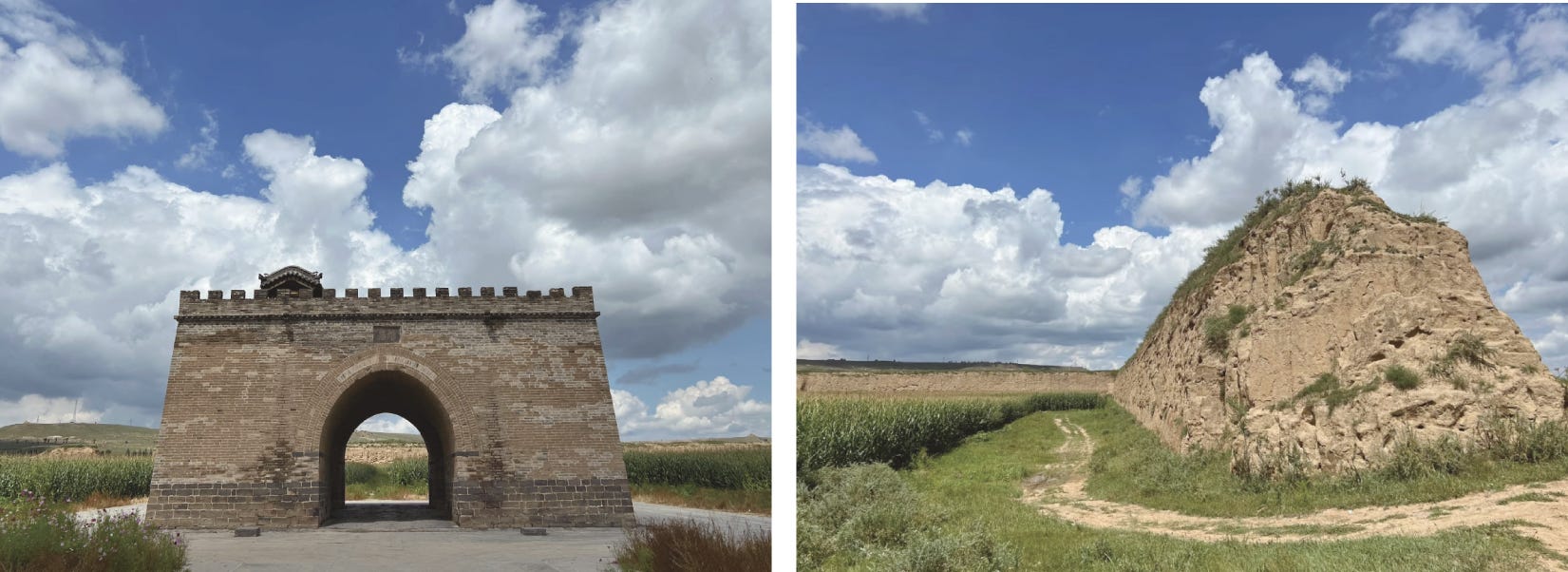
After cycles of violence, including Altan Khan’s (俺答汗) pressure in the 1550s–60s, the political hinge came in 1571: the Longqing settlement (隆庆和议) granted Altan Khan tributary titles and reopened markets along the Great Wall (Datong, Xuanfu, etc.). Peace was explicitly transactional: trade in exchange for quiet. From then on, the court could toggle access, open to pacify, close to punish, with immediate effects on prices and supplies across the line.
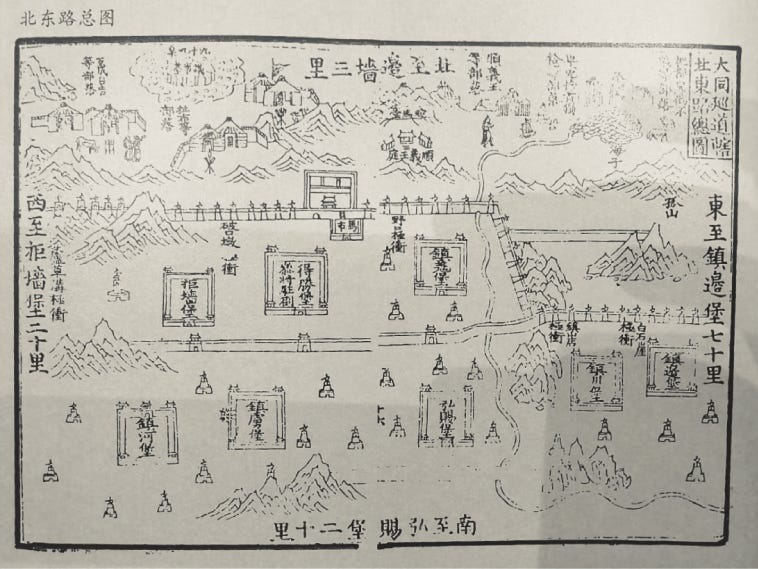
The Ming court also ran on contraband lists and licensing. Grain, tea, textiles, and manufactured wares moved; ironware, weapons, and gunpowder ingredients did not. Legal culture reinforced the boundary. The Great Ming Code provided penalties for illicit arms trade and frontier regulations spelling out what could pass.
Compared with the Song, the Ming held greater leverage. It could cut markets unilaterally and, after 1571, use on/off access as a durable carrot and stick. Raiding never disappeared, yet much frontier contact shifted into predictable, taxable exchange, lowering the payoff to high-risk banditry whenever stalls were open and stocked. Over time, peace through markets proved cheaper and often more reliable than campaigning.
The Quiet Hand on the Gate
In calm times, as with Qi and Lu, taste itself can be engineered and then withdrawn. In a standoff, as under the Song, markets can be made to breathe: never fully open, never fully closed, so that prices carry the message better than proclamations. And when one side holds the higher ground, as the Ming often did, the list of what may not pass: ironware, powder, the stubborn metal of daily life, does the speaking.
Trade war is less a rupture than a cadence. It moves at the tempo of harvests and convoys, of spring plowing delayed for lack of a ironware, of caravans idling until a seal is stamped. The instruments change, pass permits become licenses, contraband lists become export controls, but the questions stay familiar: How much pressure before it leaks? Which exception buys cooperation? How long do you let time do the work?
If my insights brought you a fresh perspective, please consider supporting me by buying me a coffee. Your generosity fuels my writing.
Further Reading
“Situating the Qingzhong” and discussions of economic manipulation in early Chinese statecraft.
“Merchants, Monetization, and Networking” , brief note that markets along the Great Wall were reopened in 1571 under Longqing.
How China's Past Haunts Its Political Present
·
In 2012, when China’s sweeping anti-corruption campaign began, many observers interpreted it as a way to consolidate power and weaken rivals. That interpretation captured an important part of the story. Yet the campaign also struck a familiar chord for many within China: throughout history, rulers who failed to check corruption saw their dynasties decay…

Hi Jingyu- "Prices carrying the market better than proclamations" is probably the stand-out sentence here. I love the way you weave prices, places, people, and as a matter of fact, 'proclamations.' A fascinating write-up. Hope you're well today? Cheers, -Thalia
“Rules that leak” - I love that!