

Walk into any museum wing labeled “Chinese Art” and you meet a tidy universe: bronzes, ceramics, scroll paintings, calligraphy, ink landscapes, maybe a room for Buddhist sculpture, perhaps a “contemporary” gallery at the end. Common as it is, that Chinese art gallery feels timeless. It isn’t. The very idea that these practices belong to one thing called “art”, a bounded field with schools, genres, museums, departments, and degrees, is a modern construction that arrived in China in the late nineteenth and early twentieth centuries. China has an immense, sophisticated aesthetic tradition; what it didn’t have, for most of its history, was Art as a single, capital-A domain.
Here I sketch two stories at once: first, how premodern China organized making, judging, and using beautiful things without a unified “art” category; second, how Euro-Japanese concepts of “fine art,” translated as 美术 (meishu) and 艺术 (yishu), reassembled those older practices into something we now call “Chinese art.”
Before “art”
Classical Chinese sources talk constantly about 美 (mei, beauty), 艺 (yi, cultivated skills), 术 (shu, techniques), and 乐 (yue, music). However, these distinct elements were never formally integrated into a single academic discipline or institutional field comparable to the Western notion of “Art.” Instead of a unified category, three specific features defined how these practices and objects were valued and understood within the premodern Chinese world.
The foremost concern was an object’s function within the ritual order and social life. Items like bronze vessels, jades, textiles, and architectural ornaments derived their primary importance from their ability to stabilize ritual and society. A bronze ding (a tripod or four-legged vessel), for instance, was not conceptualized as a “sculpture”; it was a functional vessel whose value was inseparable from its role in rites and history. While beauty and exquisite craftsmanship were certainly appreciated, they were ultimately regarded as qualities that contributed to the object’s proper and effective use.
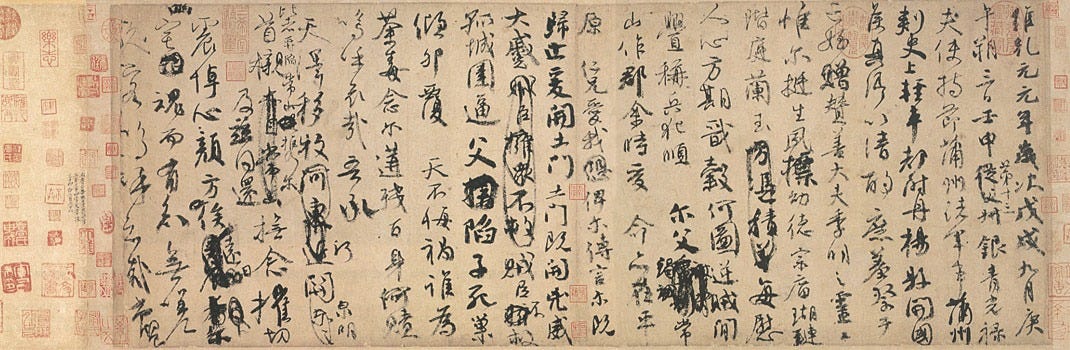
A second crucial feature was the preeminence of writing as the highest form of making. Calligraphy occupied the summit of all cultivated skills because it was understood as inseparable from self-cultivation and moral character. The very act of writing was seen as the act of forming one’s person, and judging a person’s script was, in essence, judging their character. Painting, particularly when practiced by scholar-officials, aligned itself with this moral and ethical framework. An ink landscape was valued not just for its visual composition, but for its brushwork, which was esteemed using the same criteria applied to fine calligraphy, and was often read in combination with the poetry, colophons, and inscriptions it carried.
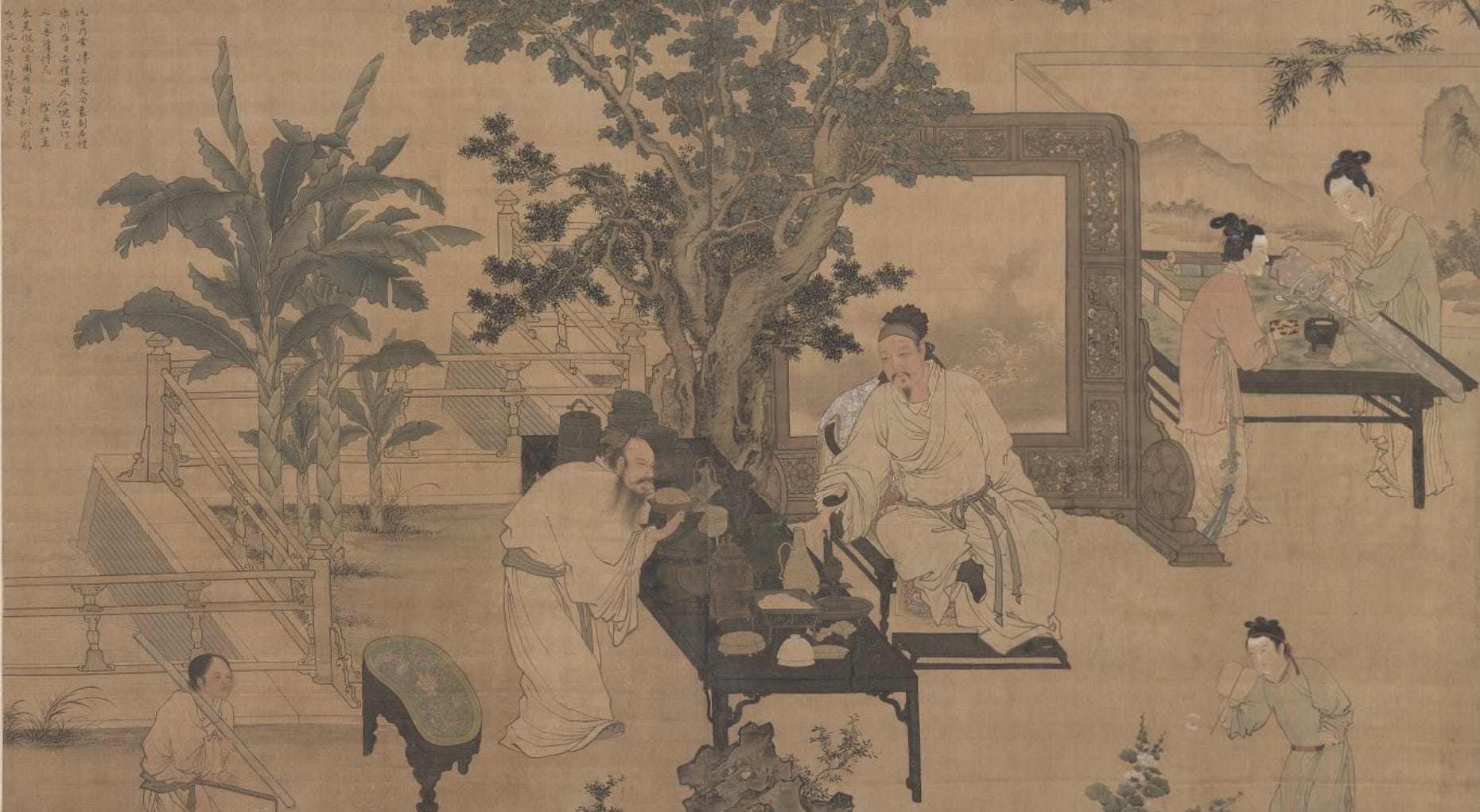
Finally, the ecosystem supported a sophisticated tradition of connoisseurship that existed without a corresponding concept of “fine art.” Premodern critics developed intricate theories, such as Xie He’s “Six Laws” (谢赫六法) or the distinctions between literati and court painting, culminating in systems like Dong Qichang’s Northern–Southern school schema. Collections flourished, supported by manuals and vibrant markets. Yet, the categories remained specific to the medium and its use: shu (calligraphy), hua (painting), yue (music), and qi (crafted objects). Crucially, there was no single institutional body created to gather all these distinct practices under one umbrella term of “the arts.” This structure inherently privileged education, ritual, and literati practice over the idea of autonomous “aesthetics.” A Ming dynasty connoisseur could appreciate a beautifully crafted ceramic bowl and a masterfully painted scroll with equal intensity, but neither object would be conceptually set apart from the totality of life as a distinct “fine art object.”
Translation as invention
The nineteenth century witnessed a profound remapping of the global intellectual landscape. Through contact with Europe and, critically, via translations circulated in Meiji-era Japan, a host of new terms and institutions entered the Chinese world. Key vocabulary such as 美术 (meishu), which initially mapped to “fine arts” (largely visual), and the broader term 艺术 (yishu), meaning “art,” arrived alongside concepts like 美育 (meiyu) (aesthetic education).
