

Modern management theory and contemporary political discourse are dominated by the concept of “vision.” In this paradigm, the leader is an architect of the future or a charismatic prophet. The primary task of leadership is presumed to be the articulation of a compelling endpoint, a transition from a flawed present to an idealized future.
However, applying this vision-centric model to historical Chinese organizational behavior yields a profound dissonance. The architects of complex Chinese administrative systems rarely operated as visionary prophets. Instead, the core logic of traditional leadership focused less on creating an idealized future and entirely on managing the present: specifically, the meticulous orchestration of human networks and the pragmatic manipulation of systemic leverage.
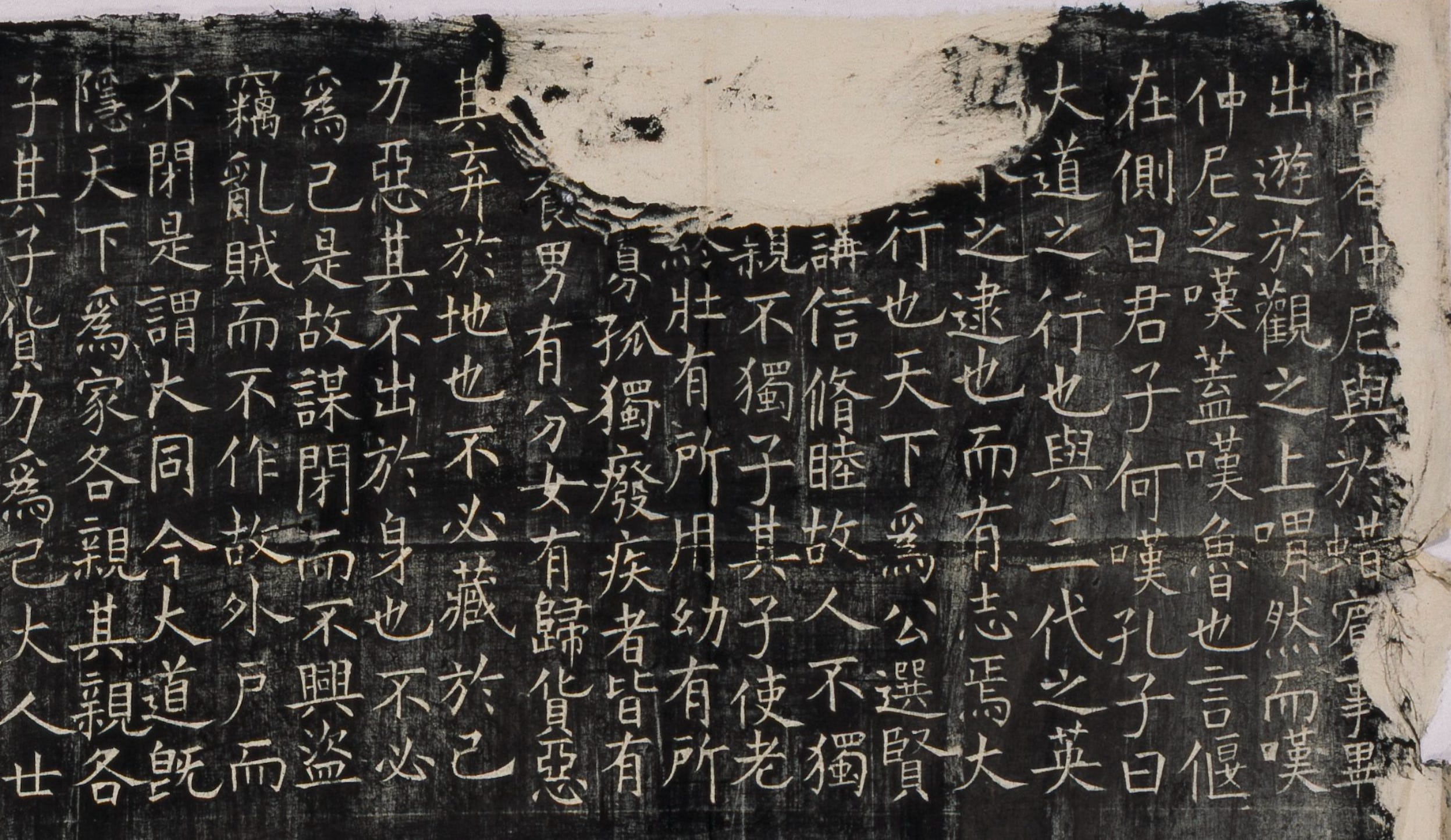
This divergence exists because, in the traditional Chinese context, the “vision” had already been established. From the utopian ideal of “Great Harmony” (Tianxia Datong, 天下大同) to the rigid social order of “let the ruler be a ruler and the minister a minister” (Jun jun chen chen, 君君臣臣), the ultimate endpoint was always a self-evident truth and a pre-existing cultural consensus. With the destination already agreed upon by ancient sages, the leader’s role shifted from drawing the map to navigating the human nature, utilizing propensity, structural balance, and information asymmetry to maintain control.
Telos vs. Shi
The divergence of leadership begins at the level of ontology and how each culture perceives efficacy. The French sinologue François Jullien provides a comparative framework for this distinction, contrasting the Western reliance on the “ideal” with the Chinese focus on the “propensity of things.”
The Western tradition operates on the concept of Telos (purpose, end, or goal). The leader constructs an abstract ideal and then attempts to impose that model onto the messy reality of the world. It requires an exertion of will, as reality naturally resists conforming to a theoretical blueprint. The visionary leader must constantly motivate, persuade, and force the environment to align with the Telos.
Conversely, traditional Chinese thought, from Daoist philosophy to military strategy, rarely begins with a rigid, abstract blueprint. Instead of imposing an ideal upon reality, the focus is on identifying and harnessing the inherent trajectory of reality itself. This is the concept of Shi (势), often translated as “propensity,” “momentum,” or “positional advantage.”
If the Western leader is an architect attempting to build a cathedral according to a precise drawing, the traditional Chinese leader is more akin to a farmer or a navigator. A farmer does not create a harvest through sheer willpower or by giving a visionary speech to the crops. Instead, the farmer meticulously manages the preconditions: assessing the soil, observing the seasons, controlling the irrigation, and planting the seeds. By structuring the environment correctly, the desired outcome happens naturally, driven by its own internal logic.
This brings to the frequently misunderstood concept of Wuwei (无为)1, often translated as “non-action.” In the context of leadership and power, Wuwei is not passivity. It is the highest form of strategic efficacy. It means refraining from actions that go against the natural grain of the situation. A master of Shi arranges the organizational structure, the incentive mechanisms, and the political environment in such a way that the subordinates’ most rational, self-serving actions inevitably lead to the leader’s desired outcome. The leader appears to do nothing (acting behind the curtain), yet everything falls into place because the “propensity” of the system has been perfectly calibrated.
Confucian Facade, Legalist Engine
“Outer Confucianism, Inner Legalism” (外儒内法) is a dual-layered architecture where moral narrative and raw power politics operate in tandem.
The outer layer is Confucianism. In the realm of leadership, Confucianism serves to establish the moral hierarchy and the relational network. It is the ultimate tool for “managing people.” The Confucian hierarchy is ethically and relationally defined. It assigns every individual a specific “name” (名, Ming) and a corresponding set of behavioral expectations, ruler and minister, father and son 君臣, 父子.
This layer provides the ideological legitimacy of the system. It suggests that leadership is a function of moral cultivation (ruling by virtue), creating a gravitational pull that aligns the bureaucracy. However, seasoned historical administrators understood that a massive bureaucratic apparatus could not be sustained by moral exhortation alone. The outer layer provided the necessary societal cohesion, but the inner core required a more robust mechanism to deal with human ambition, deception, and the natural tendency of bureaucracies to serve themselves.
This is where the Legalist engine activates. Legalism (法家, Fa Jia) strips away the moral romanticism and views human nature through a lens of profound skepticism. If Confucianism relies on virtue, Legalism relies on Shu (术, methods/tactics) and Fa (法, laws/regulations) to manipulate the Shi (势, propensity).
Traditional leadership at the highest levels was essentially the practice of Shu 术, the hidden, often ruthless, administrative tactics used by the ruler to control the bureaucracy. A primary objective of Shu is to prevent any single node within the network from accumulating enough power to threaten the center. Therefore, the leader deliberately manages “moves” by creating and exploiting factionalism.
History provides endless iterations of this dynamic balance: emperors intentionally elevating the “Inner Court” (like eunuchs, close advisors, the Grand Council) to bypass and check the power of the “Outer Court” (the formal bureaucratic ministries). The leader does not seek absolute harmony, as harmony can easily transform into a unified bloc of resistance against the top. Instead, the leader maintains a state of dynamic tension, acting as the ultimate arbiter above the fray, constantly shifting weights on the scale to ensure that all factions remain dependent on the sovereign’s favor.
The Qing Secret Memorial System
To observe this leadership model in its most refined, granular application, one must examine specific institutional designs. Perhaps no historical mechanism better illustrates the art of controlling the Shi than the Secret Memorial System (密折制度), formalized and perfected during the Yongzheng 雍正 reign of the Qing Dynasty.
The context is crucial: the Qing empire was vast, and the traditional bureaucratic chain of command was dangerously slow and prone to filtering information. Provincial governors and local magistrates had immense incentives to collude, hide crises (like famines or local uprisings), and present a falsely optimistic picture to the capital to protect their careers. The traditional hierarchy threatened to blind the supreme leader.
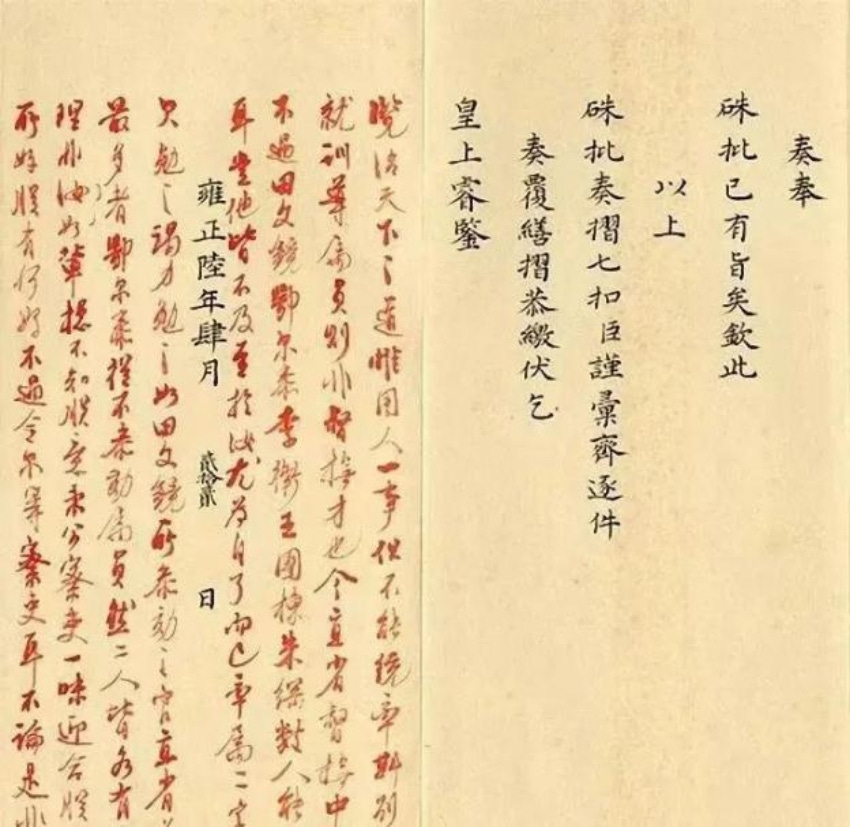
To counter this, the Yongzheng Emperor expanded a system that completely bypassed the formal bureaucratic structure. Select officials, ranging from high-ranking provincial governors down to relatively low-ranking military officers or local magistrates, were granted the privilege of submitting “secret memorials” directly to the emperor. These documents were transported in locked boxes, the keys to which were held only by the sender and the emperor. The emperor would read the report, write his comments directly on it in red ink, and send it back to the official.
This was not a tool for discussing the grand vision of the Qing empire. It was an instrument of absolute, microscopic control. It fundamentally altered the Shi of the entire officialdom.
The Secret Memorial System created an omnipresent panopticon based on radical information asymmetry. Because the emperor granted the memorial privilege selectively and secretly, no official knew definitively who among their peers, subordinates, or superiors was reporting directly to the throne. An official might be negotiating a local policy with a colleague, entirely unaware that the colleague was simultaneously detailing the negotiation, along with character assassinations and rumors, directly to the emperor.
This architecture of control manipulated human psychology flawlessly. It generated a pervasive environment of mutual suspicion. Collusion became incredibly dangerous, as the cost of betrayal by a co-conspirator possessing a secret memorial box was absolute. To protect themselves, officials were forced to pre-emptively report on one another and, most importantly, on themselves. They were compelled to confess minor errors before a rival could report them as major crimes.
The leadership exercised here is a pure manifestation of Shu. The emperor did not need to deliver inspiring speeches to demand loyalty and diligence. By simply establishing the rules of the secret memorial network, the emperor created a “propensity” where the most logical survival strategy for every official was absolute, paranoid subservience to the throne and the immediate reporting of accurate information. The ruler sat at the center of a spiderweb of intelligence, pulling the strings, playing officials against one another, and maintaining an unassailable position of supreme authority.
The Legacy of Dynamic Balance
The ultimate irony of the Secret Memorial System is that it contained the seeds of its own informational collapse. The system functioned effectively only when the supreme leader possessed superhuman cognitive bandwidth and a terrifying work ethic, as the Yongzheng Emperor did. However, as the system scaled and time passed, the bureaucracy adapted.
Bureaucrats, realizing they were trapped in a panopticon, began to game the system. They learned to anticipate the emperor’s suspicions and prejudices. More subversively, officials began to form invisible alliances to coordinate their “secret” reports, deliberately shaping the narrative that reached the throne. The emperor, sitting at the center of the web, suddenly finds that total awareness has degraded into total blindness. The ultimate control mechanism becomes an echo chamber.
The DNA of traditional Chinese leadership did not vanish with the fall of the empire. It merely shed its imperial robes and integrated itself into modern Chinese corporate governance and contemporary bureaucratic culture.
While leaders of large Chinese enterprises may fluidly adopt the Silicon Valley lexicon of “vision,” “OKRs,” and “disruption,” their internal organizational architecture often mirrors the imperial court. This is evident in the deliberate design of overlapping jurisdictions, the famous “horse-racing” (赛马, internal competition) mechanisms where multiple teams are pitted against each other to develop the exact same product, or the establishment of powerful, opaque internal audit departments that bypass all managerial hierarchies to report directly to the founder.
In this context, the concept of “Dynamic Balance” must be fundamentally understood on Chinese terms. It is not the nstitutional concept of “checks and balances,” which is designed to limit the power of the top executive. In the Chinese paradigm, Dynamic Balance is a mechanism of control wielded by the top executive.
It is the deliberate cultivation of controlled internal friction. By pitting veterans against newcomers, or the sales division against the product division, the leader ensures that no single faction can achieve self-sufficiency or dominance. The system is designed to be perpetually unstable at the middle levels, a state of affairs that prevents collusion and forces all unresolvable conflicts upward. The supreme leader thus remains the indispensable pivot, the only entity capable of resolving the tension and distributing resources.
Ultimately, traditional Chinese leadership is rarely about drawing a map to a promised land, because the destination is presumed to be known. It is about constructing a self-regulating ecosystem where human ambition, suspicion, and weakness are the very gears that keep the machinery turning.
If my insights brought you a fresh perspective, please consider supporting me by buying me a coffee. Your generosity fuels my writing.
For More on WuWei, please proceed to Debbie Liu ‘s brilliant series on the concept, specifically Governance and Community - Wu wei in the Han
This is a fascinating share. Thank you! I believe you intentionally have left this essay neutral — beyond good/bad or moral judgment. In this game of cat/mouse (or perhaps cannablistic mouse games) — I wonder if the inherent natural end is a revolution that punches up.
this is something i’ve come to find existentially grating after years here. if china was supposed to adopt socialism, an ideology in which seeking to demolish alienation is paramount, why is a more dignified working and political life so out of reach for the average person?
this isn’t to say things are bad or that the system is too rigid; however, it feels like the (apparently holy) convenience of everything, streamlined services, material wealth… all tend to serve the alienation.
consumerism is promoted to fill the void between shifts - and serve the country!
people think little about the guy sending them a meal for pennies, who himself works ridiculous hours. well, so do i, so why should i care about him?
it’s not unlikely to get caught in a loop of time being dominated by work life, lacking energy to explore the world or oneself more deeply, and rely on convenience to soothe exhaustion.
when someone yaps on about how authoritarian china is, they generally have no clue what they’re talking about. it is, but not in the way they think. it also isn’t, and also not in the way they think. so i don’t bother.
you’ve tapped into the real issue of authority and its place in chinese society. thanks for the great piece.