

When I travel across China, I rarely follow lists of cafes or new landmarks. Instead, I follow the List of National Key Cultural Heritage Sites (全国重点文物保护单位). Over time, this list has become my atlas, guiding me to caves with fading pigments, brick walls that still hold the sound of old footsteps, and temples where history lingers in the shade. I keep exploring these places because I believe modern China holds half of its future in its past. On the road, there's a simple test I trust: when I see the small stone plaque that reads “全国重点文物保护单位”, I know I'm standing at an original, true piece of time.

Most visitors know the big names: the Forbidden City, the Terracotta Army, the Mogao Grottoes. But China’s heritage system is much broader. It brings together palaces and temples, prehistoric sites and revolutionary landmarks, mosques and cathedrals, railway stations and modern monuments. It is not a single story of emperors and dynasties, but a mosaic that records how people have lived, believed, fought, and created on this land for thousands of years.
New Launch!
In the coming months, aside from weekly review, Old North Whale Review will be launching a series of articles exploring these heritage sites in detail. Each piece will focus on one site: its setting, its art, its history, and what it tells us about China. The goal is not only to describe but also to invite curiosity, to make readers feel the weight of stone, the silence of caves, the echoes of ceremonies.
This series will begin with Beijing, where imperial palaces, Buddhist temples, revolutionary sites, and modern monuments stand within the same city grid. From there, it will branch outward to grottoes in the deserts, ruins along forgotten rivers, and villages where traditions endure.
Heritage is not only about the past. It is about how we choose to remember, and how memory shapes the present. China’s cultural heritage protection units are more than a list. They are a living archive, open to anyone willing to look.
The Origins of Protection
The idea of preserving relics in China began long before the word “heritage” became global currency. For centuries, scholars studied bronzes and inscriptions to reconstruct the past. This was the tradition of jinshi xue (金石学), or epigraphy, which valued old objects as evidence of history. By the early 20th century, archaeology emerged in China, influenced by Western science but rooted in local curiosity about origins.

The Republican period (1912–1949) marked a turning point. Institutions like the Academia Sinica sent teams to dig Neolithic sites, collect oracle bones, and catalog ancient architecture. This was the first modern attempt to protect relics not just as treasures but as part of national identity.
When the People’s Republic of China was founded in 1949, the work continued under a centralized state. In 1961, the government announced the first batch of nationally protected sites. That list included 180 entries—palaces, temples, pagodas, grottoes, ancient walls. Ironically, these designations later saved many relics during the Cultural Revolution, when countless temples and statues were destroyed as “old things.” Those with official protection often survived because they were tied to the state’s own authority.
A System that Grows with History
Since then, the protection system has expanded every decade. Today there are more than 5,000 national-level sites, supported by an even larger network of provincial and local ones. What makes the Chinese system unique is its breadth. It is not limited to palaces or museums. It includes almost every kind of site that can tell a story about the land and its people.
Ancient Architecture
Yes, there are the expected masterpieces of imperial architecture: the Forbidden City in Beijing, the palaces of Shenyang, the Summer Resort of Chengde. But the system also protects humble structures—bridges, pagodas, city walls—that connect us to daily life in the past.

China’s stone grottoes form another great category. Sites like Dunhuang Mogao Caves (莫高窟), Yungang Grottoes (云冈石窟), and Longmen Grottoes (龙门石窟) preserve not only sculpture but also evidence of cultural exchange along the Silk Road. Their Buddhist imagery carries Persian, Indian, and Central Asian influences, carved into rock faces that still glow with faint pigments.
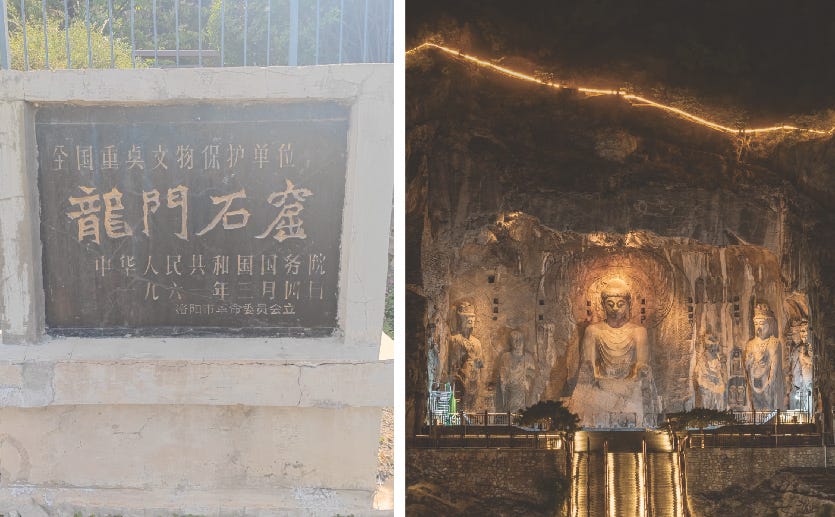
Archaeological Sites
The system extends deep into prehistory. Old Stone Age (旧石器时代) cave sites in Shanxi or Henan show how early humans lived on the Chinese plateau. The discovery of Liangzhu (良渚) culture, with its jade ritual objects and water management system, revealed an early state-level society over 4,000 years ago. Such sites challenge the idea that China’s story begins only with written records; they show how humans adapted to rivers, plains, and mountains long before dynasties.
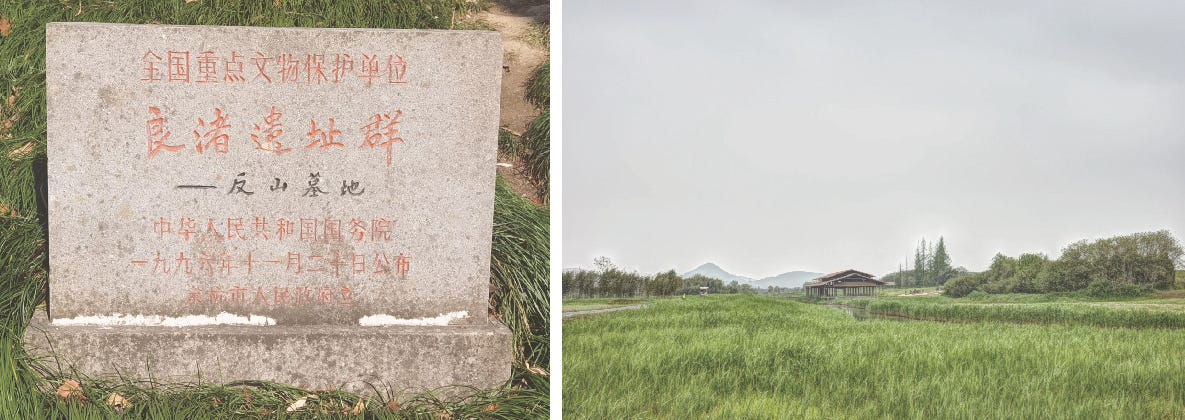
Battlefields and Ruins
History is not only culture but also conflict. Many heritage units preserve the sites of decisive battles and ancient cities. The ruins of Changping battlefield, where the Qin defeated Zhao in 260 BCE, still carry the weight of military strategy. The remains of cities like Yin Xu (殷墟), the Shang dynasty capital, confirm the lines written in oracle bone script. These ruins turn abstract history into physical ground.
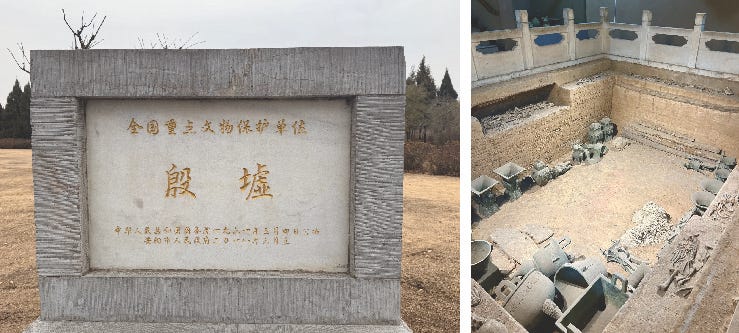
Religious architecture
Religious buildings form one of the strongest threads in China’s heritage. They include Buddhist and Daoist temples, Tibetan monasteries, mosques for Hui and Uyghur communities, and Christian churches from treaty-port days—plus rarer traces like the Tang-era Nestorian Stele and Harbin’s Jewish sites. Many mix forms: a mosque with Chinese courtyards, a cathedral in local brick, a mountain monastery that shapes the forest around it.
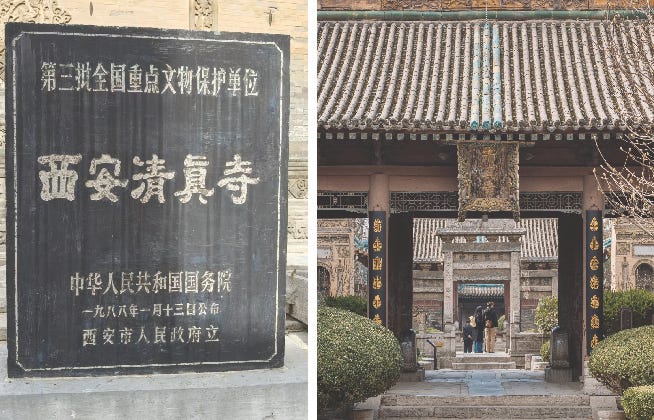
Most are still in use. Bells ring, calls to prayer sound, incense burns. Heritage status does not freeze them; it coordinates care. Repairs protect beams, murals, and stained glass, while schedules respect worship and community life. These places show that China’s past is not only preserved but is practiced.
Modern Landmarks
Heritage in China is not only ancient. The list includes sites tied to the birth of modern China. The Opium War memorials at Humen recall the destruction of foreign trade opium in 1839, a symbol of national resistance. The First National Congress of the Chinese Communist Party site in Shanghai preserves the tiny room where a new movement began.
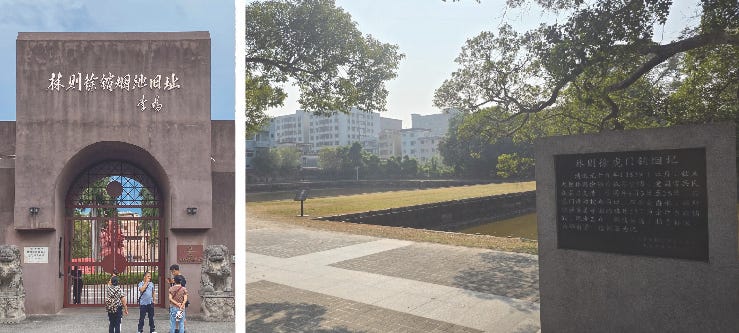
Even the architecture of the Republic of China finds a place: banks, schools, and civic buildings designed in a mix of Western and Chinese styles. Some are in Nanjing, once the capital of the Republic. Others stand in Shanghai, where Art Deco skyscrapers line the Bund.
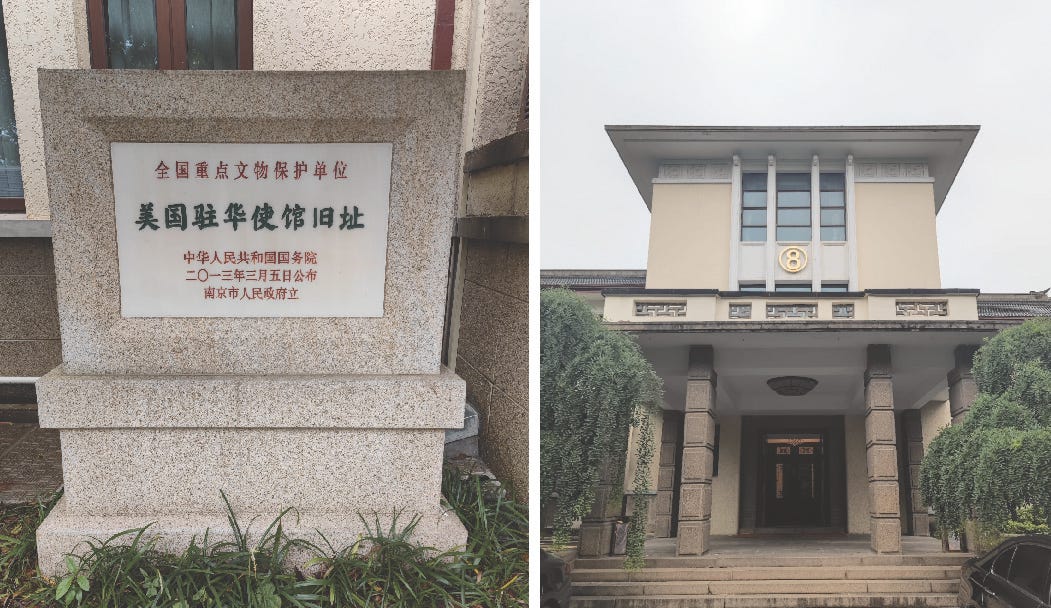
New China’s Story
The narrative continues into the era after 1949. Some of the most symbolic examples are the Ten Great Buildings (十大建筑) completed in Beijing in 1959 for the tenth anniversary of the People’s Republic: the Great Hall of the People, the National Museum, Beijing Railway Station. They mix socialist monumentality with Chinese motifs, embodying a new political order. These are also heritage sites, reminders that history did not end with emperors but continues with the modern state.
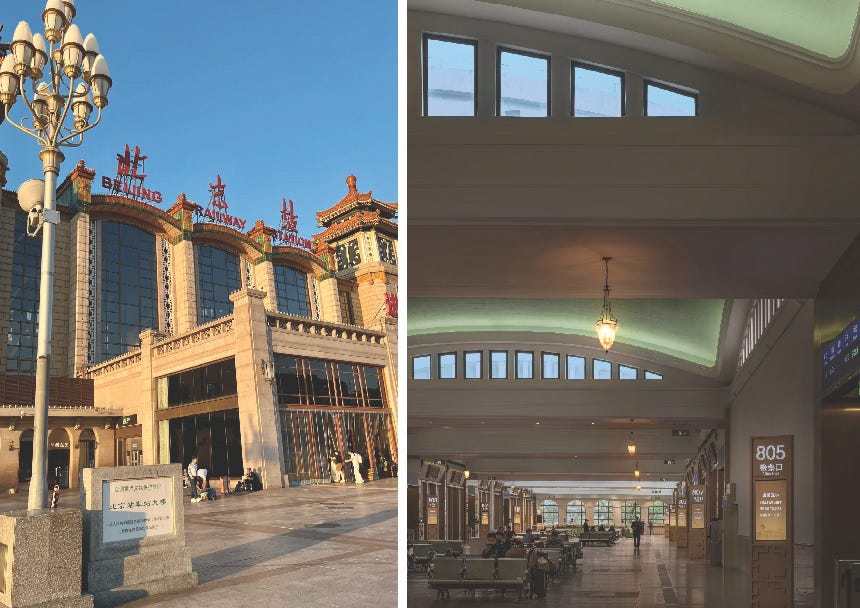
From National Protection to World Heritage
China’s cultural heritage system also connects with UNESCO’s World Heritage List (世界遗产名录). Every Chinese World Heritage Site, such as the Forbidden City, the Great Wall, or the Mogao Grottoes, is also first designated a National Key Cultural Heritage Site (全国重点文物保护单位). In practice, the national list is the foundation: it provides legal protection, research, and conservation funding at home. Only after this step can a site be nominated internationally. In this way, the world heritage titles extend recognition abroad, while the national system anchors preservation on the ground.
If my insights brought you a fresh perspective, please consider supporting me by buying me a coffee. Your generosity fuels my writing.


