

If your mental image of feng shui is intensely practical, furniture, doors, mirrors, plants, and the uneasy feeling of a bed “in the wrong place”, that’s not entirely wrong.
In its popular, modern form, feng shui often reads like a spatial checklist: lay a bagua grid over a floorplan, label zones (wealth, relationships, health), then “tune” the home through placement and small interventions: decluttering, shifting a desk, redirecting a mirror, adding a plant or a water feature as a visible “cure.” It’s a way of treating a room as a web of real relationships: movement, light, sightlines, and the psychological comfort of order.
If you want to see the kind of feng shui that feels immediately legible to modern eyes: a good embrace of mountains and water, a site that looks protected, dignified, and naturally ordered. A state-sized version of it, at the Ming Tombs (The Ming, 1368–1644) outside Beijing, is the perfect place. It is feng shui as landscape composition. The terrain is the argument.
But rewind a few centuries, and the Song dynasty (The Song, 960–1279) version of “doing feng shui” can look less like a persuasive landscape and more like a system you can run. The Song imperial mausoleums in today’s Gongyi, Henan are a good example of fengshui in its early form.
Feng shui wasn’t a single timeless system. It changed sometimes quietly, sometimes dramatically as China’s politics, publishing, cities, and professional specialists changed with it.
A quick feng shui primer
Classical feng shui starts from a basic premise: place matters. The land isn’t neutral. It carries qi, vital influence, that can be gathered, guided, dispersed, or blocked.
One of the most famous early definitions comes from the Book of Burial (Zangshu, 葬书), attributed to Guo Pu (4th century): “Qi rides the wind and scatters, but is retained when encountering water.”
That sentence already tells you the genre: this isn’t “superstition” in the modern sense of random magic. It’s an attempt to reason from environment to fate, using an older physics: wind disperses, water gathers; mountains shelter, valleys hold.
Over time, practitioners bundled this environmental reasoning into different toolkits. A common modern summary is that classical feng shui has two major emphases:
Form (xíngshì 形势 / “Form School”): read the visible landscape—mountains, ridges, rivers, “embracing arms,” protective backs, open fronts.
Compass / Pattern-of-qi (lǐqì 理气 / often grouped as “Compass School”): read the invisible patterns—direction, timing, cosmological correspondences—often with a luopan compass.
Most popular feng shui today leans heavily on form as intuitive storytelling. A mountain behind you is a “backing.” Water in front is “wealth.” A bend in the river is an “embrace.” It’s easy to visualize, easy to sell, and easy to retrofit onto modern neighborhoods.
So let’s start there, with a tomb complex that perfectly fits the familiar picture.
The Ming tombs: feng shui as a stage-managed landscape
The Ming imperial tombs outside Beijing (the “Thirteen Tombs”) are practically a textbook illustration of form-based feng shui: a carefully selected basin, backed by mountains, approached by a ceremonial axis, and guarded by stone figures along the Sacred Way. It sits in topographical settings chosen according to geomantic principles.
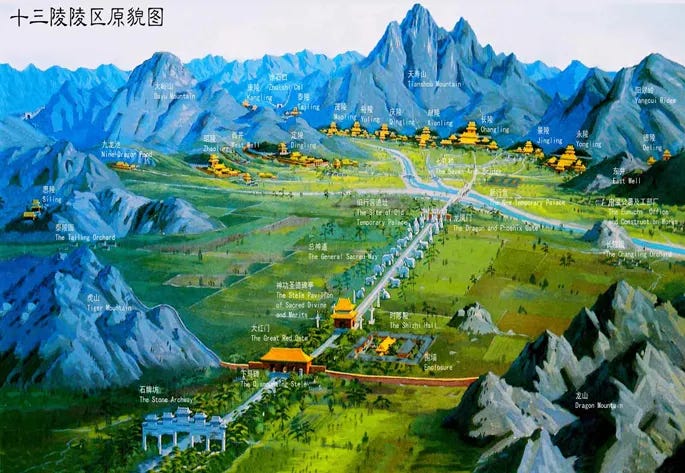
Even popular descriptions emphasize the same point: pick a site where the landscape itself feels like protection, an arc of mountains to the north, a calmer, open approach to the south, and a choreography that turns nature into imperial order
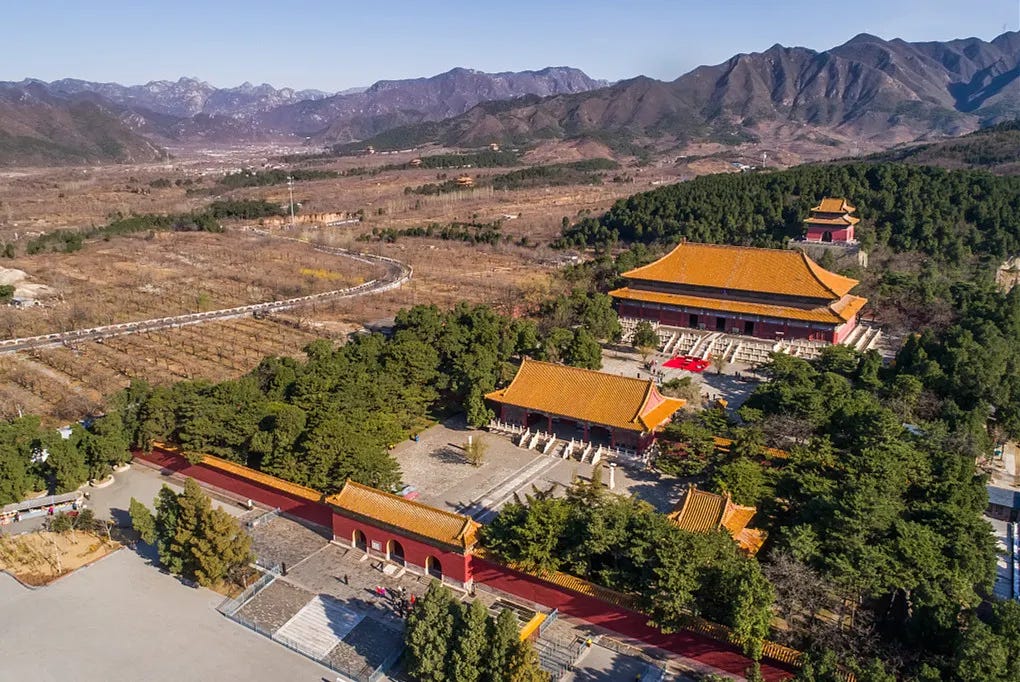
This is the feng shui most readers can immediately “get.” Even if you don’t believe in qi, you can see the logic: shelter, water, orientation, symbolic procession. It’s environmental design plus political theater.
Now here’s the twist: If you carry that Ming-tombs mental model back to the Song dynasty, you may end up misunderstanding what you’re looking at.
A Song dynasty surprise
While ideas related to site divination existed much earlier under names like kanyu (堪舆, heaven-and-earth), dili (地理, earth principles), and yin-yang methods, the term “feng shui” only became common during the Song dynasty.
Instead of the dramatic “nestled valley” aesthetic, the Northern Song imperial tombs are famous for another image: stone statues standing in farmland, like silent sentries in wheat and rapeseed fields.
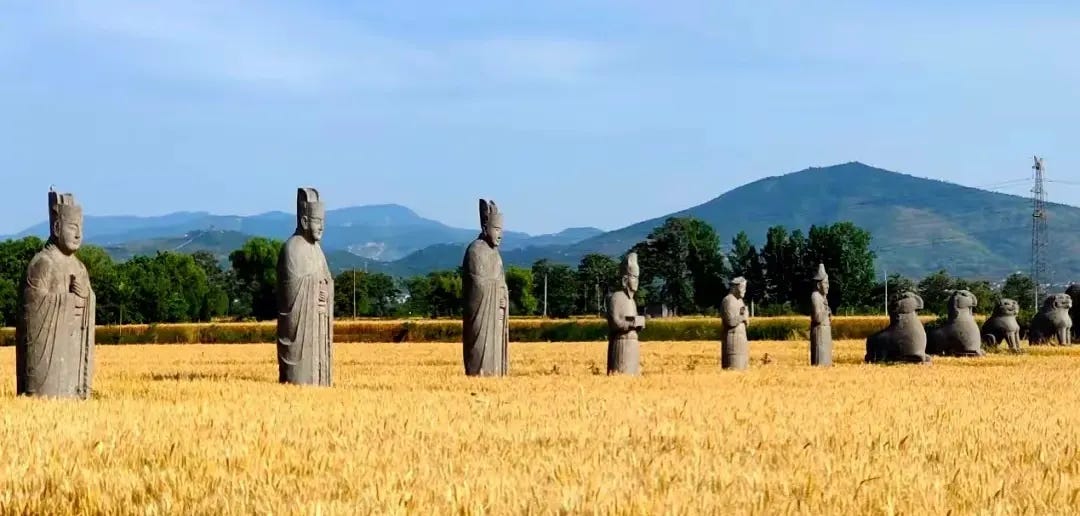
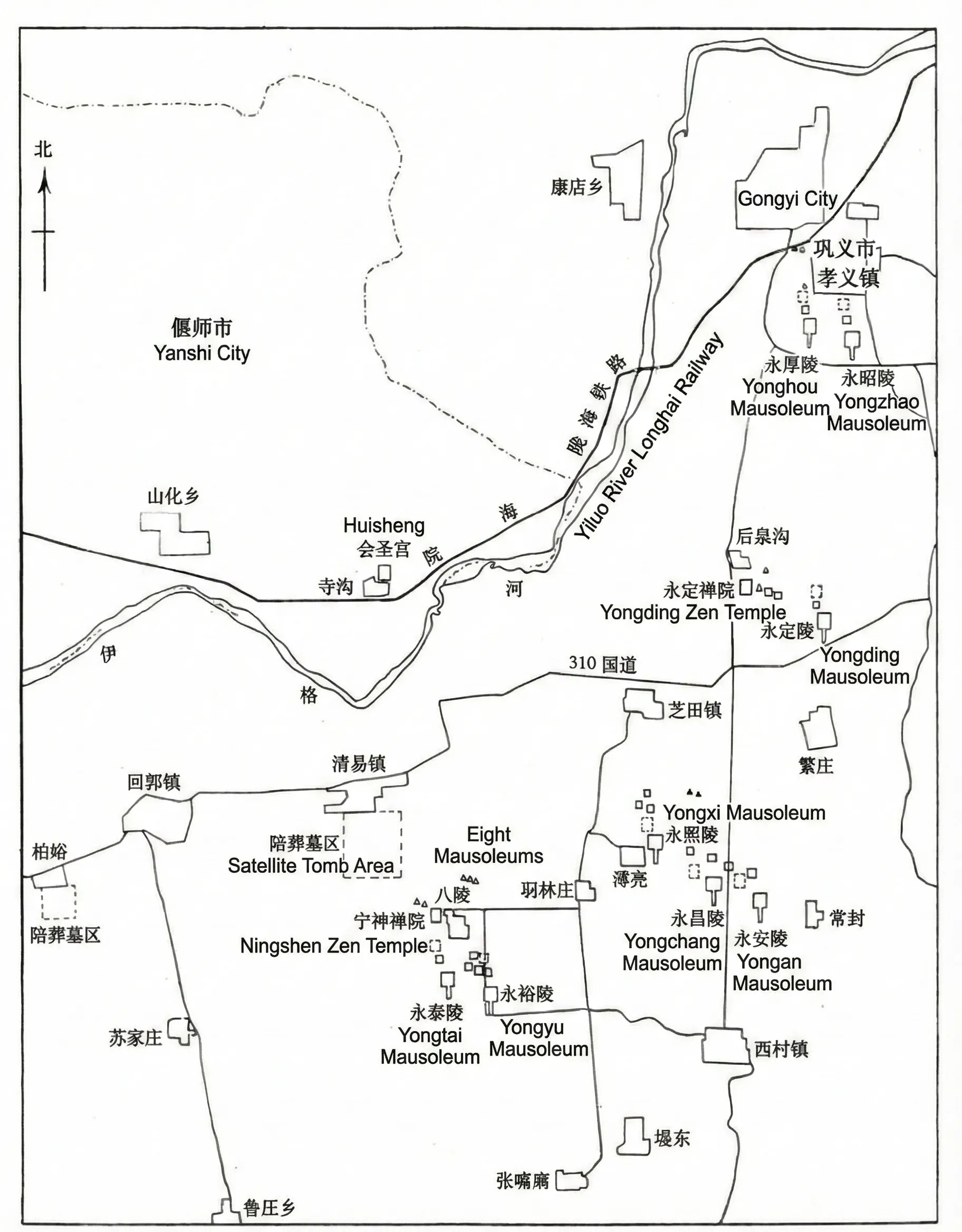
The main Northern Song imperial mausoleum cluster sits around Gongyi, near today’s Zhengzhou in Henan. The area is commonly summarized as “Seven Emperors and Eight Tombs”—the seven imperial mausoleums plus one for the founding emperor’s father. The layout of the tomb area, instead of following a scenic form, follows a more calculable correspondence of the era, known as wuyin xingli (五音姓利, Five Sounds, Surname Benefit)
Five Sounds, Surname Benefit
“五音姓利” literally means something like “Five musical tones, surname-based advantage.” The idea is strikingly systematic:
Take the five tones of classical Chinese music theory—宫 (gong), 商 (shang), 角 (jue), 徵 (zhi), 羽 (yu).
Map them onto the five phases—earth, metal, wood, fire, water.
Classify a person (or lineage) by surname into one of these tonal/phasal categories.
Choose burial orientation and site characteristics that are “beneficial” to that category.
In the Northern Song, an important compilation associated with this framework is Wang Zhu’s Dili Xinshu (地理新书)—a text that includes sections and diagrams explicitly organized around “Five Sounds beneficial directions” (五音大利向) and related rules
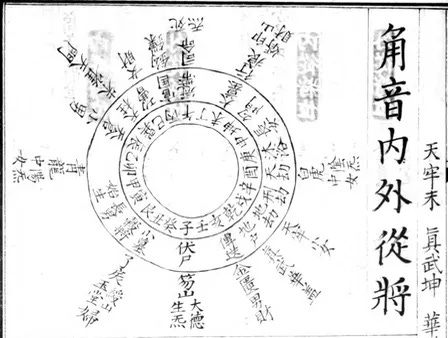
This matters because it suggests a very different feel for geomancy. It’s less “stand on the hill and sense the dragon vein, but more “place your lineage into a category and match it to a directional logic.”
Reading Song through “五音姓利”
The imperial surname Zhao (赵) is treated in this system as belonging to one of the five tones, often discussed as 角 (jue), associated with wood.

Wood is associated with the East, is generated by Water (North), and overcomes Earth (Center) (木主东方,生于水,克于土). More importantly, according to the geomancy manual Dili Xinshu, the “Jue” note was considered highly auspicious for the “Ren” and “Bing” (“壬、丙”) directions (north-by-west and south-by-east)
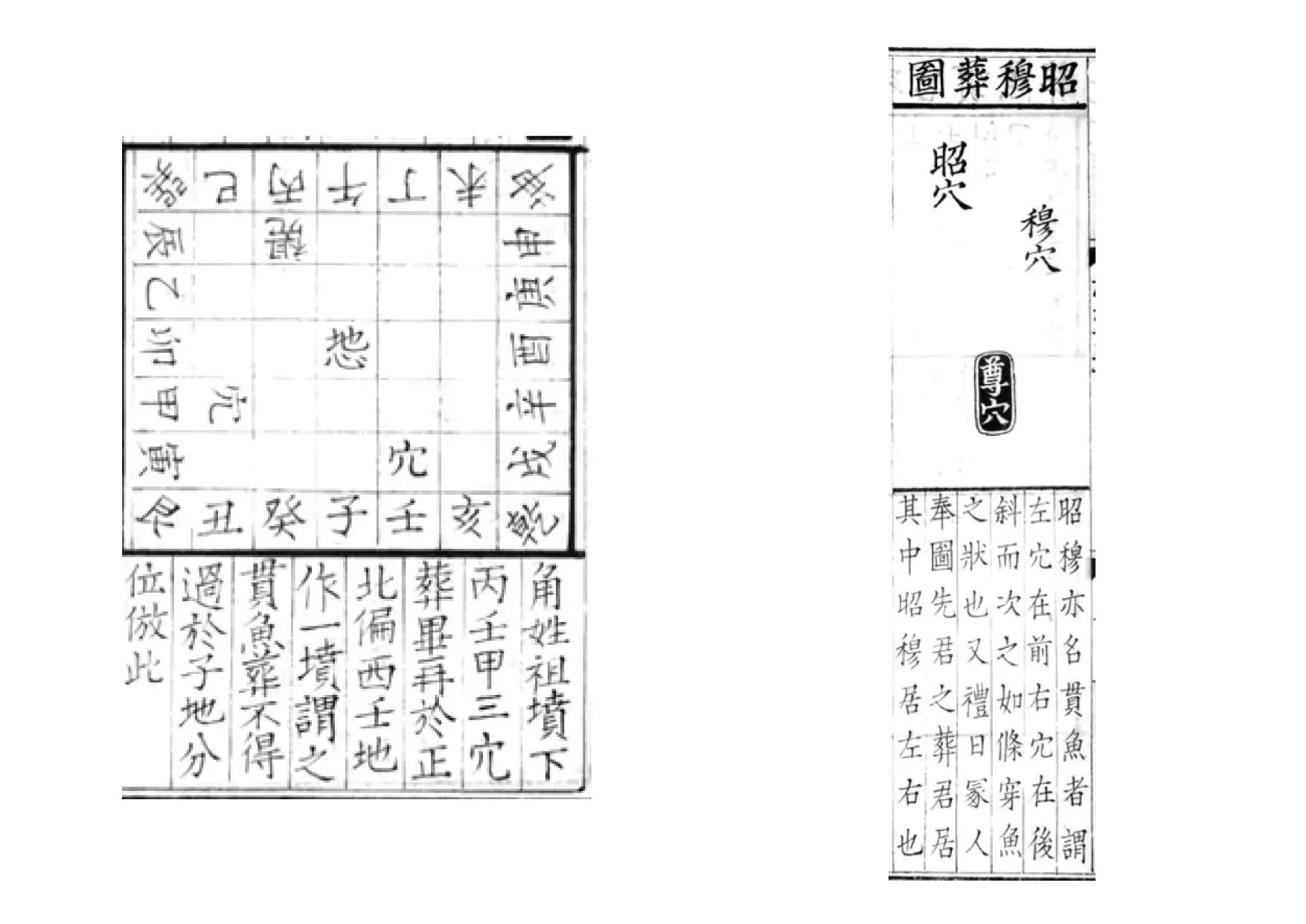
To fulfill the auspicious orientations for the “Jue” note, the ideal tomb site had to feature “high in the southeast, low in the northwest”. This configuration, described as “the southeastern land arched, the northwestern land drooping,” aligned with the favorable “Bing” and “Ren” directional combination for the Jue surname
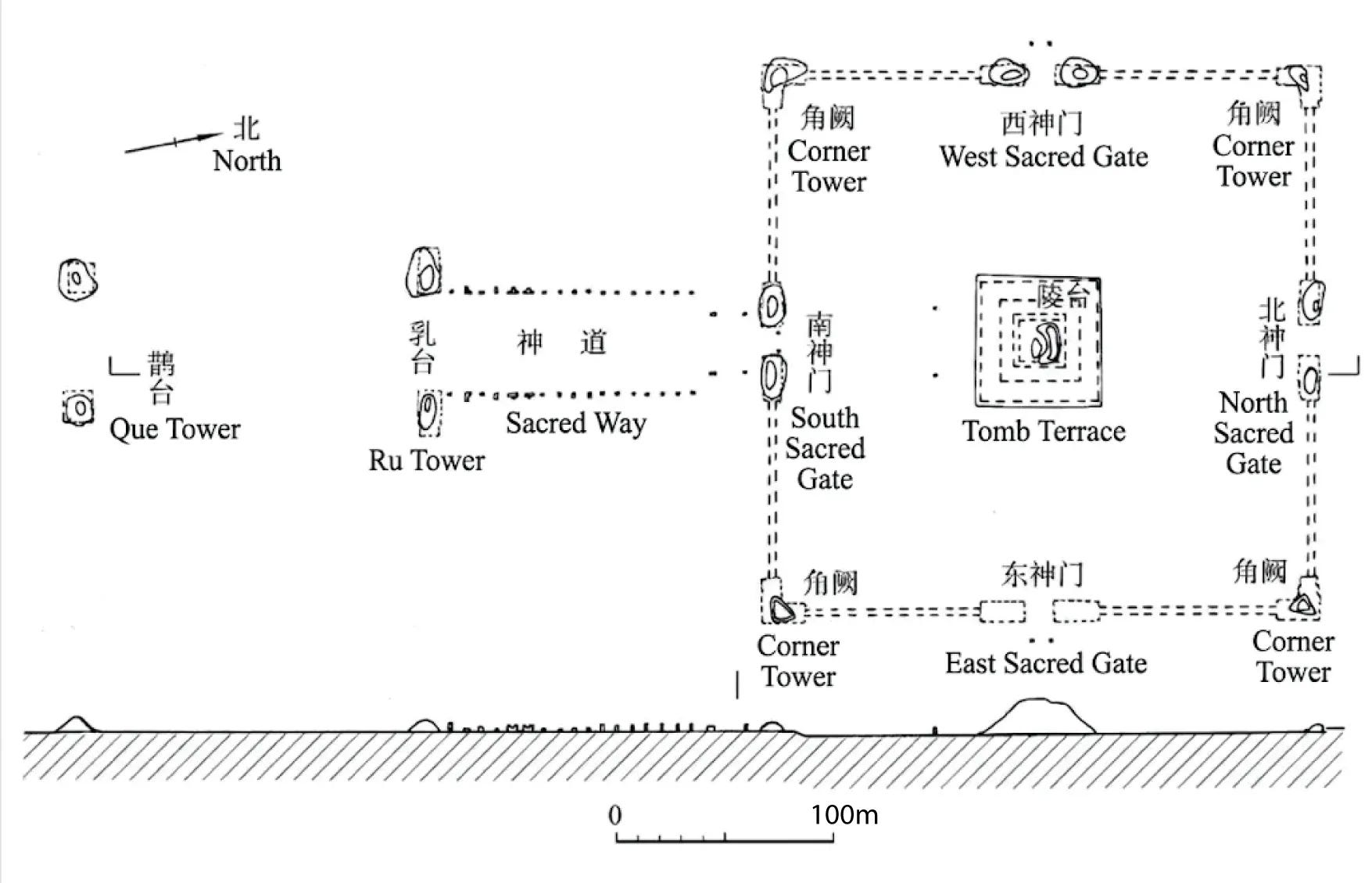
Consequently, one observes the unique phenomenon at the Song mausoleums in Gongyi: the entire necropolis is oriented south-facing, yet the entrance, spirit way, Que gates, and Ru platforms—all above-ground structures—are situated on the higher southeastern ground. In contrast, the emperor’s lingtai (underground palace) is placed at the lowest northwestern corner of the complex. This stands in complete opposition to the commanding layout of Ming and Qing imperial tombs, which symbolized the emperor’s supreme authority over his realm.
Evolution: from Song calculability to Ming-Qing scenography
Now we can name the evolutionary arc more clearly.
Song emphasis: 理气 as correspondence (and a court-friendly bureaucracy of rules)
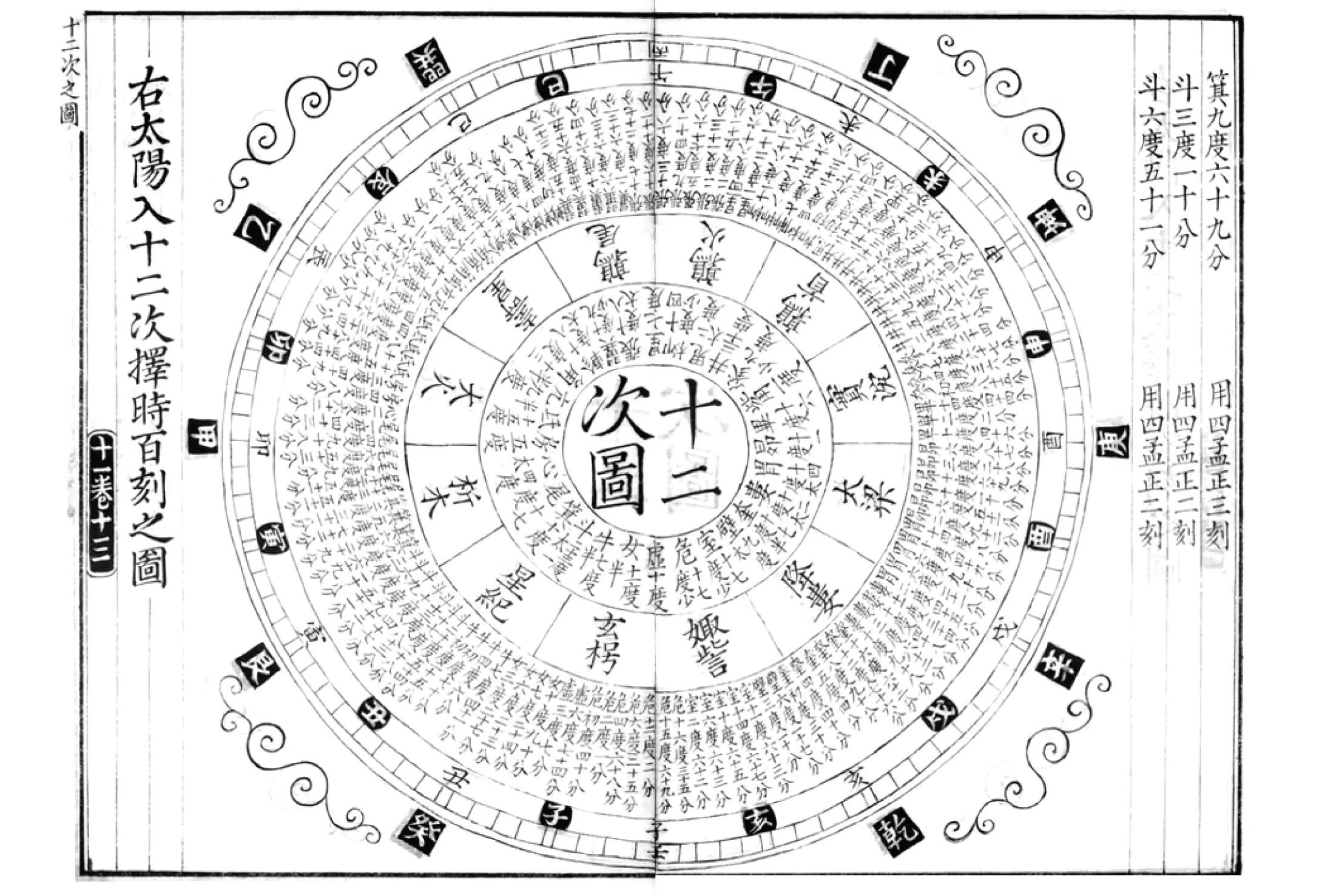
In Song contexts, feng shui often reads like an expert practice of matching—between a family/lineage and a directional-cosmological template. 五音姓利 is a perfect example: it’s a system that feels at home in a world of literate officials, manuals, diagrams, and argument-by-classification.
This is also the era when feng shui texts proliferate widely across different social and religious actors (including monks and Daoists), suggesting a broader “market” for geomantic knowledge beyond a single court ritual context.
Ming-Qing emphasis: 形势 as persuasive landscape (and popular legibility)
By the Ming, imperial tomb planning becomes a kind of national monumentality. The Ming tombs are not only aligned and categorized; they’re staged: mountains, spirit ways, gates, and statuary produce a visceral sense of “this is the center.” The tombs highlights not only geomantic site selection but also the ceremonial axis, stone monuments, and hierarchical layout—feng shui as part of an architectural-political system.
This is where the “form” story becomes more intuitively visible to later observers, and therefore more culturally sticky. You don’t need to know the owner’s surname classification to be impressed by a basin of mountains and an imperial avenue of stone animals.
And as later feng shui is taught, popularized, and exported, the legible part tends to win.
So the evolution isn’t “from superstition to science” or “from magic to modernity.” It’s closer to something more mundane: from a court-and-text-centered system of correspondence to a more widely legible system of landscape persuasion, while both continue to borrow from each other.
Why this matters for how we talk about “feng shui”
The point of this essay is not to crown one school “real” and the other “fake.” It’s to challenge a common assumption: that feng shui is a single ancient formula that has stayed stable for millennia.
A thousand years ago, “feng shui” could mean: a diagram, a classification, a rule-set that ties your surname to directions and land tendencies (五音姓利).
Five hundred years ago, “feng shui” could mean: an imperial valley turned into a cosmological stage, where geomancy, ritual hierarchy, and monumental architecture fuse into one spatial argument.
Today, “feng shui” might mean: an interior-design dialect of luck, circulated globally, still drawing vocabulary from qi, water, and wind, but increasingly detached from burial, state ritual, and the older professional world of site selection.
So when someone says “feng shui is ancient,” the most precise reply might be: yes, and it also has a history.
If my insights brought you a fresh perspective, please consider supporting me by buying me a coffee. Your generosity fuels my writing.


This article isn’t really about feng shui as it’s practiced today.
It’s about an earlier way of thinking, when space was understood through calculation and correspondence, long before feng shui became visual or landscape-based.
The Song dynasty tomb is just a window into that older logic.
"In the winter, that seat is close enough to the radiator to remain warm and yet not so close as to cause perspiration. In the summer, it’s directly in the path of a cross-breeze created by opening windows there and there. It faces the television at an angle that is neither direct, thus discouraging conversation, nor so far wide to create a parallax distortion. I could go on, but I think I’ve made my point. " ----- the Feng Shui practice in real life :)