

Most people encounter Daoism as a philosophy of the reclusive and anti-system. However, it was once the ‘knowledge’ that helped lead people into the society and the system. For a nation of exam that promoted Confucianism as orthodoxy, it is hard to believe that China once used Daoist classics as the standard for its imperial exams.
In 742 AD, Tang Emperor Xuanzong issued an edict establishing an alternative path to government office: the daoju (道举), or Daoist examination. Aside from the Daodejing, which is a fundamental classic for Daoism, four other Daoist texts were elevated to the status of “true scriptures” (zhenjing 真经). Zhuangzi, Liezi, Wenzi, and Kangcangzi were granted the title. The five classics together became the standard textbooks, just like the Analects and other Confucian classics in the regular exams.
It was one of the most unusual episodes in Chinese history. It’s not just about how Daoism influenced the Chinese political tradition. It also offers a view of the everlasting dynamic and tension between the emperor and the whole bureaucratic system. The ‘knowledge’ or professionalism itself might not be the key to becoming the official. And an emperor’s personal preference ultimately could not overcome the inertia of the bureaucratic elite.
Here is what happened and why.
How the normal exam worked
China has long had a social hierarchy centered on official rank. Under the Confucian tradition, becoming an official was and still is the ultimate career path for everyone. It’s the way to serve the country and achieve personal fulfillment.
During Tang dynasty (7th-10th century), there were multiple ways to become an official. The most prominent way for regular people was to pass the Keju (the civil exam). The exam system offered the two main tracks, mingjing (明经, “illuminating the classics”) and jinshi (进士, “presented scholar”).
The mingjing tested the memorization of Confucian classics. The primary format was tiejing (帖经), a fill-in-the-blank exercise in which the examinee had to fill in missing characters from a random page of a classic. There was also moyi (墨义), a short-answer format in which candidates explained the meaning of a concept or passage. Those who passed this track were assigned entry-level positions in the bureaucratic system, and their career ceiling remained rather low.
The jinshi was the harder and far more prestigious track, testing poetry composition and policy essays. As the saying went: “Thirty is old for mingjing; fifty is young for jinshi” (三十老明经,五十少进士). If you had not passed the mingjing by thirty, you were slow; if you passed the literary jinshi by fifty, you were ahead of everyone. Passing the jinshi brought immense honor among the elite, and most of the empire’s chancellors came from this track, especially during the late Tang dynasty.
However, the core texts for both tracks were drawn exclusively from the Five Classics and the wider Confucian tradition. This had been the default ever since Emperor Wu of Han established the supremacy of Confucianism in the 2nd century BCE.
Why the Emperors Wanted a Daoist Track
Every dynasty in Chinese history needed to justify its legitimacy in some way. For the Li family that founded the Tang dynasty, part of its legitimacy came from the overthrow of the non-Han aristocratic families of the Northern Dynasties, while another part was to prove the prestige of the family’s bloodline. Laozi, who was believed to have also borne the surname Li, then became the distant ancestor of the Li family. It was an ingenious piece of genealogical engineering that claimed descent from a sage even older than Confucius. It shrouded the royal family in the mystical aura of Daoism.
This engineering escalated over generations. Emperor Gaozong, in the mid-seventh century, added the Daodejing to the mingjing exam as supplementary reading. Emperor Xuanzong went further. In 732, he personally annotated the Daodejing, distributed his commentary nationwide, and ordered every household to keep a copy (sounds familiar?). Furthermore, in 746, Laozi’s birthday (the 15th day of the second lunar month) was declared a national holiday.
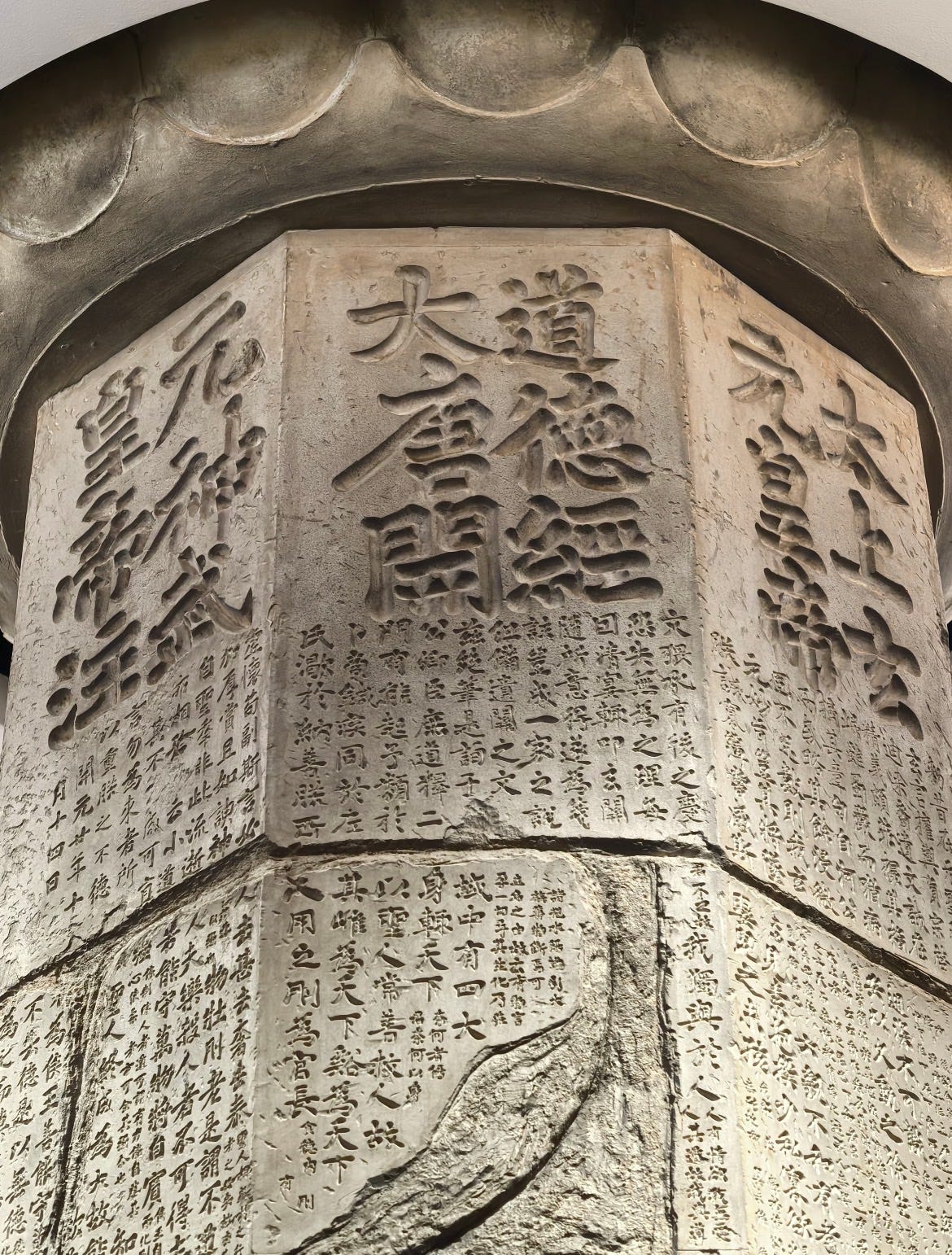
Establishment of the Daoju
Xuanzong’s fascination with Daoism went further as he began to recruit Daoist priests and experts as his personal advisers. In 737, Xuanzong created the post of “Doctor of Mysterious Learning” (xuanxue boshi 玄学博士) and decreed that Daoist rituals be incorporated into state rites and ancestral worship.
