

On the evening of May 15, 1932, eleven young Japanese naval officers walked into the official residence of Prime Minister Inukai Tsuyoshi 犬養毅, pistols drawn. Inukai, seventy-six years old and one of the last civilian politicians capable of restraining the military, reportedly said: if we talk, you will understand. One of the officers replied: dialogue is useless. They shot him nine times.
The officers surrendered voluntarily. At trial, they refused to express remorse. Their written statements described the assassination not as a crime but as a moral necessity: the government had betrayed the nation, and their conscience had demanded action. Several were celebrated as heroes in the public letters that flooded the courthouse. The presiding judge received nine fingers, preserved in salt, sent by civilians who wished to share in the officers’ martyrdom. (See more in the speech of former Japan Prime Minister Shigeru Ishiba, Oct.10th 2025)
The standard account of this episode places it inside Japanese militarism, Shinto nationalism, the cult of the emperor, the particular fanaticism of the Imperial Navy. None of that is wrong.
But there is another layer. The moral vocabulary these officers used did not originate in Japan: the idea that genuine knowing demands action, that a pure conscience overrides institutional law, that inaction in the face of a corrupt order is itself a form of corruption. It originated in the exile writings of a Ming dynasty Chinese official who had been banished to a malarial frontier to die, more than four centuries earlier.
His name was Wang Yangming 王阳明.
The Stone Coffin
In 1506, Wang Yangming was subjected to punishment on the orders of the eunuch official Liu Jin 刘瑾 and exiled to Longchang 龙场. It was a remote garrison post in what is now Guizhou province, populated largely by non-Han peoples. By the standards of the Ming bureaucracy, it was a destination from which one did not return. Wang prepared a stone coffin and placed it in his hut. Instead of dying, he lay in it day and night, meditating and reflecting.
The insight he arrived at, which he later called zhīxíng héyī (知行合一, the unity of knowledge and action), was deceptively simple: knowing and doing are not sequential. They are one event. A person who genuinely understands that cruelty is wrong cannot continue to be cruel. If they do, they do not genuinely understand it. The knowledge is incomplete. True moral understanding always already contains its own enactment.
The companion principle was zhì liángzhī (致良知, extending the innate moral knowing). Every person, regardless of class, education, or rank, is born with an internal moral compass. The task of self-cultivation is not to accumulate classical learning, as the rival Neo-Confucian tradition of Zhu Xi 朱熹 demanded, but to clear away the social noise that obscures the moral clarity already present within.
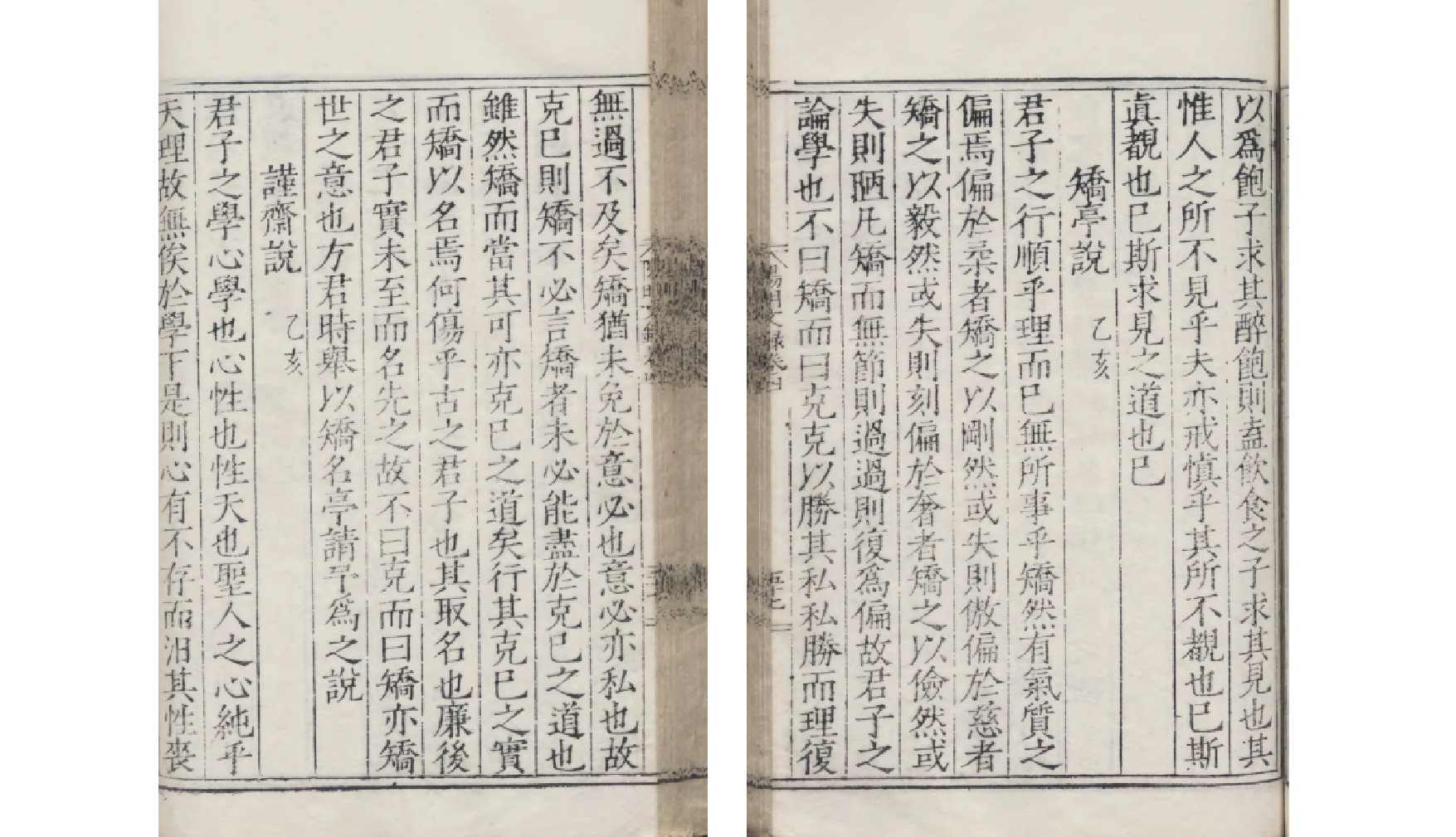
Wang Yangming returned from exile, served the court, and died in 1529 of illness, on a boat, still in official service. His philosophy survived him by centuries. But not, for long, in China.
The Suppression
The standard account of Yangmingism’s decline attributes it to the fall of the Ming dynasty in 1644. Late-Ming intellectuals, the argument goes, had become so absorbed in Wang’s emphasis on inner moral experience that they neglected concrete statecraft, and the dynasty collapsed around their meditations. The Qing rulers who replaced them promoted Zhu Xi’s more rigorous, text-centered orthodoxy as a corrective.
The Qing started as a Manchu conquest dynasty governing a Han Chinese majority through an elaborate apparatus of cultural legitimation. Zhu Xi’s framework was structurally useful: it demanded that moral authority flow from the classics, the institutions, and ultimately the throne, not from individual conscience. Wang Yangming’s framework was structurally threatening: it told every literate person that their inner knowing outranked external authority. For a dynasty that needed Han literati to defer to Manchu rulers, a philosophy of sovereign individual conscience was incompatible with the entire project.
The Fringes of Edo
Yōmeigaku (陽明学), the Japanese reading of Yangmingism, arrived in Japan through the usual circuits of cultural transmission and found its first serious advocate in Nakae Tōju 中江藤樹 (1608–1648), a rural Ōmi scholar who gave up a hereditary stipend to care for his aging mother. It was an act of conscience over institutional obligation that illustrated the philosophy he taught. The Tokugawa shogunate 徳川幕府, like the Qing, had mandated Zhu Xi’s orthodoxy as the ideological cement of its caste system. Yōmeigaku remained marginal.
The men Yōmeigaku attracted were actually the lower-ranking samurai: shi 侍/武士. Of the long Edo peace: these samurai who bore the cultural obligations and social identities of warriors had no wars to fight. They watched merchant families accumulate wealth the Confucian hierarchy pretended to despise, whose rank in the rigid caste order could not be earned through individual effort. Wang Yangming’s insistence that moral authority derived from inner cultivation rather than social station was a reordering of the world in their favor.
When Commodore Perry’s Black Ships arrived in 1853 and the shogunate’s paralysis became visible, Yōmeigaku had been waiting for exactly this kind of crisis for two centuries.
Yoshida’s Classroom
In 1857, Yoshida Shōin 吉田松陰 was thirty years old and under house arrest in his native Chōshū domain 長州藩. He opened his private school, the Shōka Sonjuku 松下村塾. Before, he had already attempted to board one of Perry’s ships to study Western military methods, but failed and served prison time. Then he was released into his family’s custody. The shogunate considered him a manageable eccentric.
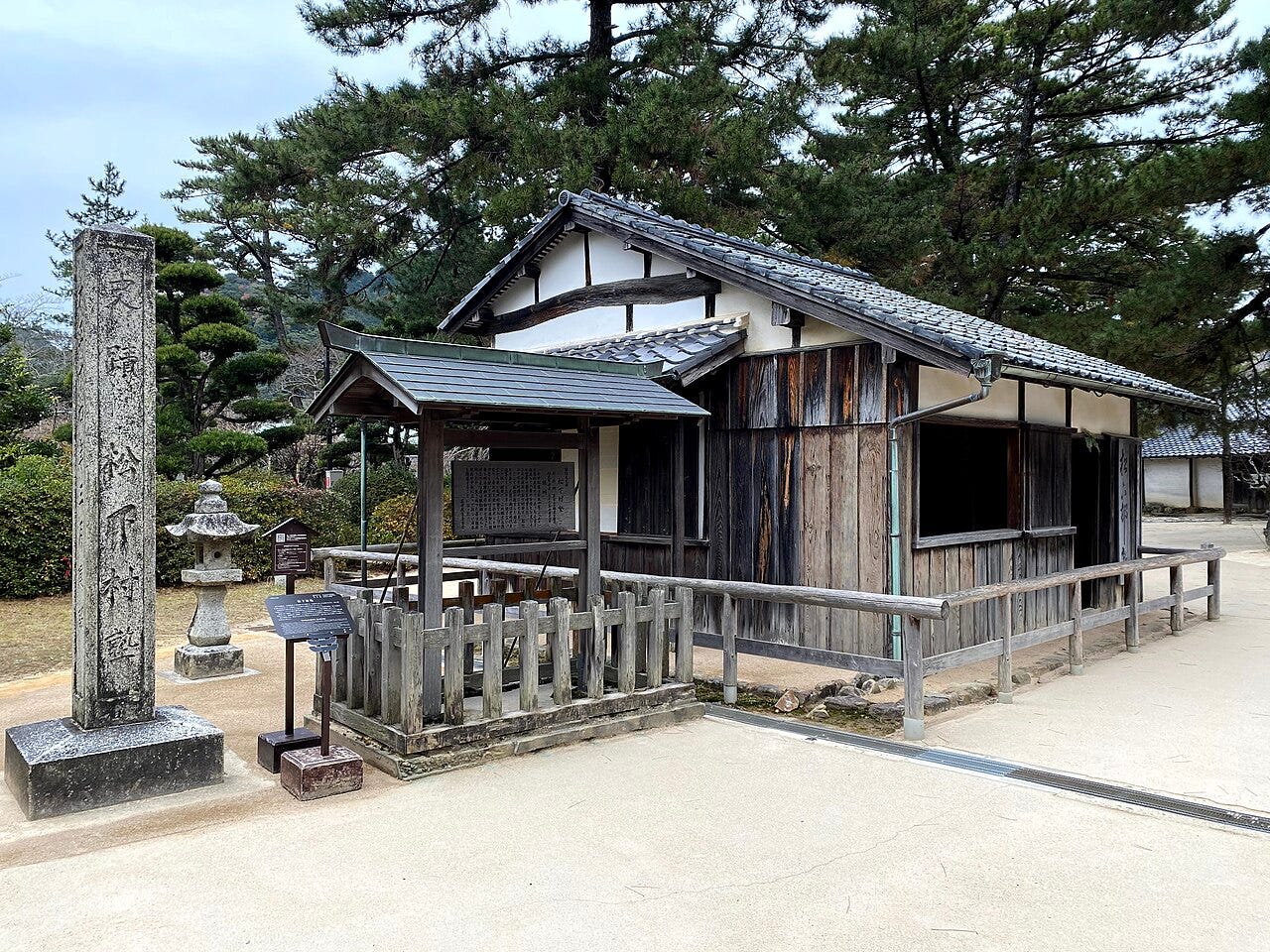
The Yōmeigaku tradition Yoshida inherited was enduring. In 1837, a municipal official named Ōshio Heihachirō 大塩平八郎 had demonstrated what it looked like in practice. Ōshio was a committed Yōmeigaku scholar stationed in Osaka. When a famine struck and city merchants began hoarding rice, he watched the poor starve outside his window. He petitioned his superiors. They did nothing. So he sold his entire personal library to buy food for the neighborhood, wrote a public manifesto invoking zhīxíng héyī by name, and led an armed uprising through the streets of Osaka. It was crushed within a day. But his written justification was precise: a man who sees injustice and does not act does not truly understand what injustice is. It was Wang Yangming, applied to a rice shortage, producing an armed insurgency.
Yoshida cited Ōshio’s case explicitly. His own prison letters returned repeatedly to the same logic. In one 1854 letter, he argued that the foreign ships in Edo Bay created exactly the kind of moral emergency that required ordinary men to act independently of the ruling class, using the term sōmō (草莽, literally “the weeds and reeds”) to name who bore that duty. The sōmō formulation is Yangmingist in its bones: institutional rank carries no moral authority. What matters is whether the person of conscience acts or fails to act. This is the specific idea Yoshida passed to his students.
Yoshida was executed in 1859 for plotting against the shogunate. But his students went on to dismantle the shogunate. Among them were Itō Hirobumi 伊藤博文, who drafted the Meiji Constitution, and Yamagata Aritomo 山縣有朋, who designed the Imperial Army. The school lasted two years. Its curriculum produced the architects of a modern state.
This is where Wang Yangming’s philosophy completed its mutation. The late-Ming tendency toward meditative self-examination, sitting quietly until the innate knowing clarified itself, was gone entirely. What remained and intensified was the imperative to act, now fused with the particular urgency of national survival. The stone coffin in Guizhou had become, four centuries and one sea crossing later, the classroom of the Meiji Restoration.
The Return
In 1895, China lost the First Sino-Japanese War. The treaty signed at Shimonoseki 马关 ceded Taiwan and the Liaodong Peninsula to Japan and imposed an indemnity so large it consumed a third of the Qing government’s annual revenue. The shock did not produce immediate revolution. It produced something that would eventually amount to the same thing: Chinese intellectuals traveling to Meiji Tokyo to understand how a country they had long considered a cultural dependent had defeated them.
What Liang Qichao 梁启超 found in Tokyo was not what he expected. The Japanese modernity he encountered had a philosophical backbone he recognized but could not locate in anything he had read in China. The Meiji state had forged a decisive, morally autonomous, action-oriented subject, the man who would act against unjust authority because his conscience demanded it. This figure had been shaped, in significant part, by a Chinese philosopher whom the Chinese had buried under Qing orthodoxy for two hundred years.
Liang began writing about Wang Yangming. So did other late Qing reformers. Sun Yat-sen 孙中山 spent years in Japan raising funds and networks for revolution; the Yangmingist atmosphere of Meiji political culture was the air in which the Xinhai Revolution 辛亥革命 was intellectually prepared. The revolutionaries who returned to China in 1911 carried with them Japanese translations and Japanese interpretations of a philosophy their own dynasty had suppressed as dangerous.
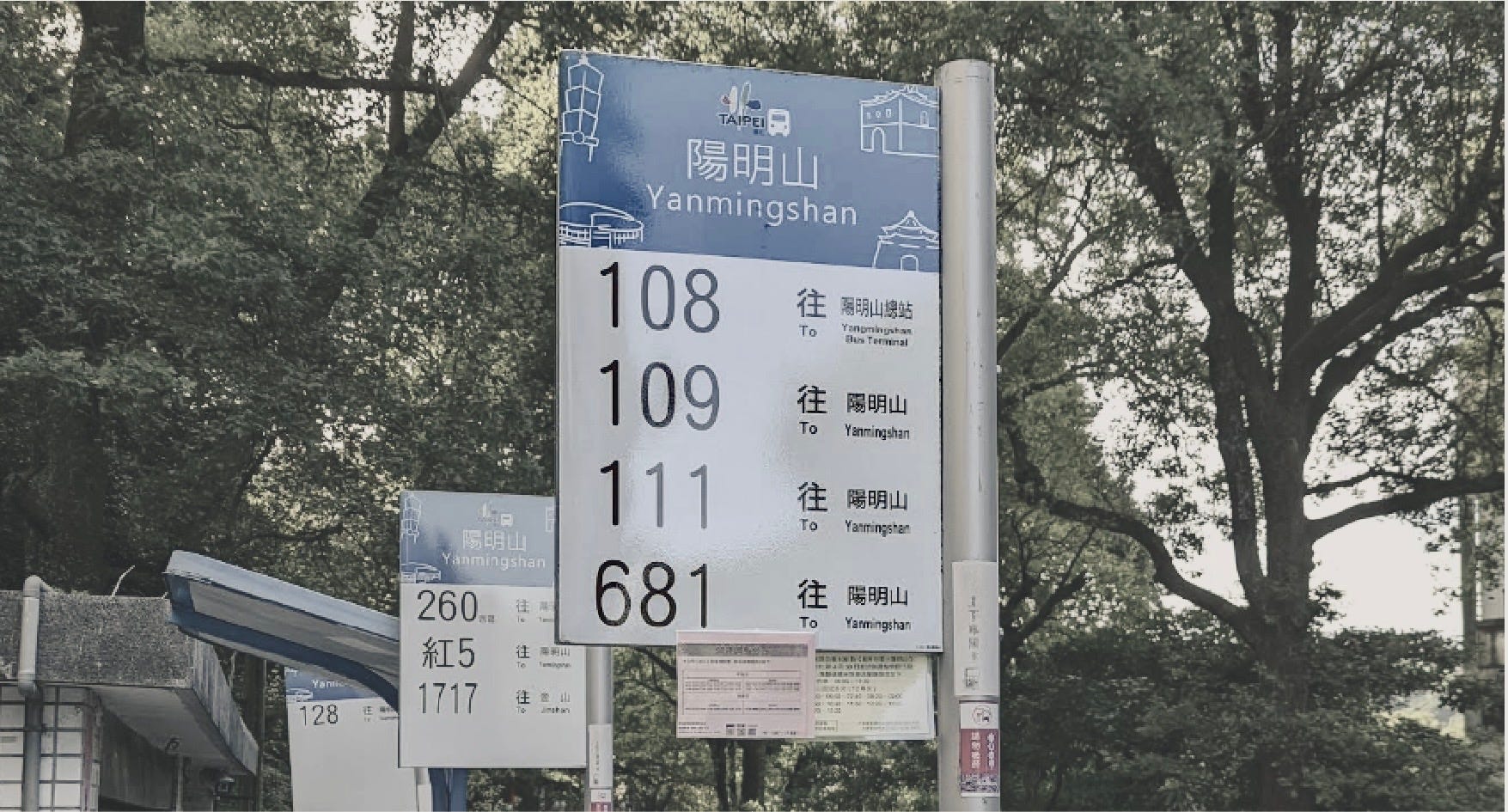
They used it to end that dynasty. Chiang Kai-shek 蒋介石, who inherited the revolutionary movement and spent decades trying to govern China, read Wang Yangming obsessively throughout his life. His diaries return to Yangmingist self-examination as a practice, not merely a citation. When he retreated to Taiwan in 1949, having lost the mainland, he renamed Grass Mountain 草山, the peak where he built his residence above Taipei, Yangmingshan 陽明山. It still bears the name. Every weekend, Taiwanese families take the MRT to walk among its cherry blossoms and volcanic hot springs, passing signs for a mountain named after a Ming philosopher whose ideas had to be radicalized in Japan before China could use them to imagine its own rebirth.
The Laundering
A selective and distorted reading of Friedrich Nietzsche provided the psychological veneer for Nazi Germany. The concept of the Übermensch was stripped of its introspective complexity and handed to a machinery of mass death. Philosophers rarely control what their ideas become when a political crisis finds them useful. Wang Yangming did not produce the atrocity in East Asia any more than Nietzsche produced the gas chambers in Europe. But a philosophy that locates absolute moral authority inside the individual, and then insists that authentic knowing must express itself in action, is a particular kind of igniter that waits for the right fire.
Japan resolved its relationship with Yōmeigaku’s most violent legacy through careful institutional forgetting. The young officers who assassinated Inukai in 1932, the factions who launched unauthorized invasions under the logic that pure conscience superseded the chain of command, the kamikaze pilots whose final letters described death as the only authentic enactment of what they knew, all of this became history that required quarantining after 1945.
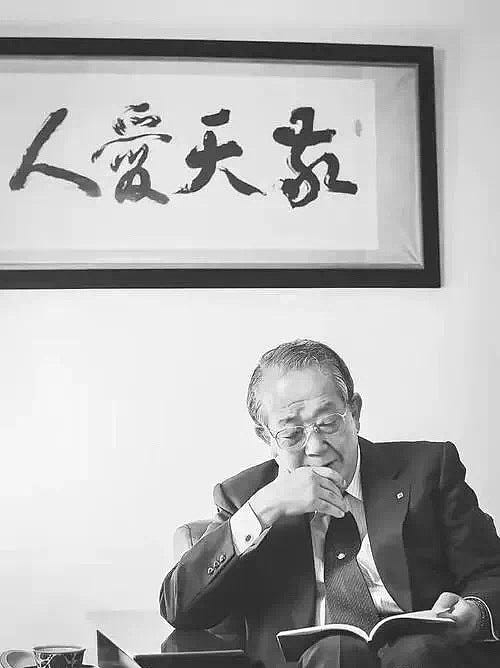
The philosophy was not abandoned. It was repackaged. Inamori Kazuo 稲盛和夫, founder of Kyocera and one of the most celebrated business figures of postwar Japan, built an entire management philosophy on zhīxíng héyī: know your purpose fully and your actions will follow. His seminars, attended by tens of thousands of small business owners across Japan, transmit the unity of knowledge and action as a principle of corporate culture. The sword became an earnings philosophy.
The Convenient Amnesia
China’s silence on this history is less tidy than Japan’s, and more revealing.
For decades, the official narrative marginalized Wang Yangming. He was dismissed as a subjective idealist whose philosophy of internal conscience clashed with materialism, a suspicion deepened by the fact that he was the lifelong obsession of the defeated Nationalist leader, Chiang Kai-shek. But in recent years, Yangmingism has been rehabilitated into a massive, state-sponsored renaissance. Today, his complete works are bestsellers. Officials are instructed to study zhīxíng héyī as a moral anchor for public service and incorruptibility. Corporations run Yangmingist leadership sessions, and self-help books reframe zhì liángzhī as a modern productivity hack.
Modern China's national story is largely built on overcoming the Japanese invasion and returning to greatness. Because of this, it is awkward to admit a major historical irony: the spark for China's own modern revolution actually began in Tokyo. To fully accept the history of the Chinese philosopher Wang Yangming, whose ideas helped modernize Japan, fueled Japanese militarism, and were then brought back home by Chinese students to overthrow the Qing dynasty. It means China must admit it owes an intellectual debt to the very country responsible for its greatest modern trauma.
So Wang Yangming gets his heritage park in Guizhou, his towering statues, and his state endorsement. But the wild, radical edge of his philosophy, the ideological fuel that burned down dynasties and empires across China has been carefully neutered.
The mountain above Taipei still has his name. Almost no one who visits it knows why.
If my insights brought you a fresh perspective, please consider supporting me by buying me a coffee. Your generosity fuels my writing.
Interesting! Your writing here reminds me of the posts of Takahiro, whom I first learned about Wang Yangming. https://www.shitsurae-japan.com/
Thanks for a wonderfully informative tour. The New Confucian scholar Tu Weiming has interpreted the Confucian tradition in light of Wang Yangming and Mencius. Like his New Confucian mentors, he combines this lineage with a liberal democratic politics, which is such a contrast with Yomeigaku's adoption by militarists in Japan. Intellectual history has fascinating twists and turns as you have so well illustrated.