

Picture how the US makes its elite. Phillips Exeter to Harvard; the admissions essay; the unpaid internship, the strategically chosen volunteer trip, the “passion project,” activities pursued for how they read on an application. Oxbridge and PPE and the slow escalator into the British Establishment have their own version. A whole literature exists to argue about it, The Price of Admission, The Tyranny of Merit. Now try to picture the Chinese equivalent. For most people familiar with China, there is one impression, “the gaokao is hard,” and then static.
The blank is odd, because the place where China manufactures its elite is not hidden. Haidian (海淀, “where the waters gather”), the district in the northwest of Beijing, may be the most legible elite-factory on earth.
It is packed with universities, research institutes, and technology companies, the densest concentration of higher learning in China, and it is the richest district in Beijing. Yet it has almost no luxury stores.
The absence is the tell: a place built to produce, not to consume. What it makes is not China's money or its power, but the technical class that designs and runs it.
The Absence Is the Point
By output, Haidian leads Beijing outright: its economy passed 1.3 trillion yuan in GDP in 2025, making it only the second district in all of China, after Shanghai’s Pudong, to cross that line. Yet per resident it ranks third in the city, behind the older districts of Xicheng and Dongcheng. The wealth is real, but it sits in laboratories, server farms, and patents, in production, not in the shopping bag.
So the luxury maisons went elsewhere. Chanel, Louis Vuitton, and Hermès cluster across town in Chaoyang, in the SKP department store, in China World, in Sanlitun. The one clarifying statistic: the outdoor brand Arc’teryx, unofficial badge of the Beijing tech manager, keeps a single store in all of Haidian and seven in Chaoyang. Beijingers have a verse for the divide: Chaoyang has no savings; Haidian has no fashion.
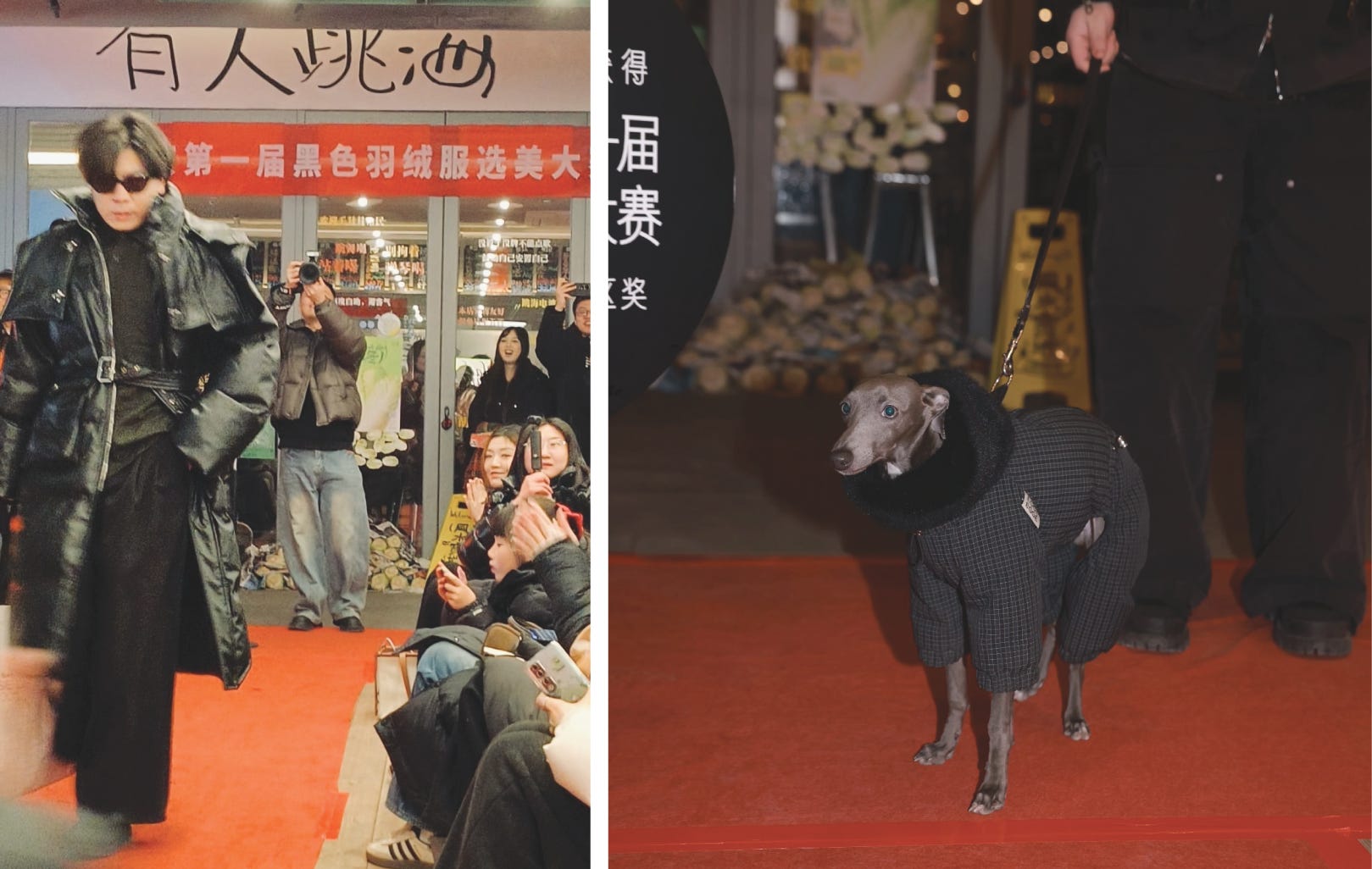
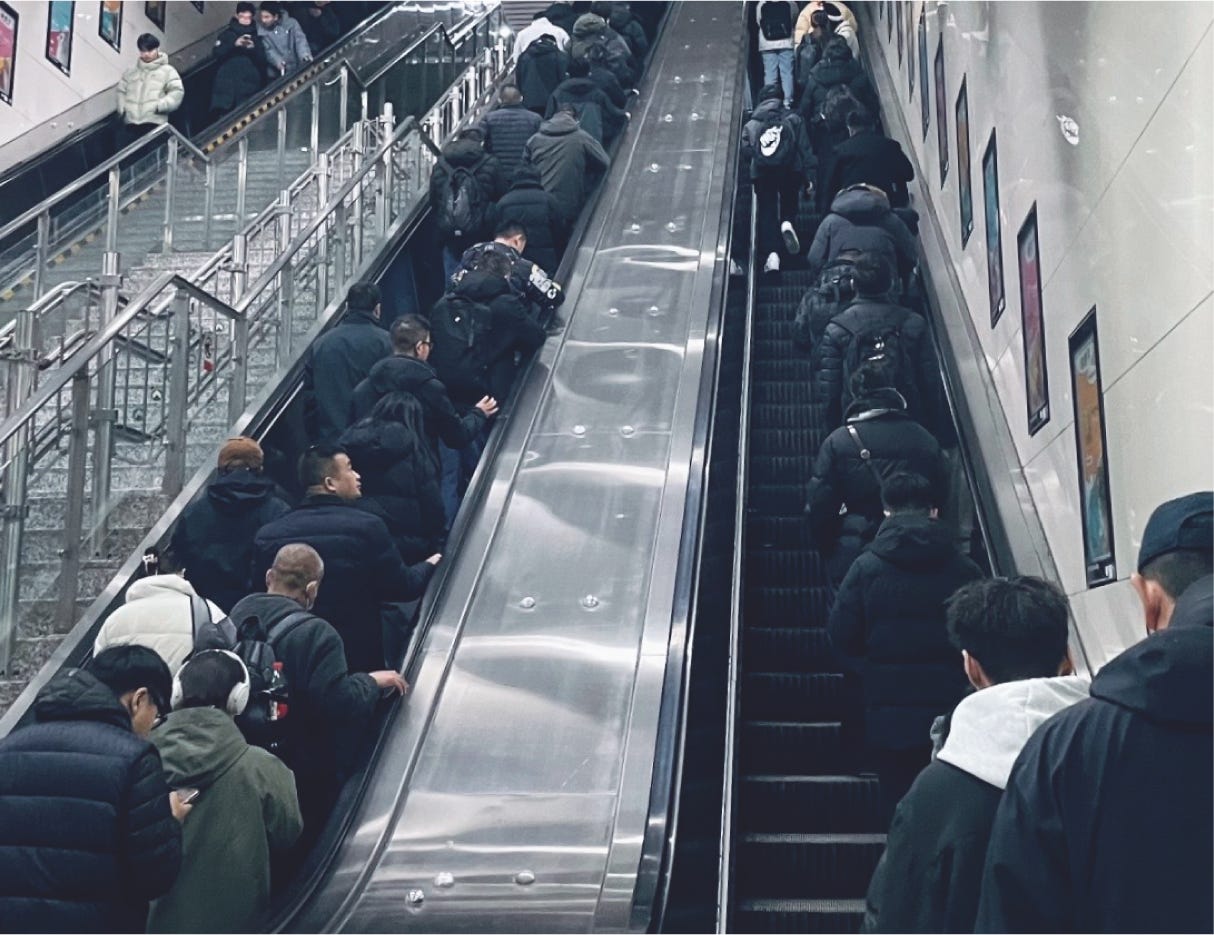
Step into a Haidian subway car in winter and the point turns visual: a carriage of near-identical black down jackets, an ocean with no color in it. Read as fashion, it is a void. Read correctly, it is a uniform. The district has even named its own anti-style, hǎidiàn lǎoqián fēng (海淀老钱风, “Haidian old-money style”). It seems its resident never agonize over clothes, never chase trend.
The Factory Was Drawn, Not Grown
The name remembers what the land was: hai-dian, the place where waters gather, a marshy plain of springs that once mirrored the western hills. The Chinese emperors chose it for exactly that, building the 三山五园 (sānshān wǔyuán, the Three Hills and Five Gardens), the imperial pleasure-world, walled off from the dust of the capital. Haidian began as a retreat for the few. Its first instinct was already separation.
The modern district was laid down in 1952, following the Soviet model, China carried out the 院系调整 (yuànxì tiáozhěng, the “reorganization of departments”). The movement broke comprehensive universities apart into narrow, single-purpose institutes, each tuned to one task of national construction. The Eight Great Colleges: geology, mining, steel, aeronautics, petroleum, languages, rose on Haidian farmland along a new road named 学院路 (Xuéyuàn Lù, College Road). At the same moment the Chinese Academy of Sciences moved into 中关村 (Zhōngguāncūn), then a village of some two hundred people beside a cluster of eunuch graves. China’s nuclear-weapons research began in a Zhongguancun building in 1951; the scientists of the nuclear and missile program raised their families on those lanes.
A third layer settled in alongside them: the 部队大院 (bùduì dàyuàn, the military and government compounds), walled communities of officers and cadres whose children, the 大院子弟, “compound kids,” became a hereditary elite of access and information. The compounds were, in the words of their own chroniclers, socialism with Chinese characteristics rendered as a place to live.
So three walled worlds, imperial garden, Soviet institute, cadre compound, were stacked onto the same marsh. Haidian’s austerity is not the absence of privilege. It is what privilege looks like when the state, not the market, designs it. Today the district holds 27 universities, 99 research institutes, and 605 academicians, more than a third of the national total.
The State Built It; the Family Inherited It
For a generation the machine ran on command: the institutes trained the engineers, and the state assigned them. Then the reform era pulled out the guarantee. The brains remained; the allocation did not. Consequently, the optimization logic the state once used migrated into the family, turning upon the children.
The result is the figure the rest of China both mocks and fears: the 海淀家长 (hǎidiàn jiāzhǎng, “Haidian parent”). Its capital is 海淀黄庄 (Hǎidiàn Huángzhuāng), an intersection nicknamed “the universe’s tutoring center,” where, at its peak in 2018, some 105 cram schools operated within five hundred meters. A circulated “Haidian parent” timetable sets the milestones: bilingual by one, a hundred classical poems by three, competition mathematics by five. The entry fee is 学区房 (xuéqūfáng, “school-district housing”), an ordinary, often shabby apartment whose multi-million-yuan price buys nothing but the right, under the household-registration system, to enroll a child in one particular elite public school.
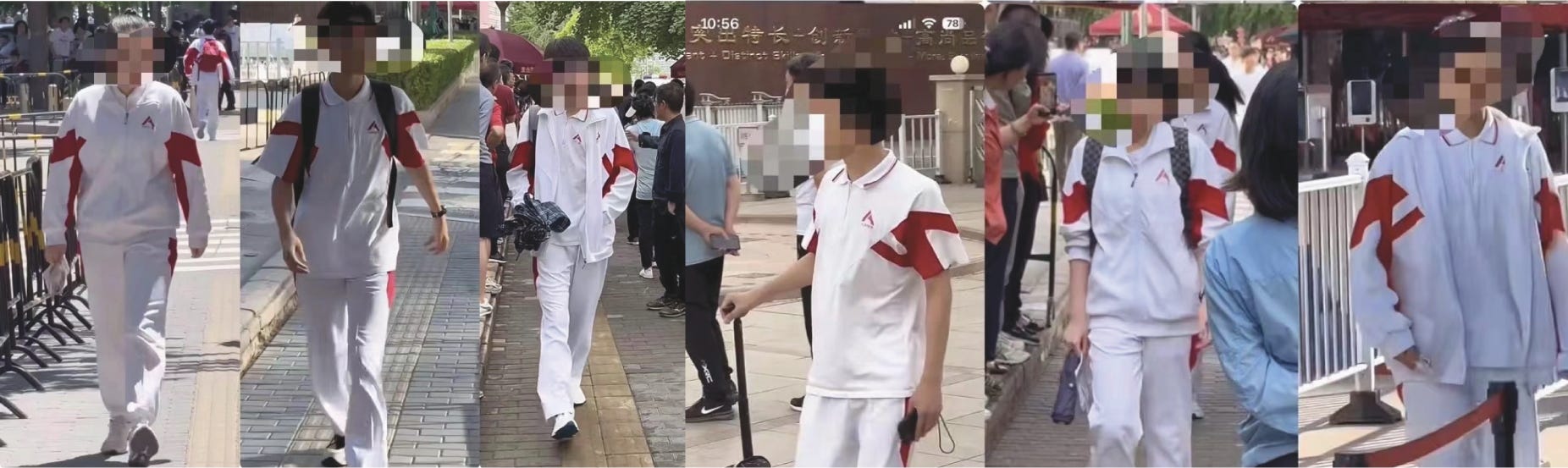
The cruelty here is the transparency. The US runs many opaque ladders at once; Haidian runs one, in the open, at least a decade ago. Everyone can see the single game: exam, then cram school, then Tsinghua or Peking, so everyone plays it to exhaustion.
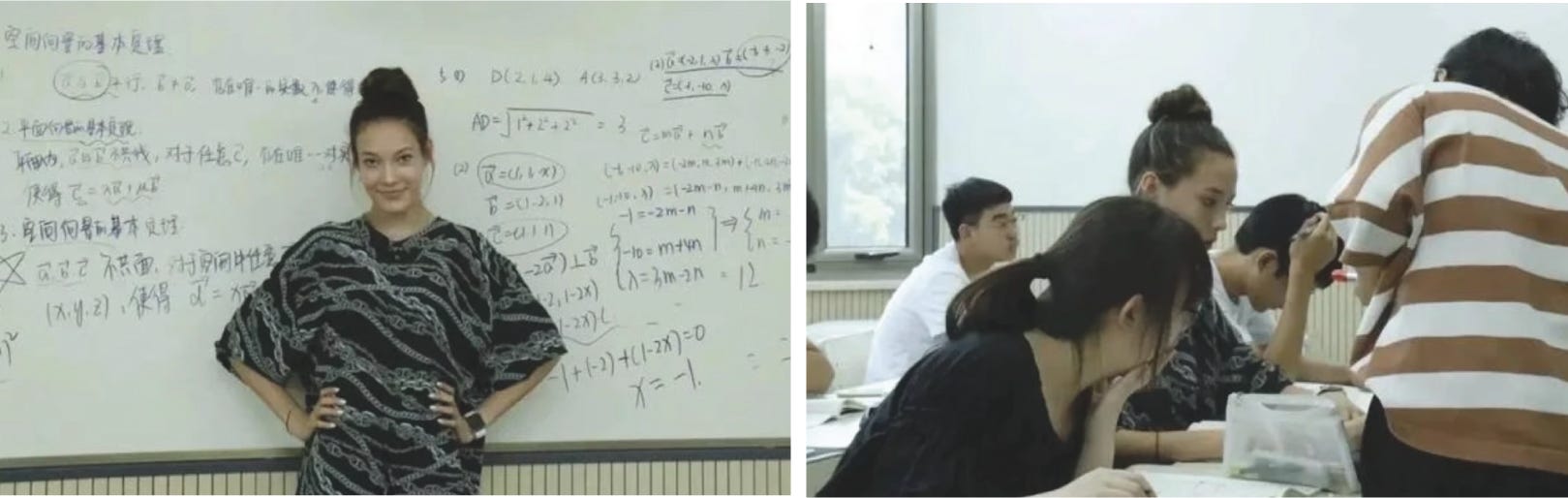
Its most luminous product is by now globally famous. Eileen Gu (谷爱凌, Gǔ Àilíng), Olympic gold medalist, Stanford student, fluent in unaccented Beijing dialect, spent her childhood summers, by her own account, doing mathematics in the Haidian cram circuit; her mother’s line was that ten days of school in China was worth a year in America. The most cosmopolitan young celebrity China has produced this decade was, in part, a ‘product’ of the Haidian system.
The same logic governs the adults. North of the schools sit 上地 and 西二旗 (Shàngdì / Xī’èrqí), the software parks that house Baidu, Xiaomi, and ByteDance, a zone one resident described, perfectly, as “both crowded and desolate”: packed with hundreds of thousands of engineers and almost nowhere to live, where the coder earning fifty thousand yuan a month is famous for living like five. His deliberately drab clothes are the academician’s black coat, one generation on.
What the Fold Hides
In 2012, on a Tsinghua University student forum, a writer named Hao Jingfang (郝景芳) posted a story called 北京折叠 (Běijīng Zhédié, Folding Beijing). It won the 2016 Hugo Award. In it, the city physically folds itself into three spaces, each allotted its hours and its class, so that the comfortable never have to see what holds them up. Haidian folds the same way, not in time, but beneath its own metrics. The 1.3 trillion yuan and the 605 academicians are the surface that stays unfolded. The costs are tucked under.
Some of the folding is literal. The walls that built the district, campus, institute, compound, break its street grid into superblocks, leaving the “dead-end roads” that paralyze Haidian traffic during peak hour; Beijing’s own 2016–2035 master plan now pleads to pry the old compounds open and reconnect the city’s “capillaries.” The walls that gathered the elite still wall off everyone else.
Some of it is quieter. In 2026, 豆瓣书店 (Dòubàn Shūdiàn), the beloved scholars’ bookshop by Peking University’s east gate, closed after nineteen years, one of nearly a hundred booksellers that once ringed the campus and have now all but vanished, undercut by the e-commerce discounting that Haidian’s own tech economy perfected. The district that industrialized knowledge could not keep alive bookstores that sold it for love.
The Crack
The machine is now, audibly, straining. The 2021 “double-reduction” policy (双减, shuāngjiǎn) outlawed much of the for-profit tutoring industry overnight; the cram schools fled Huangzhuang and the storefronts emptied. But you cannot ban a logic the city was physically built to run, and the anxiety simply went underground, into private tutors, quieter group chats, longer waitlists.
The deeper crack is in the promise itself. The exam, once meant to convert effort into status, now produces more winners than the economy can absorb. Parents have begun weighing the return on investing tens of millions of yuan in “school district housing” against the uncertain future of their children. As youth unemployment climbs, even graduates from Tsinghua and Peking, China’s top two universities and the ultimate destination of this competition, cannot secure a decent job in the market. A generation answers the whole apparatus with 躺平 (lying flat), the refusal to keep running a race whose prize keeps shrinking. The birthrate falls, and with it, the number of children left to optimize.
There is a symmetry here worth sitting with. Haidian’s meritocracy is faltering at the exact moment America has begun to interrogate its own, the same decade that produced The Tyranny of Merit produced “lying flat” in China. Two elite-factories, built on opposite blueprints, arriving at one doubt: that sorting human beings by a single measure, however pure, may corrode the very thing it was built to reward.
The ocean of black coats is still there each winter morning, flowing toward the labs. Eileen Gu, the system's most dazzling output, took her training and left, which is, in the end, the one outcome the machine was never built to produce, and inevitably did.
If my insights brought you a fresh perspective, please consider supporting me by buying me a coffee. Your generosity fuels my writing.
Turchen's overproduction of elites thesis applies.
Clever observation on the parallels between the two systems. What do they have in common? Both are extending their wealth lead over the rest of the world, and wealth inequality is rising rampant within.