

If you look at Japanese newspapers before and during the War, you will find that instead of using “China” (中国, Chūgoku), papers used “Shina” (支那; Zhīnà in Mandarin) to refer to the Republic of China. On the front page of the Tokyo Asahi Shimbun in September 1937, the four-character slogan 暴支膺懲 (bōshi yōchō): punish the violent Shina. It set the narrative for the total invasion.
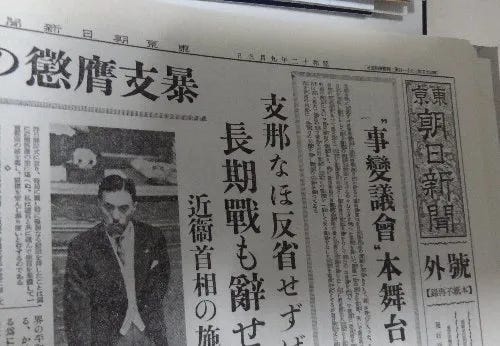
Shina 支那 was the name Imperial Japan used to replace “China 中国,” with a whole intellectual system built to despise and diminish the Chinese, and it partly established the ideology behind the massacres during the war.
Japan government stopped using the name since 1946. Outside Hanzi/Kanji/Chinese-character world, the shift of the name seems insignificant. Yet, it created an entire academic discourse and a framework for understanding history and international relations that still influences East Asia today.
A neutral name
支那 Shina began as a transcription. During the Tang dynasty, Buddhist translators noted that the Sanskrit used Cīna for China. When they explained how Indian called China, they transcribed Cīna into 支那 Zhīnà, sometimes 脂那 (Zhīnà) or 至那 (Zhìnà), and 震旦 (Zhèndàn) for the longer Cīnasthāna. The characters reached Japan inside the Buddhist texts and stayed a monk’s word for a thousand years.
In the Chinese-character cultural sphere, the underlying meaning of China (中国) is explicit: “the Middle Kingdom.” In eighteenth century, Edo scholars reading Dutch books met a country called China and needed a Japanese name for it. Inside directly use 中国, Arai Hakuseki used 支那 Shina in Seiyō Kibun 西洋紀聞 (1715), and the scholars who followed argued openly that Japan should stop calling its neighbor “the Middle Kingdom.” By then, Shina was no more than a neutral alternative to “the Middle Kingdom.”
The Meiji reform in the the 1860s put Japan on the track of modernization, in 1885. Fukuzawa Yukichi’s “On Leaving Asia” (Datsu-A Ron, 脱亜論) set the narrative of how japan positioned itself in the East Asia region, he famously declares:
我れは心に於て亜細亜東方の悪友を謝絶するものなり
“In my heart, I decline the bad friends of eastern Asia.”
The “bad friends” are China and Korea. Japan has crossed to the side of civilization, its neighbors have not. So it’s acceptable to treat the neighbors as the West treats them. Nihonjin-ron (日本人論: treatises on Japaneseness) grew and develop, especially after winning the war against China and Russia consecutively. However, what has often been overlooked is the accompanying rise of Shinajinron (支那人論, theories on the Shina people).
The Theory of Shina
In 1914. Naitō Konan 内藤湖南, the prestigious sinologist, the holder of the first chair of Oriental History at Kyoto Imperial University, published the most-read Japanese book on contemporary China of its generation: Shina-ron (支那論, The Theory of Shina). The book established the discourse of how to understand China.
It was built on four theses:
China is already modern. The “Tang–Song transition” holds that China entered its modern age around 960 after Tang dynasty: the aristocracy vanished, the emperor became an autocrat, the status of common people improved, and commerce rose. China was ahead of Japan and the West and had already lived through its modernization. But the later dynasties exhausted the modernity. The Republic of 1912 is not a beginning or a new start. It is just a very old society trying on a modern system that no longer fits it. So its failure is foreseeable.
The state is an empty shell. Since the Song, Chinese people have lived inside the 郷団 (gōdan), the self-governing local community of clan and gentry, and have been indifferent to who holds the state above it. Dynasties fall, the village goes on. So people are indifference to the state and lacking a national identity.
China should be smaller and unarmed. It argues that authentic China is only in ‘China proper,’ the provinces populated predominantly by ethnic Han. The Republic cannot hold the Qing empire’s outer lands, Mongolia, Tibet, Xinjiang, Manchuria, and should let them go. He also suggests, the Republic does not need an army at all. It can give up national defense and let the foreign powers check on each other to keep it safe.
The cultural center has moved. In 1924, Shin Shina-ron (New Shina Theory) further argues that the center of East Asian civilization has migrated over history from the China mainland and across the sea. Japan is where Chinese culture continues, and an ageing China (which is no longer China but merely Shina) can be renewed only from outside. In the chapter “China’s Renewal and Japan” he draws the conclusion that Japanese involvement in Chinese politics should not count as aggression, because it is the cultural center (Japan) attending to its periphery (China).
The War
Shina-ron set up the systematic narrative of condescension and discrimination. View through the narrative, war against China is more like a helping than an invasion. And Chinese, or Shinajin, are just ungoverned population lacking national cohesion.
Five weeks after the Marco Polo Bridge incident, the Konoe cabinet on Aug. 15, 1937, issued the government statement that opens the full war. However, it was not framed as a declaration of war. It declares as a punitive action:
支那軍の暴戻を膺懲し以て南京政府の反省を促す
“To punish the violence of the Shina army and thereby bring the Nanjing government to reflect.”
膺懲 (yōchō) is a word for what a parent does to a child, a magistrate to a criminal. Violence against Shina is penalty rather than war between states, since Shina is not a state at all.
If antisemitism is behind the Jewish massacre, Shina-ron definitely helped to alleviate the burden of Japanese soldiers during killing and slaughter of the Chinese civilians.
For most Chinese people, if they ask their parents or grand-parents who lived and survived the Japan invasion, they will definitely hear a scary and indelible memory of hiding and escaping from Japanese soldiers.
Forget Shina
Japan government stopped using the term after the War in 1946, under official protests by the Republic government. However, it grants exceptions for “historical, geographical or scholarly” use, so that 東支那海 (East China Sea) and 日支事変 (Sino-Japanese Incident) could continue. Academic departments of Shina studies (支那学) were subsequently renamed Chinese studies (中国学).
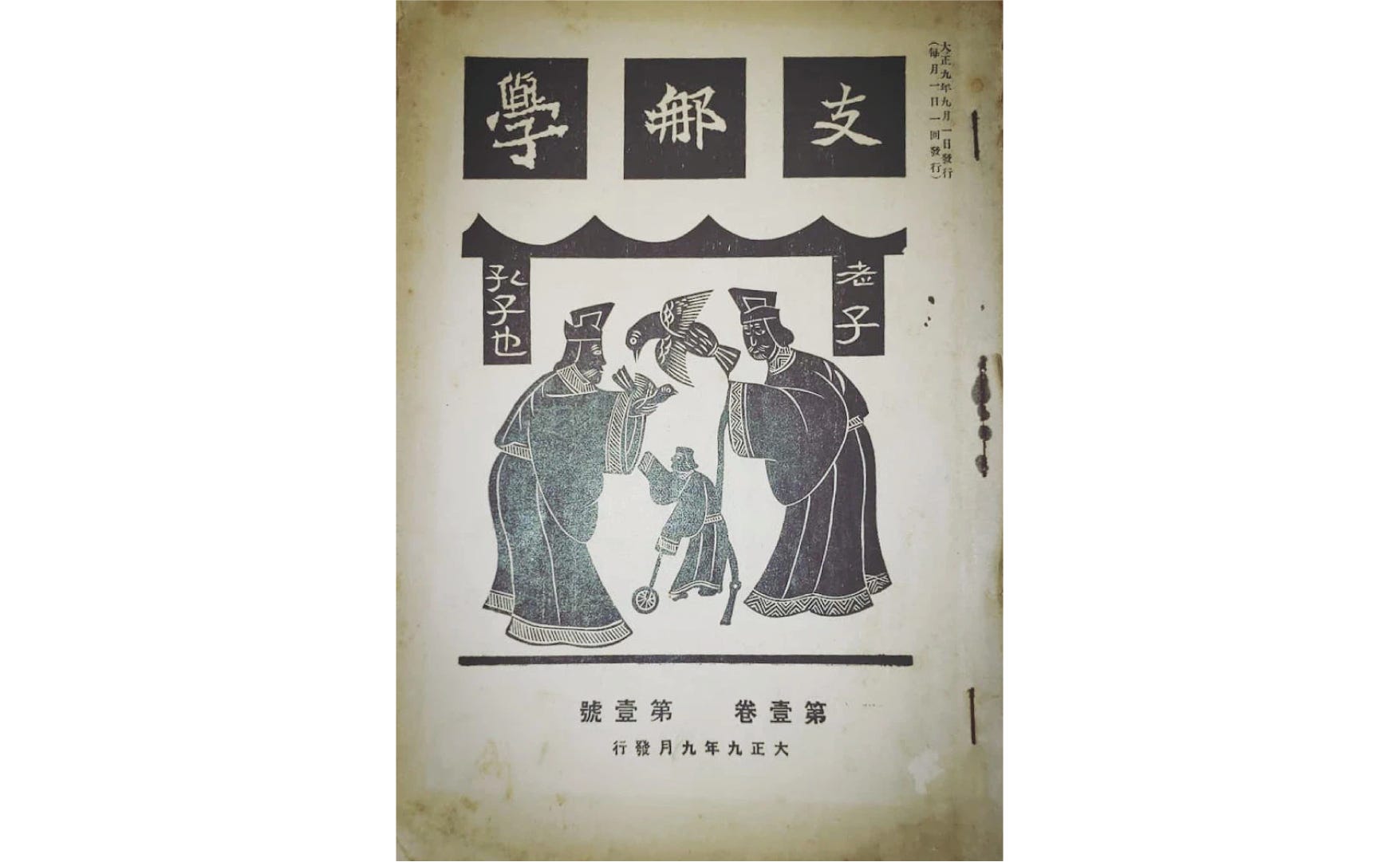
The journal ran until 1947; the discipline was renamed Chūgokugaku (中国学) after the 1946 directive. Naitō's generation studied China as Europe studied antiquity, through its texts, as a finished civilization whose living descendants were a separate and lesser matter.
The Chinese Civil War and the following Communist revolution fundamentally altered how postwar Japanese intellectuals viewed China. Sinologist like Takeuchi’s argued that China, through revolution, had achieved a modernity of its own from the inside, while Japan had only imitated the West. Revolutionary China became the Asia that Japan should have become. This admiration was broad: the Japan Socialist Party, the Japan-China Friendship Association (日中友好協会), academia, and eventually the public. In stark contrast to current polls, where negative impressions of China hover near 90 percent, in the early 1980s, around 80 percent of the Japanese public reported feelings of affinity toward China.
Framing the narrative of the war was also complex on the Chinese side. Back in the 1920s and 30s, the contempt that Chinese students encountered in Japan was so pronounced that they repeatedly petitioned the Republican government to issue formal diplomatic demands to abolish the term Shina. After the war, seeking to recreate bounds between the people, the Chinese government adopted the statement that the war was the work of “a handful of militarists”; the Japanese people were also its victims; the two peoples had been friends for two thousand years. And it’s a principle that still holds until today.
However, if the war was just the atrocity of “a handful of militarists,” and Japanese people back then were also victims, there left little analytical room to examine how thoroughly Shina theory had permeated pre-war and wartime Japanese society as a whole.
Shina Theory revival?
In 1980, the Japanese Cabinet Office surveyed public sentiment: do you feel affinity toward China? 78.6 percent said yes. Today, that figure has plummeted to the single digits, and high unfavorability has persisted for over a decade. The Diaoyu Islands dispute (the Senkaku islands) triggered it since 2013. The negative sentiment was so enduring as if it were the same contempt directly from the pre-war era
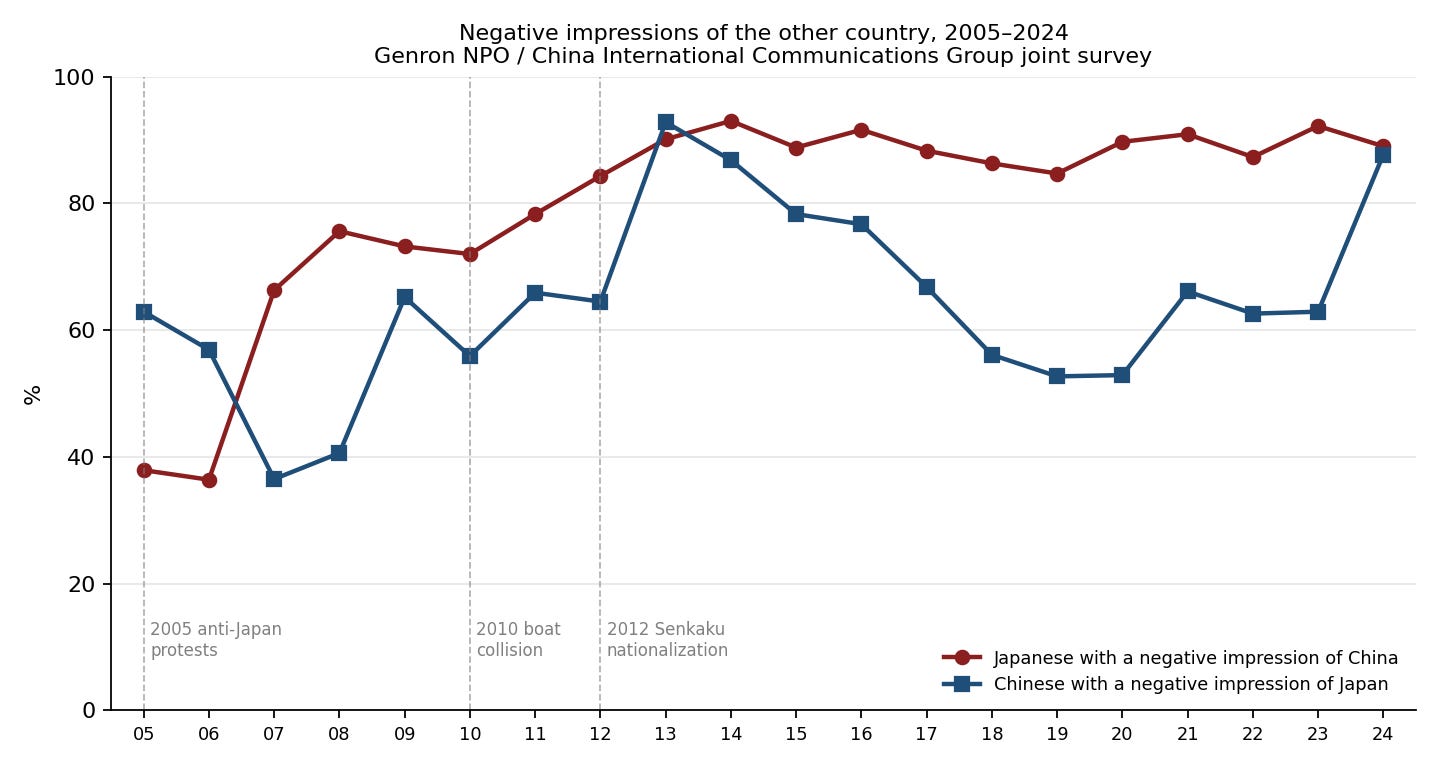
The negative sentiment is made of two main components. Political friction aspect claims that China’s actions are different from international rules. China is conducting military expansion. And social criticism aspect targets on “Chinese people’s manners,” Media coverage frequently highlighted Chinese tourists talking loudly, not queuing, squatting in stations, taking too much at the buffet.
The word Japanese reach for is 民度 (mindo), literally “the level of the people,” a measure of a population’s civility. The mainland visitors believe to exhibit low mindo. The 2014 publishing boom in 嫌中本 “China-hating books,” sold on the same two claims, the Chinese have no public spirit and no rules. Further, prominent political figures like tokyo’s governor Ishihara Shintarō openly used Shina 支那 in public for decades and defended it.
Set these next to Fukuzawa’s bad friends’ “without law” 無法 in 1885, and the 1937 slogan named the enemy “the violent Shina” 暴支, the question is that whether older patterns are resurfacing in modern geopolitical rivalries.
Shina never disappear
On Chinese-speaking internet, the word Shina 支那 has re-emerged as a targeted insult and a discrimination label.
In 2016, two newly elected members of Hong Kong’s Legislative Council took their oath of office with a banner reading “Hong Kong is not China,” and pronounced the name of the country they were swearing loyalty to as Shina. Their seats were voided.
By 2019, the word had ‘evolved’ on Taiwan internet forums into 支語 (Zhīyǔ, literally “Shina language”), referring pejoratively to mainland-style Mandarin. Notice the difference of word preference, young people in Taiwan have been calling Mainland vocabulary 支言支語 (Zhīyán Zhīyǔ, “Shina-speak”). And there’s even 支語警察 (zhīyǔ jǐngchá, “Shina-language police”), if you say 視頻 (shìpín) instead of 影片 (yǐngpiàn) for “video,” or 質量 (zhìliàng) instead of 品質 (pǐnzhí) for “quality” and you will be marked as ‘contaminated’ by the Mainland.
Looking back at Naitō Konan’s Shina-ron, the discourse surrounding the term never entirely disappeared. Instead, its underlying assumptions continue to surface across regions linked to China, shaping how people perceive and think today.
If my insights brought you a fresh perspective, please consider supporting me by buying me a coffee. Your generosity fuels my writing.
Primary sources
Shina, origin — 玄奘『大唐西域記』卷五 (摩訶至那) — Xuanzang, Great Tang Records on the Western Regions (646), Book 5, the passage on “Mahācīna”; 新井白石『西洋紀聞』1715 — Arai Hakuseki, Seiyō Kibun
1885 — 福澤諭吉「脱亜論」『時事新報』1885-03-16 — Fukuzawa Yukichi, “On Leaving Asia” (Datsu-A Ron), editorial in Jiji Shinpō, 16 March 1885.
1914 / 1924 — 内藤湖南『支那論』1914; 『新支那論』1924 — Naitō Konan, On China (Shina-ron, 1914); New Thoughts on China (Shin Shina-ron, 1924). Collected in Complete Works of Naitō Konan, vol. 5 (Chikuma Shobō, 1972).
1937 — 近衛内閣 政府声明 1937-08-15 — Konoe cabinet, Government Statement of 15 August 1937 (the “punish the violent Shina” statement).
1946 — 外務次官通達「支那の呼称を避けることに関する件」1946-06-06 (文合第357号) — Foreign Ministry Vice-Minister’s Circular, “On Avoiding the Appellation ‘Shina’,” 6 June 1946 (Doc. No. 357);
1949 — 竹内好「日本人の中国観」— Takeuchi Yoshimi, “The Japanese View of China.”
1972 — 周恩来 歓迎宴会 演説 1972-09-25 — Zhou Enlai, speech at the welcome banquet for Tanaka Kakuei, Beijing, 25 September 1972; 日中共同声明 1972-09-29 — Joint Communiqué of the Government of Japan and the Government of the People’s Republic of China, 29 September 1972..
Your essay gave me a great deal to think about, particularly when considered alongside Louise Young’s Japan’s Total Empire. The Mukden Incident was staged by officers within the Kwantung Army, who then presented Tokyo with a fait accompli. Young argues that the resulting expansion was accepted and sold to the public not merely through top-down propaganda, but through newspapers, academics, women’s groups, youth organizations, and other institutions that helped mobilize enthusiasm for empire.
That suggests a more precise causal sequence than simply “a theory justified a war”:
A military faction manufactures a pretext → a preexisting ideological framework, exemplified by Shina-ron, makes it readily intelligible and acceptable → a decentralized network of institutions turns it into mass consent.
The vocabulary itself did real work in that final step: “punish” (膺懲) rather than “wage war,” and “incident” rather than “invasion.” If that language eventually permeated society, it did not get there by itself. Officials gave it authority, academics gave it legitimacy, newspapers repeated it, and civic organizations carried it into ordinary life.
We see the same mechanism in labels such as “American imperialists” and “Red Chinese.” Neither merely identifies the actor; each arrives carrying an interpretation and a verdict. More importantly, that verdict does not remain confined to a government, political system, or particular policy—it is passed on to an entire people. A government’s actions become the supposed character of everyone it governs.
People need not have studied the ideology behind the phrase. Repetition of the language teaches them the framework and tells them whom to condemn.
What makes Shina difficult to place entirely in the past is that the word never disappeared. Ishihara Shintarō, a four-term governor of Tokyo and later a national party leader, publicly defended its use decades after it had been removed from official language.
Does that continuity suggest that the worldview embodied in Shina-ron was never truly retired in 1946, but merely pushed out of official language while remaining politically available? And was the word itself helping preserve that worldview—or merely revealing a belief that had survived beneath it?
Very interesting. It puts a perspective on the use of the word by the Hong Kong protesters. It was really childish, more the behavior of rebellious teenagers rather than responsible politicians.